
Views: 222 Author: Amanda Publish Time: 2025-08-24 Origin: Site


Content Menu
● Understanding the Water Truck: Components and Functions
>> Water Tank
>> Pump System
● Operating the Water Spray System
● Tips for Efficient Water Truck Operation
● Routine Maintenance and Safety Procedures
● FAQ
>> 1. What safety measures should I take when operating a water truck?
>> 2. How do I prevent the water in the tank from causing instability?
>> 3. Can I operate the water spray system while driving?
>> 4. How often should I perform maintenance on my water truck?
>> 5. What is the recommended water volume for a construction site dust control task?
Operating a water truck is an essential skill for many professionals in construction, mining, agriculture, road maintenance, and industrial sectors. A water truck helps control dust, compact soil, provide water to remote sites, or even extinguish small fires. At KeyChain Venture Co., Ltd., we provide high-performance commercial vehicles including specialized water trucks to our domestic and international clients, ensuring reliable and efficient operation in various environments. This comprehensive guide will walk you through how to operate a water truck safely and effectively, from pre-operation checks to routine maintenance.
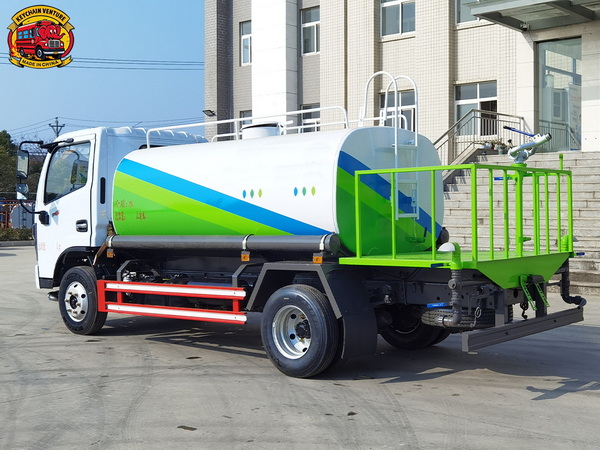
Water trucks play a critical role in a wide range of industries by providing water for construction site dust control, soil compaction, fire suppression, and landscaping. Proper operation ensures safety, efficiency, and prolonged vehicle life. In this article, we focus on everything you need to know about operating a water truck—from understanding its components to expert tips for best practices.
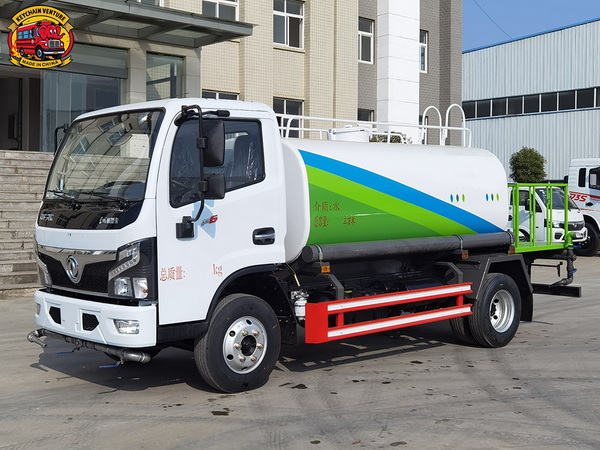
A water truck typically consists of several major components designed to provide efficient water transportation and spraying capabilities. Knowing these parts clearly helps operators use the vehicle optimally.
The large tank mounted on the truck chassis stores the water. Tanks vary in size, typically ranging from 2,000 gallons to over 5,000 gallons depending on the truck model. Tanks are specially engineered to withstand the stresses caused by water sloshing and to prevent leakage. Some tanks feature internal baffles to reduce liquid movement, enhancing stability while driving.
The pump draws water from the tank and sends it through hoses to spray nozzles. Pumps can be powered by the truck's engine or an auxiliary motor. The pump's capacity and pressure capabilities vary depending on the truck's intended use — from light irrigation to demanding dust suppression tasks requiring higher pressure.
Nozzles are positioned at various locations — rear, front, sides, and underbody — to allow targeted water spraying for dust suppression or soil compaction. Spray bars and adjustable nozzles give operators the flexibility to cover wide areas or focus on spots that require more water. Some sophisticated water trucks offer electronically controlled nozzles with programmable spray patterns.
Usually located inside the truck cab, the control panel operates the pump and spray nozzles, allowing the driver to switch between settings and adjust spray intensity. Modern control systems may include digital displays indicating water pressure, flow rates, and tank levels, improving operational accuracy.
Flexible hoses and valves direct the flow of water to different nozzles and allow the operator to control spray patterns and shut off areas as needed. Proper maintenance of hoses and valves ensures consistent water delivery and prevents leaks or bursts that could disrupt operations.
Water trucks are built on heavy-duty truck chassis with enhanced suspension to support the weight of the water tank safely over rough terrain. The chassis design balances load distribution, with some water trucks featuring multi-axle configurations for higher payloads.
Before operating a water truck, ensure safety by conducting a comprehensive pre-operation check. This avoids breakdowns and ensures both operator and site safety.
- Inspect the Water Tank: Check for leaks, cracks, or corrosion that might compromise structural integrity.
- Check Fluid Levels: Oil, coolant, brake fluid, and hydraulic fluids must be at optimal levels to avoid engine or system failures.
- Inspect Tires: Ensure proper inflation and no visible damage such as cuts, uneven wear, or embedded objects.
- Pump and Hose Inspection: Verify the pump is operational and hoses are free from cracks, leaks, or blockages.
- Brake and Light Test: Confirm brakes, indicators, and lights are functioning properly — essential for safe operation especially in low-light conditions.
- Control Panel Functionality: Test all controls related to water spraying systems to guarantee responsive operation.
- Safety Equipment: Ensure the presence of a fire extinguisher, first aid kit, warning signs, and any other required emergency equipment on board.
- Secure Load: Confirm all tank hatches, valves, and lids are securely closed before movement.
Efficient filling minimizes downtime and prepares the truck for operational tasks.
1. Position the water truck close to a reliable water source, such as a standpipe, well, or water reservoir.
2. Turn off the spray system and pump before connecting to filling equipment.
3. Open the tank hatch or fill inlet carefully, avoiding splash back.
4. Use a hose or water pump to fill the tank while monitoring water levels to prevent overfilling.
5. Some water trucks are equipped with automatic shut-off valves or level sensors to simplify the filling process.
6. Avoid dirt or debris entering the tank during filling by using filters or covers.
7. Securely close hatch and inlet lids after filling to prevent contamination during transport.
Operating a water truck requires attention to its heavier load and handling characteristics compared to a standard truck.
- Start Smoothly: Accelerate slowly to avoid sudden shifts of water inside the tank (known as surge effect), which can affect vehicle stability.
- Drive at Reduced Speeds: Heavy water loads increase stopping distances and affect vehicle handling, particularly on curves and rough or steep roads.
- Avoid Sharp Turns: Sudden sharp turns increase the risk of vehicle rollovers due to the shifting weight of the water.
- Use 4WD If Available: For off-road or rugged terrain, four-wheel drive modes enhance traction and control.
- Brake Gently: Gradual braking prevents sudden surges of water inside the tank and reduces wear on the brake system.
- Maintain Safe Distance: Due to the increased stopping distance, keep a greater space between vehicles.
- Stay Alert: Be mindful of environmental conditions, such as slippery surfaces or low visibility, and adjust your driving accordingly.
- Communicate on Site: Use radios or signals to coordinate with other workers and avoid accidents on busy work sites.
- Park Safely: Always engage the parking brake and use wheel chocks when the truck is stationary on slopes.
The main functional advantage of a water truck is its spray system for dust control and other water application needs.
1. Engage the pump using the control panel inside the cab.
2. Select the desired spray pattern and nozzle configuration — rear, front, side, underbody, or hand line application.
3. Adjust water pressure and spray volume depending on task requirements and environmental conditions.
4. Monitor water flow continuously via tank gauges and pressure meters to avoid running the tank dry.
5. Use the spray system intermittently to conserve water and reduce mechanical wear.
6. Shut off the spray system before relocating the vehicle to avoid damage and wastage.
7. For targeted or high-pressure spraying tasks, use hand-held hoses with directional nozzles.
8. Check that spray nozzles are clean and undamaged to maintain uniform water application.
Proper understanding of the spray system provides maximum effectiveness in controlling dust, settling debris, or watering soil.
- Plan Routes to Minimize Empty Driving: Efficient route planning reduces fuel consumption and wear.
- Monitor Water Usage: Keep precise records of water used for budgeting and environmental compliance.
- Use the Correct Nozzles: Choose nozzles appropriate for task requirements—wide spray for dust suppression, finer mist for compaction or irrigation.
- Adapt Spray to Weather: Increase spraying in windy or dry conditions, and reduce in rain or high humidity.
- Train Operators Thoroughly: Well-trained operators improve safety, equipment lifespan, and overall productivity.
- Communicate with Site Personnel: Coordination can help avoid redundancies and improve water application efficiency.
- Use Baffled Tanks for Stability: Investing in tanks with internal baffling reduces liquid surge effects.
- Keep Equipment Clean: Regularly flush pump systems and nozzles to prevent clogging.
- Follow Manufacturer Guidelines: Adhere to weight limits, pressure ratings, and maintenance recommendations.
Proper maintenance extends the service life of the water truck and ensures operational safety.
- Pump Maintenance: Lubricate bearings, inspect seals, and monitor performance to prevent pump failure.
- Tank Cleaning: Periodically drain and clean the tank to remove sediment, algae, or mineral deposits.
- Hose and Nozzle Inspection: Replace damaged hoses, clean nozzles, and ensure radiation protection for critical parts.
- Brake System Checks: Brake systems carry added stress due to the water's weight; inspect brake pads and lines frequently.
- Cooling System Maintenance: Prevent engine overheating by regularly checking coolant levels and radiator cleanliness.
- Electrical System Checks: Inspect the wiring and connectors controlling pumps and spray systems for damage or corrosion.
- Safety Equipment Inspection: Verify that all emergency gear is functional and accessible.
- Document Your Maintenance: Keep detailed logs to track service intervals, repairs, and parts replacement.
Proactive maintenance prevents costly downtime and loss of productivity.
Operating a water truck safely and efficiently requires thorough knowledge of the vehicle's systems and careful attention to operational best practices. From pre-operation inspections, safe driving techniques, to effective use of the spray system and routine maintenance, each step contributes to optimal performance and prolonged vehicle lifespan. At KeyChain Venture Co., Ltd., we provide advanced water trucks built for durability and high efficiency to support your industrial needs. Properly operated, a water truck becomes an indispensable tool for dust control, soil compaction, irrigation, and many other critical functions on work sites worldwide.

Always perform a thorough pre-operation check, drive at reduced speeds, avoid sharp turns, and ensure the spray system is off while driving to maintain vehicle control.
Drive smoothly with gradual acceleration and braking to minimize liquid surge inside the tank. Selecting a water tank with internal baffles can also improve stability.
Yes, but it should be used carefully and at low speeds to maintain control and avoid water wastage or damage to equipment.
Routine visual checks should be done daily; more comprehensive maintenance should be performed monthly or as outlined in the manufacturer's guidelines.
This varies with site size and conditions, but light, intermittent spraying is generally more effective and resource-efficient than continuous heavy spraying.


