


Content Menu
● What Exactly Is a Semi Trailer?
● Standard Lengths and Global Variations
● Influence of Trailer Type on Length
● Cargo Capacity and Payload Efficiency
● Maneuverability, Handling, and Safety
● Practical Considerations for Fleet Planning
● Operational Scenarios and Case Studies
● Technical Aspects and Design Considerations
● Regulatory Navigation for Global Operations
● Practical Guidance for Selecting a Semi Trailer Length
● Safety and Compliance at a Glance
● Sustainability and Efficiency
● FAQ
>> 1. What is the most common semi trailer length?
>> 2. Are there shorter semi trailers?
>> 3. Can semi trailers be longer than 53 feet?
>> 4. Do trailer length regulations vary by country?
>> 5. What should be considered when choosing a semi trailer length?
KeyChain Venture Co., Ltd. stands at the forefront of China's commercial vehicle solutions, delivering high-performance passenger and heavy-duty truck components to clients worldwide. The semi trailer serves as the backbone of many logistics networks, enabling efficient urban deliveries, regional distribution, and long-haul transportation. Understanding the length dimensions of a semi trailer—and how those dimensions interact with regional regulations, cargo types, and fleet strategy—is essential for operators seeking to optimize payload, route planning, and overall cost effectiveness. This article synthesizes industry standards, regional variations, and practical considerations for choosing the right semi trailer length in various markets, with a focus on how length influences capacity, maneuverability, and compliance.

A semi trailer is a freight-carrying platform designed to be towed by a tractor unit. It shares a common design principle across many markets: the front of the trailer couples to the tractor via a kingpin, while the rear wheels bear most of the load. The tractor provides propulsion and steering, while the trailer carries the cargo. Because the front end relies on the tractor for weight support and articulation, the overall vehicle length and turning characteristics become a function of both the trailer and the tractor arrangement. This design enables efficient use of road networks and dock infrastructure while allowing substantial cargo capacity per trip.
Across many regions, standard semi trailer lengths are aligned with highway and dock infrastructure to maximize cargo space while maintaining safe operating practices. In North America, the typical highway trailer length is 53 feet, with 48 feet also common for regional or shorter-haul operations. In other markets, such as parts of Europe and Asia, shorter or differently configured trailers may be dominant, influenced by road geometry, urban density, and regulatory regimes. The important takeaway is that 53 feet is widely recognized as a common benchmark in many markets, but total permissible lengths may vary by jurisdiction and permit regimes, particularly for specialized or oversized cargo.
Length regulations exist to balance safety, traffic flow, and infrastructure wear. In some countries, the maximum length is codified for standard configurations, while others allow extended lengths under case-by-case permits or escorted operations for oversized loads. Fleet managers must remain current on local standards when operating across borders or targeting new markets. Compliance considerations often drive the mix of trailer lengths within a fleet, ensuring that a portion of the fleet can operate efficiently on standard highways while other portions are reserved for heavy or specialized loads that require longer configurations or alternative equipment.
The range of semi trailer types—dry van, refrigerated, flatbed, low-bed, tanker, and intermodal—often shares standardized lengths, but there can be notable differences depending on cargo needs. For example:
- Dry van and refrigerated trailers typically adhere to the 53-foot length in many markets to optimize enclosed cargo capacity.
- Flatbeds, while also offered in 48 to 53-foot configurations, may be selected in shorter lengths to improve maneuverability in urban settings or to fit specific dock constraints.
- Tanker and liquid trailers commonly follow lengths aligned with stability and loading operations, which can vary by product and regulatory requirements.
- Intermodal trailers designed for containerized freight often reflect compatibility with standard container lengths (such as 20, 40, or 53 feet), emphasizing interchangeability across shipping modes.
The length of a semi trailer strongly influences cargo capacity and payload efficiency. Longer trailers increase interior volume, allowing more pallets, crates, or unitized cargo per trip. This can reduce the number of trips needed for a given shipping volume, lowering per-ton-mile costs and potentially reducing emissions per ton transported. However, increasing length can also raise handling complexity, loading/unloading times, and the need for specialized equipment or routes. Fleet decisions should balance the marginal gains in capacity against the realities of dock operations, driver availability, and route constraints.
Longer semi trailers demand greater turning radius, careful lane discipline, and attention to road geometry. In dense urban environments, longer units may encounter tighter restrictions at intersections, toll plazas, or loading bays. Driver training, route planning software, and real-time traffic data become especially important for optimizing performance. Safety considerations extend to braking distance, weight distribution, and trailer sway dynamics, all of which are influenced by trailer length and load profile.
- Load type and arrangement: Palletized vs. non-palletized cargo affects how efficiently interior space is utilized, which in turn interacts with trailer length choices.
- Delivery environment: Urban cores typically benefit from shorter trailers, while regional and nationwide networks can leverage longer configurations for higher throughput.
- Dock and terminal compatibility: Door widths, dock levelers, and trailer parking space influence the practical feasibility of certain lengths at key facilities.
- Permitting and escort requirements: Oversized loads may necessitate special permits or escort vehicles, impacting routing, timing, and cost.
- Total cost of ownership: Longer trailers may reduce trips but increase maintenance, tire wear, and capital expenditure; a lifecycle view helps identify the optimal mix for a given operation.
- Regional distribution with long-haul legs: A fleet operating predominantly 53-foot dry vans may achieve best efficiency by consolidating payloads to minimize empty space and reduce total trips, while maintaining flexibility for urban access with shorter trailers in dense markets.
- Intermodal logistics: For containers, trailer lengths are selected to maximize compatibility with standard container lengths and terminal gate processes, reducing handling time and improving dwell times at ports and rail yards.
- Specialized equipment: Heavy-haul or oversized cargo may require extendable or dual-length configurations, carefully managed with permits and escort arrangements to meet safety and regulatory expectations.
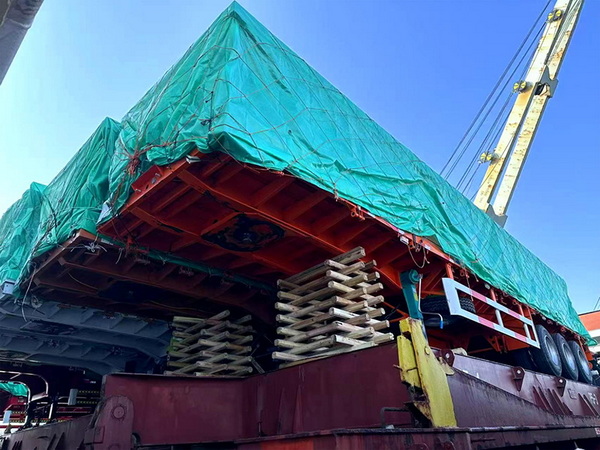
Efforts to optimize trailer length are often driven by a combination of regulatory alignment, cost per ton transported, and environmental considerations. Some markets have experimented with longer standard trailer configurations to boost efficiency, while others prioritize tighter urban integration and easier access for last-mile operations. The balance between payload capacity, maneuverability, road wear, and safety remains the guiding principle in decisions about semi trailer length across the logistics landscape.
- Structural integrity: Longer trailers require robust framing, suspension, and coupling systems to maintain safety margins under high payloads and long-distance operation.
- Weight distribution: Proper axle configuration and load placement maintain stability, reduce tire wear, and comply with axle load regulations.
- Accessories and add-ons: Mirrors, lights, mud flaps, and safety devices must be compatible with various trailer lengths and configurations, while not exceeding maximum width or height limits.
- Aerodynamics and efficiency: Some fleets explore aerodynamic enhancements for longer trailers to reduce fuel consumption and improve overall efficiency.
Operators traveling across borders must understand not only the base length limits but also temporary or state-specific allowances that may apply during certain seasons, construction periods, or special events. Trading partners and freight forwarders often coordinate routes that conform to local rules while optimizing cargo consolidation and transit times. This ongoing regulatory awareness supports safer operation and ensures predictable service levels for customers in diverse markets.
- Begin with core cargo profiles: Consider typical load dimensions, pallets per unit, and stacking patterns to estimate interior space requirements.
- Assess dock and terminal constraints: Confirm dock width, door height, and available turning space at frequent destinations.
- Plan for variability: Maintain a mix of trailer lengths to handle a broad range of shipments, with a smaller subset dedicated to oversized or special loads.
- Factor in total cost of ownership: Compare the long-run cost implications of different lengths, including maintenance, depreciation, and fuel efficiency tied to payload efficiency.
- Never exceed legal length limits; always comply with permit conditions for oversized loads.
- Ensure proper load distribution and securement to maintain stability over longer spans.
- Maintain appropriate clearance around the trailer to prevent collisions with infrastructure elements.
- Use route planning tools to identify roads and facilities that can accommodate longer configurations.
Longer trailers, when used strategically, can reduce the number of trips and lower emissions per ton-mile. However, efficiency gains depend on consistent load factors and stable demand. Fleet operators should monitor fuel consumption, tire wear, and maintenance costs as trailer lengths evolve with cargo profiles and market requirements.
Semi trailer length is a core dimension that shapes capacity, efficiency, and regulatory compliance in commercial trucking. By understanding regional standards, trailer types, and operational trade-offs, KeyChain Venture Co., Ltd. can design and deploy a fleet that optimizes payload utilization while maintaining safety and interoperability with distributing networks. As logistics demands continue to evolve, a balanced approach—combining standard lengths for routine loads with adaptable configurations for oversized or specialized shipments—offers the best path to reliable service and sustainable growth across domestic and international markets.
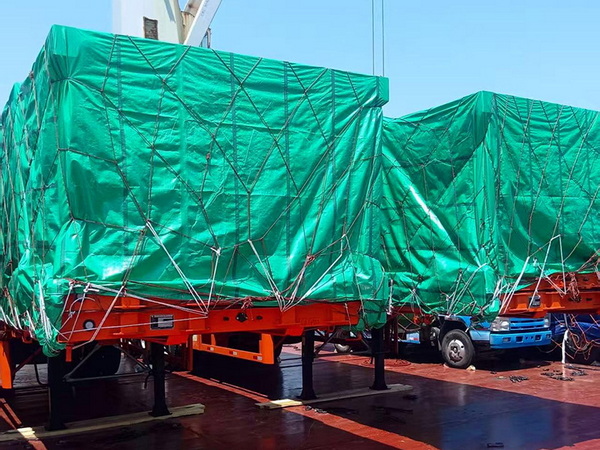
The 53-foot length is widely used in North America as a standard for maximizing cargo capacity, with 48-foot variants also common for regional operations.[10][11]
Yes, shorter configurations such as 28-foot pup trailers are used in city deliveries and tight urban environments for improved maneuverability.[11]
Yes, certain extendable or specialized configurations can exceed 53 feet, often requiring special permits and escort approvals for oversized loads.[11]
Yes, length limits differ globally, ranging from about 40-45 feet in many European regions to 53 feet and beyond in North America, depending on permits and road allowances.[2]
Cargo type, loading patterns, destination environments, dock access, and regulatory permitting all influence the optimal trailer length for a given operation.[10][11]
[1](https://www.deloupe.com/en/semi-truck-width/)
[2](https://en.wikipedia.org/wiki/Semi-trailer_truck)
[3](https://ops.fhwa.dot.gov/freight/publications/size_regs_final_rpt/)
[4](https://www.tralert.com/en/blog/what-is-the-maximum-width-of-a-truck/)
[5](https://www.abivin.com/blog/transportation-logistics-5/key-points-in-regulations-for-tractor-trailers-and-containers-1655)
[6](https://technical-regulation-information-system.ec.europa.eu/lv/notification/24526/text/D/EN)
[7](https://www.tongyatrailers.com/blog/are-there-any-restrictions-on-the-length-of-a-20ft-semi-trailer-in-different-reg-1361056.html)
[8](https://www.itf-oecd.org/road-transport-group/weights-and-dimensions/denmark)
[9](https://semitrailer.by/the-longest-semi-trailer-exploring-dimensions-regulations-and-industry-trends/)
[10](https://www.1gptransinc.com/tools-to-help/trailer-types-and-dimensions)
[11](https://schneiderjobs.com/blog/semi-truck-trailer-dimensions)


