Content Menu
● Core design principles of orchard tractors
>> Low profile and canopy clearance
>> Narrow width and tight turning radius
>> Power, torque, and hydraulics balance
>> Attachments and implement versatility
>> Ergonomics and operator comfort
● Practical applications across orchard operations
>> Pruning, trellis work, and canopy management
>> Pest management and precision spraying
>> Ground maintenance and pathway clearance
>> Harvest preparation and light transport
● How to choose the right orchard tractor for your operation
>> Row geometry and tree height
>> Attachment ecosystem and service support
● Operational tips for maximizing orchard tractor performance
● Market landscape and supplier considerations
>> Regional adaptations and standards
>> Partnering with a trusted supplier
● Illustrative case perspectives (practical insights)
>> A: pruning-focused operation
>> 1. What distinguishes an orchard tractor from a standard agricultural tractor?
>> 2. Which attachments are most common for orchard maintenance?
>> 3. How do you determine the right size of an orchard tractor?
>> 4. What are typical ownership considerations for orchard equipment?
>> 5. Are there regional standards or certifications for orchard tractors?
Orchard tractors are purpose-built companions for specialty farming environments where trees, vines, and closely spaced rows define the landscape. Unlike standard row-crop tractors, orchard tractors prioritize a low overall height, narrow chassis, precise steering, and attachment versatility to minimize crop disturbance while maximizing productivity. For buyers and distributors targeting international markets, understanding the orchard tractor's niche helps align specifications with task loads such as pruning, spraying, mowing, and short-haul transport within orchard blocks. This article delves into the design philosophy, core features, application scenarios, buying considerations, and practical guidance for selecting a tractor that delivers reliable performance in a demanding, canopy-obstructed environment.
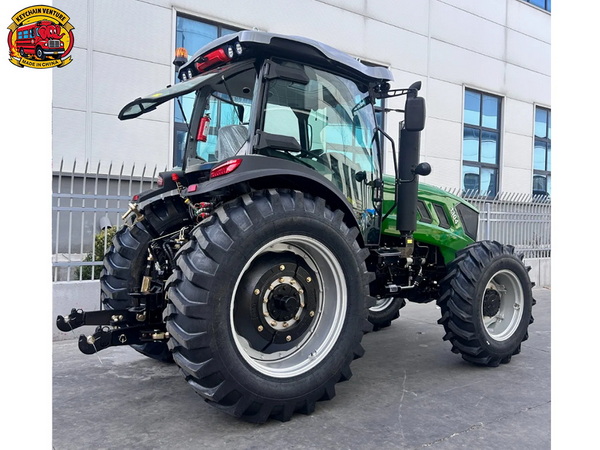
A defining trait of orchard tractors is a compact silhouette that fits under branches and above ground-level obstacles. The low profile reduces the risk of snagging branches and improves operator visibility when working along tree lines, pruning paths, and irrigation corridors. This enables more consistent task performance with less crop damage and shorter turnover times between operations. The ergonomic cab placement and optimized seating contribute to operator comfort during long shifts, a critical factor for productivity in commercial operations.
Row spacing in orchards often dictates maneuverability. A narrow chassis and a tight turning circle minimize soil compaction and disruption to fruiting zones, while enabling efficient traversal along curved trellis layouts. The ability to negotiate narrow aisles without sacrificing traction or load handling is a hallmark of modern orchard designs and a significant differentiator for dealers serving specialty agricultural markets.
Orchard tasks demand adequate power for lifting, cutting, spraying, and transport, but without the heavy footprint of wide, high-horsepower machines. A well-tuned engine, matched with a responsive hydraulic system and an appropriate drivetrain, ensures smooth operation of common implements such as pruning arms, sprayers, and mowing decks. A favorable torque curve at low revs enhances performance during lifting and implement engagement, aiding fuel efficiency and reducing operator fatigue.
Attachments are the lifeblood of an orchard tractor's versatility. Common categories include pruning attachments, sprayers with precise nozzle control, mowing decks designed for strip-wide coverage without overhanging limbs, cultivators for floor-level weed management, and light transport platforms. Compatibility with hydraulic remotes, PTO speeds, and uptime-friendly interfaces is essential for reliability in commercial distributions and service networks.
Given the long hours typical in commercial operations, design elements such as intuitive control layouts, easy-to-reach levers, low-vibration seating, and accessible service points contribute to sustained productivity. A robust but comfortable platform supports accurate and safe operation during high-intensity tasks.
Orchard tractors provide stable, precise control for pruning operations, enabling operators to reach targets along trellis lines with minimal disturbance to fruiting zones. The availability of compatible pruning attachments and joysticks for multi-axis movement enhances accuracy and consistency across rows.
In integrated pest management programs, precise spray deposition reduces chemical usage while maintaining effective coverage. Orchard tractors with appropriate sprayer configurations can deliver targeted treatments to trunks and canopy zones, supporting environmental and economic efficiency.
Maintaining clean aisles between tree rows preserves access and reduces debris-related damage to equipment and fruit. Mowing decks and weed-control implements mitigate competition and help manage understory growth without compromising tree health.
During harvest preparation, the ability to move fruit bins, transport tools, and shuttle supplies along rows supports overall operational flow. A tractor with a robust hitch system and stable ballast is well-suited to light transport duties within the orchard block.
Measure row spacing, canopy height, and desired clearance to determine the minimum tractor width and height requirements. Align these dimensions with the dimensions of available models and the intended attachment footprint.
Match engine power, PTO horsepower, and hydraulic flow to anticipated implements. Ensure the hydraulic system supports required load at the chosen operating RPM, with consideration for simultaneous tool use.
Assess compatibility with pruning arms, sprayers, mowers, and other implements, as well as the accessibility of regional service centers and spare parts. A robust dealer network reduces downtime and expands upgrade options.
Choose models with proven durability in orchard environments, emphasizing easy access to filters, fluids, and wear parts. Regular maintenance intervals should be feasible in field conditions to maximize uptime.
Beyond the upfront price, consider fuel efficiency, maintenance costs, potential downtime, and resale value. A well-supported model with efficient after-sales service often yields the best long-term return for commercial buyers.
Equip tractors with ROPS, seat belts, and appropriate guarding for moving parts. Conduct pre-operation checks to ensure visibility, lighting, and brake reliability, especially in low-light or high-traffic orchard environments.
Implement routine inspection schedules for hydraulic lines, filters, battery health, tire wear, and coolant levels. Cleanliness in the hydraulic system minimizes contamination risk and prolongs component life.
Plan daily routes to minimize backtracking and optimize implement changes. Pre-configure nozzle patterns, spray rates, and ballast configurations to reduce on-the-fly adjustments and improve task consistency.
Reliability, ease of maintenance, regional support, and a broad attachments ecosystem are critical. Buyers also value clear warranties, transparent service terms, and a robust supply chain for spare parts.
Regional safety certifications and compliance influence model availability and after-sales coverage. Aligning product configurations with local regulations and customer expectations improves sales velocity in diverse markets.
Opt for suppliers with established export experience, OEM options, and a track record of service continuity. A reputable partner reduces risk for international buyers and accelerates time-to-market for new orchard operations.
A mid-sized orchard leverages a narrow-width tractor with a dedicated pruning arm and canopy-safe spray boom. Time-to-completion per row decreases, while crop integrity remains high due to precise control.
An orchard with diverse tree types uses a single tractor platform with modular attachments to switch between mowing, spot spraying, and light hauling. The operator reports improved row-to-row consistency and reduced equipment idle time.
Orchard tractors are purpose-built tools that unlock efficiency in canopy-based farming systems. By combining low-profile design, narrow chassis, adaptable attachments, and reliable after-sales support, these tractors enable precise canopy work, efficient row maintenance, and streamlined harvest preparation. The right choice aligns with row geometry, tree height, and implement needs while leveraging a strong supplier network to ensure ongoing uptime and ROI.
Answer: Orchard tractors emphasize low profile, narrow width, and attachment versatility to operate safely within canopyed environments and tight rows, enabling precise pruning, spraying, and light transport.[4]
Answer: Pruners, sprayers, mowing decks, cultivating implements, and light transport platforms; all require compatible hydraulic and PTO configurations.[2]
Answer: Evaluate row spacing, tree height, required ground clearance, and hydraulic demand of implements to select a model that delivers required performance without excessive footprint.[3]
Answer: Initial cost, maintenance expense, uptime, dealer support, and resale value, balanced against productivity gains and total cost of ownership.[1]
Answer: Regional requirements vary; select models with appropriate safety certifications and warranties from established suppliers to ensure service coverage in target markets.[8]
[1](https://tractorkarvan.com/tractor/force-orchard-4wd)
[2](https://mahindrafarmequipment.co.za/orchard-series/)
[3](https://www.mahindratractor.com/tractors/mahindra-305-orchard-tractor)
[4](https://agriculture.newholland.com/en-au/oceania/products/tractors-telehandlers/t3f)
[5](http://ytocorp.com/5-10-2-75-95hp-tractor-narrow-series.html)
[6](https://www.allmachines.com/tractors/view-all?type=orchard+tractors)
[7](https://www.tractorsdekho.com/force-tractors/30-orchard/specifications)
[8](https://www.newholland.com/en-nz/cis/products/tractors-telehandlers/t4fv)
[9](https://tractorbird.com/tractor/force-orchard-deluxe)