
Views: 222 Author: Amanda Publish Time: 2025-10-11 Origin: Site


Content Menu
● Factors Affecting Water Truck Cost
● Typical Price Ranges for Water Trucks
● Renting vs. Buying a Water Truck
>> Soil Compaction and Crop Irrigation
>> Fire Prevention and Emergency Response
>> Equipment and Site Cleaning
>> Cooling and Temperature Control
● Maintenance and Operational Considerations
>> 1. What determines the price of a water truck?
>> 2. Can I rent a water truck instead of buying?
>> 3. What industries use water trucks?
>> 4. How much water can typical water trucks carry?
>> 5. Are specialized water trucks available?
Water trucks play a vital role across many industries, providing a reliable and efficient way to transport and distribute large quantities of water where it's needed most. From construction sites and mining operations to farming and firefighting, these versatile vehicles ensure smooth operations under demanding conditions. For companies considering investing in a water truck, understanding the costs involved and the features to look for is essential.
This detailed guide will elaborate on the various factors impacting water truck prices, the types of water trucks available, their practical applications, and considerations for renting versus buying. It concludes with a helpful FAQ section addressing common inquiries to help make informed decisions.

A water truck is a specialized commercial vehicle with a mounted tank and water distribution system designed for carrying and spraying water. The key purpose of a water truck is to deliver water efficiently for a range of uses including dust suppression, soil conditioning, firefighting, irrigation, and cleaning.
Water trucks vary widely in size and configuration. Compact models are agile and suitable for smaller jobs, while larger, industrial-grade trucks can carry tens of thousands of gallons of water to serve large-scale projects. The tanks themselves may be constructed from steel, aluminum, or other materials and include pumps, spray bars, and hose reels to facilitate operation.
Several important factors influence the cost of a water truck:
- Tank Size and Capacity: Tank volume is one of the largest determinants of cost. Smaller tanks (around 2,000-5,000 gallons) are less expensive, while high-capacity tanks (10,000 gallons or more) significantly increase the price.
- Brand and Manufacturer: Well-known manufacturers like HOWO, Isuzu, and Sinotruk are recognized for quality and durability, which generally drives cost higher. Chinese domestic brands may offer more competitive pricing.
- Truck Features and Configuration: The truck chassis type, such as 4x2, 6x4, or 8x4, engine power, and drivetrain influence purchase price. Added features like computerized controls, foggers, and specialized spray nozzles also add to cost.
- Material Quality and Tank Type: Tanks made from stainless steel or customized for potable water carry premium prices, while basic carbon steel tanks lower it.
- New vs. Used Vehicle: New trucks come with warranty and modern technology but cost more. Used water trucks are cheaper upfront but may require more maintenance.
- Geographic Shipping and Taxes: Location affects cost due to shipping fees, import duties, and taxes.
Understanding pricing tiers can help businesses budget effectively. Approximate market prices include:
- Small trucks with 2,000-5,000 gallon tanks: Typically range from $3,000 to $12,000.
- Medium trucks with 5,000-10,000 gallon tanks: Generally $12,000 to $25,000.
- Larger capacity trucks (10,000-20,000 gallons): Between $17,000 and $40,000 or more.
- Industrial size water trucks (20,000+ gallons): $30,000 to upwards of $45,000.
Prices for water trucks fluctuate based on specifications and seller. Renting water trucks can vary from about $1,000 to over $6,000 per week depending on the truck's size and location.
For short-term projects, renting a water truck is often a cost-efficient option. It provides flexibility without the responsibilities of ownership such as maintenance and storage. Rental fleets typically offer the newest, best-maintained trucks.
However, companies with ongoing water delivery demands benefit from purchasing water trucks. Ownership allows for full customization and long-term cost savings. Some businesses also find tax incentives and asset depreciation financially advantageous when buying.
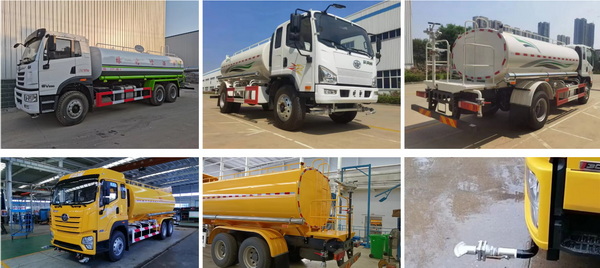
Water trucks serve diverse functions across several industries:
Dust is a major health and safety concern on construction sites and unpaved roads. Water trucks efficiently manage dust levels by spraying surfaces, improving air quality and regulatory compliance.
Maintaining soil moisture for compaction stabilizes surfaces during construction. Water trucks also irrigate farms, gardens, and other landscapes where fixed watering systems are unavailable or impractical.
Water trucks support firefighting efforts by wetting down vegetation firebreaks and transporting water in regions vulnerable to wildfires or industrial fires.
Mud and soils buildup on machinery and work areas can halt operations. Water trucks provide onsite cleaning to enhance safety and equipment longevity.
Worksites experiencing high temperatures use water trucks to reduce dust and cool down materials and vehicles.
Water trucks are categorized mainly by size and use:
- Compact Water Trucks: Best for small projects or urban sites; they offer good mobility.
- Mid-size Water Trucks: Most common; serve general construction and agriculture needs.
- Heavy-duty Water Trucks: For mining, major construction, and municipal projects needing large capacities.
- Specialized Sprinkler Trucks: Designed primarily for wide-area watering.
- Firefighting Water Trucks: Equipped with hoses, pumps, and tanks tailored for fire suppression.
Owning a water truck requires ongoing fuel, upkeep, and repair costs. Frequent inspections and maintenance prolong the truck's service life. Operator training also ensures safe and efficient use.
Water trucks are indispensable for many industries requiring dependable and versatile water delivery. Costs vary significantly based on tank size, brand, and additional features. While rental options suit short-term requirements, purchasing is preferable for sustained, customizable use.
Careful evaluation of water truck capacity, configuration, and maintenance needs helps businesses optimize investments for maximum productivity and safety.

Tank size, truck brand, drivetrain configuration, material quality, accessories, and whether the truck is new or used influence the price most significantly.
Yes, renting is viable for temporary needs and offers access to modern equipment without long-term commitment.
Construction, mining, agriculture, landscaping, firefighting, and municipal services routinely use water trucks for various water delivery tasks.
Water truck capacities vary widely, with common models carrying from 2,000 to over 20,000 gallons depending on industry requirements.
Yes, there are firefighting water trucks with enhanced pump systems and sprinkler trucks designed for irrigation and dust control.


