
Views: 222 Author: Amanda Publish Time: 2025-09-13 Origin: Site


Content Menu
● What Determines the Weight of a Water Truck?
>> Water Tank Capacity and Material
>> Pumping and Spray Equipment
● Dry Weight vs. Loaded Weight Explained
● Typical Weights According to Truck Size and Capacity
>> Large and Heavy-Duty Water Trucks
● Real-World Examples of Water Truck Models and Their Weights
>> Caterpillar 785D Water Truck
>> Mack S38R Water Tanker (Heavy Vocational Truck)
● Legal Weight Regulations Impacting Water Trucks
● Safety and Operational Considerations Related to Water Truck Weight
● Technological Advances Reducing Water Truck Weight
● Frequently Asked Questions (FAQs)
>> 1. How much does a typical water truck weigh when empty?
>> 2. How heavy is the water load in a water truck?
>> 3. Are there legal weight limits for water trucks on roads?
>> 4. Why are some water trucks limited to off-road use?
>> 5. What safety practices are important for managing heavy water trucks?
Water trucks serve as indispensable vehicles across many industries, delivering essential water supplies wherever needed. Their ability to transport and distribute large quantities of water makes them critical in construction, agriculture, mining, firefighting, and municipal applications. For companies like KeyChain Venture Co., Ltd., a leading supplier of commercial vehicles in China, understanding the weight characteristics of water trucks is vital for designing, selecting, and operating these vehicles safely and efficiently. This comprehensive article explores the factors influencing water truck weight, common size categories, technical specifications, and operational considerations to provide a detailed understanding of how much a water truck weighs.
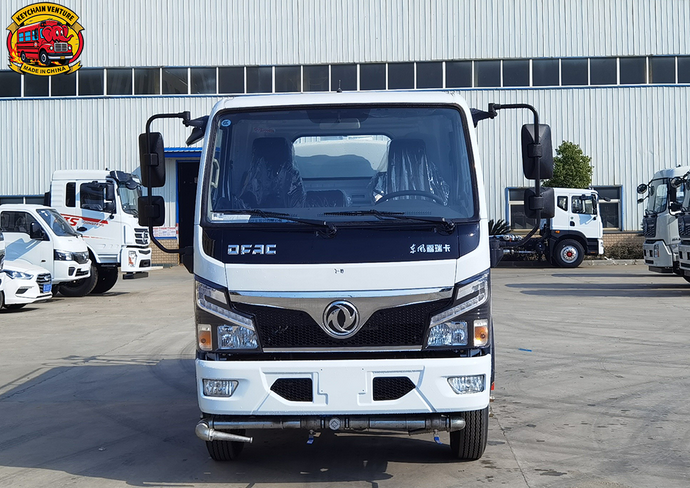
The total weight of a water truck depends on several key components, all of which contribute to the overall mass and affect its roadworthiness and usage.
The chassis forms the structural backbone of a water truck, supporting the cab, engine, transmission, suspension, and axles. Its weight varies depending on whether the truck is light-duty, medium-duty, or heavy-duty and which manufacturer model it belongs to. Heavy-duty chassis used in mining or large-scale industrial work are naturally much heavier than those designed for municipal or small construction site use.
The water tank is the defining feature of the water truck. Tank capacities range from as small as 500 gallons on light-duty trucks to over 10,000 gallons for specialized heavy trucks. The tank material—typically steel or aluminum—affects the empty weight of the vehicle. Steel tanks add more weight, although they offer high durability, while aluminum tanks are lighter but designed for different operational needs. Tanks are often equipped with internal baffles to stabilize water movement, which can also influence weight subtly.
Water trucks also carry heavy-duty pumps, hydraulic systems, spray nozzles, hoses, and controls. These components add to the overall dry weight and enable the truck to perform dust suppression, soil compaction, sewer flushing, or firefighting tasks.
Water itself is quite heavy. It weighs approximately 8.34 pounds per U.S. gallon (around 1 kilogram per liter). Consequently, the water load makes up the majority of the payload weight when the tank is full. The weight difference between an empty water truck (dry weight) and a full one (loaded weight) can easily double.
Understanding the distinction between dry weight and loaded weight is crucial for comprehending a water truck's total weight.
- Dry Weight: This is the weight of the truck without any water in the tank. It includes the chassis, tank, pump systems, and any standard equipment.
- Loaded Weight or Gross Vehicle Weight (GVW): This is the total weight of the truck when fully loaded with water, fuel, operator, tools, and any additional cargo.
The loaded weight is what affects road use permissions, safety, and operation costs. Some water trucks, especially larger models, when loaded, can weigh more than 170,000 pounds (about 77,000 kilograms).
Water trucks come in a wide variety of sizes and specifications. Here's an overview catering to different use-cases:
- Tank Capacity: Approximately 500 to 1,000 gallons (1,890 to 3,785 liters)
- Dry Weight: Typically between 10,000 and 15,000 pounds (4,536 to 6,804 kilograms)
- Loaded Weight: Can reach 18,000 to 23,000 pounds (8,165 to 10,432 kilograms)
These trucks are commonly used for municipal services, landscaping, and light construction tasks.
- Tank Capacity: Around 2,000 to 4,000 gallons (7,570 to 15,140 liters)
- Dry Weight: In the 20,000 to 30,000 pounds range (9,072 to 13,608 kilograms)
- Loaded Weight: Between 40,000 and 65,000 pounds (18,144 to 29,484 kilograms)
Medium-sized trucks are used extensively in construction sites, small mining operations, and agricultural applications.
- Tank Capacity: 5,000 gallons and above (18,927 liters+)
- Dry Weight: Typically over 30,000 pounds, sometimes exceeding 90,000 pounds (13,608 to 40,824+ kilograms)
- Loaded Weight: Can surpass 170,000 pounds (over 77,000 kilograms) for specialized off-road models
Heavy-duty trucks are designed to function in mines, large construction zones, and firefighting operations where massive volumes of water need transportation.

Analyzing specific models helps grasp typical weight ranges:
- Tank Capacity: 2,000 gallons (7,570 liters)
- Dry Weight: Around 22,000 pounds (9,979 kilograms)
- Loaded Weight: Approximately 39,000 pounds (17,690 kilograms)
- Tank Capacity: About 10,000 gallons (37,854 liters)
- Dry Weight: Close to 57,000 pounds (25,855 kilograms)
- Loaded Weight: Approximately 550,000 pounds (249,476 kilograms) gross machine weight including the chassis and water delivery system
- Dry Weight: Estimated 38,000 pounds (17,235 kilograms)
- Tank and other components included, operational gross weight changes depending on water load and specific design.
These examples illustrate that water trucks' weight varies significantly based on design and the intended operational environment.
In many jurisdictions, including the United States, water trucks must comply with Gross Vehicle Weight (GVW) limits when operating on public roads. The typical legal limit is around 80,000 pounds (36,287 kilograms), including truck weight, water payload, fuel, driver, and cargo.
Exceeding these limits can result in fines, increased wear on road infrastructure, and safety hazards. Therefore, many water trucks with high capacity tanks operate primarily in off-road environments such as mines, quarries, construction sites, or large agricultural fields where these weight restrictions do not apply.
The substantial weight loads water trucks carry necessitate rigorous operational safety and maintenance practices:
- Proper Load Distribution: Uneven or improperly secured loads can affect vehicle handling and cause tire damage.
- Braking and Suspension: Loaded weights increase the demand on braking systems and suspension components, emphasizing the need for high-quality parts and regular maintenance.
- Road and Site Suitability: Water trucks must match the load capacities of the roads, bridges, and work sites they serve to avoid structural failures.
- Weight Monitoring: Operators often use onboard weighing systems to maintain compliance and safety.
Manufacturers continue to invest in research to optimize water truck designs:
- Lightweight Materials: The use of aluminum and composite tanks reduces dry weight while maintaining strength.
- Efficient Pumping Systems: Advanced hydraulic and electric pumps decrease the need for heavy auxiliary engines.
- Automation: Real-time water flow control systems improve efficiency, reducing unnecessary water consumption and associated weight.
- Alternative Powertrains: Hybrid and electric models are beginning to emerge, improving fuel efficiency and reducing environmental impact without compromising payload.
These developments help maximize payload capacity without surpassing legal or safety limits.
The weight of a water truck is influenced mainly by its chassis size, water tank capacity, tank materials, and onboard equipment. Dry weights vary broadly from around 10,000 pounds in smaller trucks to over 90,000 pounds for heavy-duty industrial models. When full, the weight grows considerably because water itself is heavy, with approximately 8.34 pounds per gallon, often doubling the truck's total weight. Understanding these weight dynamics is crucial for ensuring safety, regulatory compliance, and optimal vehicle performance across industries.
Operators and fleet managers must carefully align their water truck selection with operational needs and legal frameworks. Advances in materials and technology further aid in balancing payload capacity with weight restrictions, driving continuous improvements in water truck design and function.

Most water trucks' dry weights range from 10,000 to over 90,000 pounds depending on their size and function.
Water weighs approximately 8.34 pounds per gallon; for example, a 5,000-gallon tank carries about 41,700 pounds of water.
Yes, typical GVWs on public roads must not exceed around 80,000 pounds to comply with safety and infrastructure regulations.
High-capacity water trucks often exceed road legal weight limits, restricting their operation to mining, construction, or agricultural sites.
Safety depends on monitoring load distribution, braking capacity, routine maintenance, and using appropriate-sized trucks for the task.
[1](https://www.westrac.com.au/products/equipment/off-highway-trucks/water-trucks/785d-water-truck-118020)
[2](https://www.leitner.it/wp-content/uploads/2022/07/Technical-Specification-WSU3000-4500-RoW-R01.pdf)
[3](https://www.mackdefense.com/wp-content/uploads/2012/08/tanker-spec-sheet.pdf)
[4](https://www.shinmaywa.co.jp/english/products/truck/introduction/pdf/water_tanker.pdf)
[5](https://www.cat.com/en_US/products/new/equipment/off-highway-trucks/water-trucks/110600.html)
[6](https://www.tti.com.au/wp-content/uploads/2020/05/I-12545_WaterTruck-Handbook-231018-Web.pdf)
[7](https://wabash.ca/the-ultimate-guide-to-water-trucks/)
[8](https://www.loadkingmfg.com/water-trucks/4000-gallon-water-truck/)
[9](https://www.basminingtrucks.com/trucks/water-truck/)
[10](https://www.allquipwatertrucks.com.au/ac-series-water-trucks)


