
Views: 222 Author: Amanda Publish Time: 2025-11-24 Origin: Site


Content Menu
● Standard Semi Trailer Dimensions
● How Many Cubic Feet in a 53-Foot Semi Trailer?
● Cubic Feet in Other Trailer Types
>> Refrigerated (Reefer) Semi Trailer
>> Specialized High-Cube and Extra-Wide Trailers
>> Flatbed and Step-Deck Semi Trailers
● Why Cubic Feet Matter in Freight Planning
● Calculating Cubic Feet for Any Semi Trailer
● Semi Trailer Capacity and Pallet Counts
● Regional and International Variations
● How Semi Trailer Capacity Affects Cost and Efficiency
● Semi Trailer Design and Innovation at KeyChain Venture Co., Ltd.
● Advanced Technology and Smart Semi Trailers
● Best Practices for Using Semi Trailer Cubic Capacity
● FAQ
>> How many cubic feet are in a standard 53-foot semi trailer?
>> Why does a refrigerated semi trailer have less cubic capacity than a dry van?
>> How many pallets can fit in a 53-foot semi trailer?
>> Do semi trailer cubic feet vary by country?
>> How does knowing semi trailer cubic feet help reduce costs?
Understanding how many cubic feet are in a Semi Trailer is essential for planning freight, optimizing costs, and ensuring safe, efficient logistics. A typical 53-foot semi trailer offers roughly 3,800–4,000 cubic feet of usable space, but the exact figure depends on dimensions, trailer type, and interior features.[1][3]
For a commercial vehicle specialist likeKeyChain Venture Co., Ltd., precise knowledge of semi trailer capacity is the foundation for designing high-performance transport solutions for domestic and international customers.[4]

A semi trailer is a freight trailer without a front axle that relies on a tractor unit to support the front part of its frame. The tractor bears a portion of the trailer's weight through the fifth-wheel coupling, making the combination more flexible and capable than a rigid truck.[7]
In global logistics, semi trailers are the most common choice for moving palletized goods, packaged products, industrial equipment, and temperature-sensitive cargo over long distances.[8]
The cubic feet of a semi trailer are determined by its interior length, width, and height. Although specific models vary, many markets follow similar standards for on-road vehicles to comply with regulations and infrastructure constraints.[7]
Typical dry van semi trailer dimensions include:
- Length: 48–53 ft
- Width: 8.5 ft (102 in)
- Interior height: about 8.5–9 ft
These interior measurements translate to an approximate volume range from around 3,500 to slightly over 4,000 cubic feet, depending on the exact specification.[3][1]
To estimate the cubic feet in a 53-foot semi trailer, the interior dimensions are multiplied: length × width × height. For a common dry van:
- Length: 53 ft
- Width: about 8.5 ft
- Interior height: around 9 ft
The theoretical maximum volume is therefore close to 4,000 cubic feet, although the usable volume is usually a bit lower due to wall thickness, roof curvature, and door design. Many industry references place the usable capacity of a 53-foot dry van in the 3,800–4,000 cubic foot range.[1][3]
Not all semi trailers are identical. Different designs change internal space and therefore cubic footage, even when length is similar.
Dry van semi trailers are enclosed box-style units used for general freight such as boxes, cartons, and palletized loads. They are the most common semi trailer on the road and often form the basis of capacity discussions.[7]
A standard 53-foot dry van typically delivers around 3,800–4,000 cubic feet of interior cargo space, with exact numbers varying based on internal height and width.[3][1]
Refrigerated semi trailers, or “reefers,” include insulated walls, a refrigeration unit, and additional internal structures to maintain controlled temperatures. The insulation and equipment reduce internal width and height compared with a dry van.[7]
As a result, a 53-foot reefer semi trailer frequently offers slightly less than a comparable dry van, often in the neighborhood of 3,600–3,800 cubic feet of usable space.[1]
Some manufacturers produce high-cube or extra-wide semi trailers to maximize volume while staying within legal size limits. These designs can add dozens of cubic feet by increasing inside height or width marginally.[9]
An extra-wide high-cube dry van can exceed 4,000 cubic feet of capacity, allowing shippers to load more cargo per trip and reduce the cost per unit transported.[9]
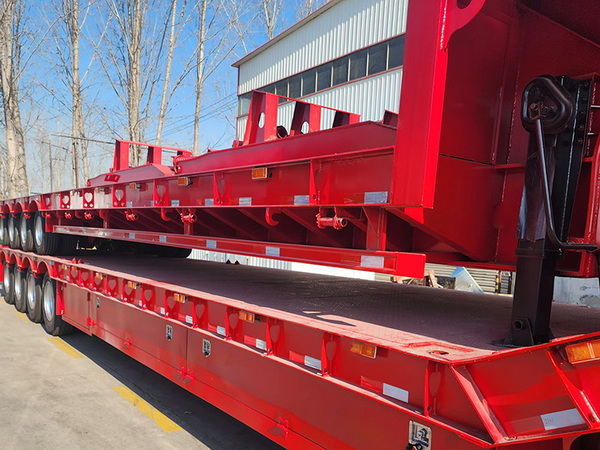
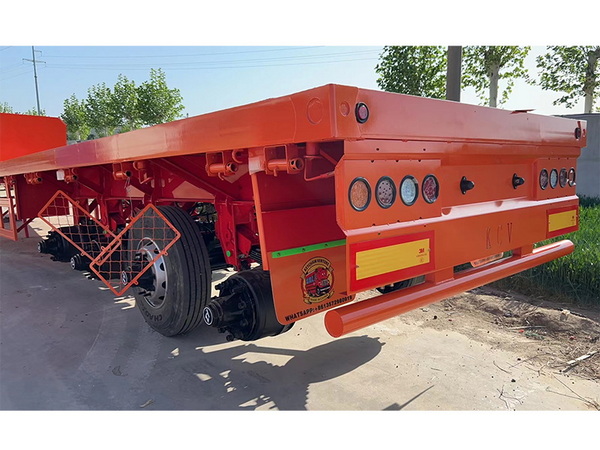
Flatbed, step-deck, and double-drop semi trailers are open or partially open designs focused on length and load footprint rather than internal cubic feet. Capacity is generally expressed in deck dimensions and weight limits instead of volume.[7]
These semi trailers excel at transporting oversized machinery, construction components, and steel products that do not need enclosed protection, making cubic footage less relevant than surface area and legal height clearance.[7]
Cubic feet is a measure of volume and determines how much physical space cargo occupies inside a semi trailer. This is distinct from gross weight, which determines how heavy the load can be before surpassing legal or mechanical limits.[3]
Understanding semi trailer cubic footage allows shippers and carriers to:
- Predict how many shipments are needed
- Evaluate whether cargo will cube out (fill space) or weigh out (hit weight limit) first
- Optimize load plans to minimize wasted space and empty miles
This balance between space and weight is especially important for goods that are relatively light but bulky, such as packaging, furniture, or consumer durables.[4]
The fundamental formula to find the cubic feet of a semi trailer is straightforward:
Cubic feet} = interior length (ft) × interior width (ft) × interior height (ft)}
For example, if a semi trailer has an interior length of 48 ft, a width of 8.5 ft, and a height of 8.8 ft, the approximate volume is close to 3,600 cubic feet when multiplied. Rounding is commonly applied in industry practice, but the same formula holds for all box-type trailers.[5]
Shippers often also consider effective or “usable” cubic feet after accounting for wheel wells, structural bows, and space needed for safe loading and unloading.[3]
In daily freight operations, semi trailer capacity is often discussed in terms of pallets rather than raw cubic feet. Nevertheless, pallet counts derive from how many pallet footprints can fit on the floor and how cargo can be stacked vertically.[7]
For a 53-foot dry van semi trailer:
- The floor can generally fit 26 standard pallets when single-stacked in a common 48 in × 40 in configuration, depending on load plan and internal width.
- In some cases, safe double-stacking can effectively allow the equivalent of 52 pallet positions, if cargo type and packaging permit vertical stacking.[4][7]
The semi trailer's cubic footage must support both the footprint and the stacked height of the pallets, while remaining within legal height restrictions and preventing load instability.[7]
Semi trailer sizes differ between regions, influencing the cubic feet available for freight. These differences reflect road regulations, bridge clearances, and national logistics standards.[8][7]
- In North America, 53-foot semi trailers are the standard for long-haul dry van and reefer operations.
- In Europe, common box trailers measure around 13.6 meters (about 44.6 ft), with volumes somewhat lower than North American 53-foot units.
- In markets such as China and Australia, a range of lengths and multi-trailer combinations can be used, creating capacity options that exceed the space of a single traditional semi trailer.[8][7]
For global shippers, understanding these variations ensures that cargo transfers smoothly between regional fleets, avoiding underutilization or unexpected overflows at transfer points.
The cubic feet available in a semi trailer directly influence unit freight cost because each trailer has fixed operating expenses, such as fuel, driver wages, tolls, and maintenance. The more cargo a semi trailer can safely transport per trip, the lower the cost per cubic foot or per item.[4]
Improving load factor, or the percentage of cubic feet in a semi trailer actually used, offers several benefits:
- Lower cost per shipment by reducing the number of trips
- Reduced emissions per unit of cargo
- Better use of driver hours and equipment availability
These gains make semi trailer capacity planning a strategic priority for large logistics networks and fleet operators.
As a leading Chinese commercial vehicle supplier, KeyChain Venture Co., Ltd. focuses on semi trailer designs that offer high cubic efficiency while meeting strict safety and durability requirements. This includes optimizing interior geometry, selecting materials, and tailoring specifications to customer needs.
By fine-tuning internal height, width, and structural layout, semi trailers from KeyChain Venture Co., Ltd. help customers maximize usable cubic feet without exceeding national and international regulatory limits on vehicle dimensions and gross weights.
Additionally, the company's engineering teams integrate customer feedback from domestic and overseas markets to refine semi trailer floor strength, wall structure, and door design so that capacity can be used fully even in demanding loading environments.
Modern semi trailers are no longer just static containers; increasingly, they incorporate technology to monitor and improve how their cubic space is used. Telematics, load sensors, and data analytics tools help carriers understand utilization patterns in detail.
Typical innovations relevant to semi trailer cubic capacity include:
- On-board sensors that track weight distribution and detect uneven or unsafe loading
- Connectivity platforms that show how often a trailer is underfilled or partially used
- Smart planning software that suggests more efficient packing schemes or load combinations
These technologies enable transport planners to match semi trailer capacity to shipment profiles more accurately, boosting profitability and reliability across the network.
To make full use of semi trailer cubic feet, logistics professionals can adopt several practical strategies:
- Design packaging that fits semi trailer widths and door openings efficiently to minimize void space.
- Implement standardized pallet patterns that maximize floor coverage and support safe stacking heights.
- Group shipments with compatible dimensions together in the same semi trailer to reduce wasted space.
- Plan multi-stop routes with attention to loading order, so that access to cargo does not force underutilization of space.
Combining these practices with well-designed semi trailers from specialized manufacturers ensures fleets achieve both high capacity utilization and safe, damage-free transport.
The question “How many cubic feet are in a semi trailer?” has a practical answer as well as strategic implications. A 53-foot dry van semi trailer commonly provides around 3,800–4,000 cubic feet of usable interior space, while refrigerated, high-cube, and regional variants shift that figure up or down depending on their dimensions and purpose.[9][1][3]
For shippers and carriers, understanding semi trailer cubic feet supports accurate planning, cost control, and higher load factors across domestic and international routes. By focusing on trailer design, technological integration, and smart loading practices, companies can transform semi trailer capacity into a true competitive advantage. KeyChain Venture Co., Ltd. contributes to this efficiency by offering advanced semi trailer solutions that align cargo space, structural strength, and regulatory compliance for global customers.
A standard 53-foot dry van semi trailer typically offers roughly 3,800–4,000 cubic feet of usable interior capacity, depending on internal height, width, and construction details.[1][3]
A refrigerated semi trailer has insulated walls, a refrigeration unit, and specialized interior structures that occupy space, slightly reducing interior width and height compared with an equivalent dry van, so its cubic capacity is lower.[1][7]
Many 53-foot dry vans can hold around 26 standard 48 in × 40 in pallets in a typical floor layout, and when safe double-stacking is possible, a semi trailer may effectively accommodate the equivalent of 52 pallet positions.[4][7]
Yes. While North America commonly uses 53-foot semi trailers, many European trailers are closer to 13.6 m in length and some markets use different configurations or combinations, which changes the cubic feet available in each semi trailer.[8][7]
Accurate knowledge of semi trailer cubic feet enables better load planning, higher utilization of available space, and fewer partially filled trips, which lowers cost per shipment and reduces fuel consumption and emissions per unit of freight.[3][4]
[1](https://www.silvermoontrailer.com/how-many-cubic-feet-in-a-53-trailer/)
[2](https://semitrailer.by/the-ultimate-guide-to-understanding-the-cubic-feet-in-a-semi-trailer/)
[3](https://haletrailer.com/blog/dry-van-dimensions-capacities/)
[4](https://www.sunhunk.com/about/groupnews-detail-547.htm)
[5](https://semitrailer.by/understanding-the-capacity-of-a-53-foot-trailer-how-many-cubic-feet/)
[6](https://www.trailersoftexas.com/media/pdfs/capacity-guide-info-chart.pdf)
[7](https://streamlogistics.com/trailer-dimensions/)
[8](https://schneiderjobs.com/blog/semi-truck-trailer-dimensions)
[9](https://www.stoughtontrailers.com/products-and-services/extra-wide)
[10](https://nationwidetrans.com/trailer-specifications/)


