
Views: 222 Author: Amanda Publish Time: 2025-11-24 Origin: Site


Content Menu
● What Is a Livestock Semi Trailer?
● Typical Dimensions and Capacity Basics
● How Much Space Does One Cow Need?
● Practical Capacity of a 53‑Foot Semi Trailer
● Single‑Deck vs. Double‑Deck Semi Trailers
● Weight Limits and Legal Framework
● Animal Welfare and Comfort in Transit
● Journey Duration and Rest Intervals
● Design Features of High‑Quality Livestock Semi Trailers
● Smart Technology and Monitoring
● Preparing Cattle and Trailer Before Loading
● Loading Techniques and Handling Practices
● Regional Practices in Major Markets
● Role of Professional Semi Trailer Suppliers
● How Many Cows Should You Really Load?
● FAQ
>> How many mature cows can a typical Semi Trailer carry?
>> Do weight laws limit how many cows go into a Semi Trailer?
>> Why do some Semi Trailers have double decks for cattle?
>> How is the recommended space per cow determined?
>> What features should a good livestock Semi Trailer include?
Transporting cattle with a Semi Trailer is a critical link between farms, feedlots, and markets. For a professional commercial vehicle supplier such as KeyChain Venture Co., Ltd., the key question is not only"How many cows can a Semi Trailer hold?" but also "How can this be done safely, legally, and efficiently?"[3][9]
A realistic loading plan must consider trailer dimensions, cow weight and size, journey time, animal welfare, and regional regulations. When all of these are balanced correctly, a modern livestock Semi Trailer becomes a highly efficient and humane transport solution for both domestic and international customers.[9][3]

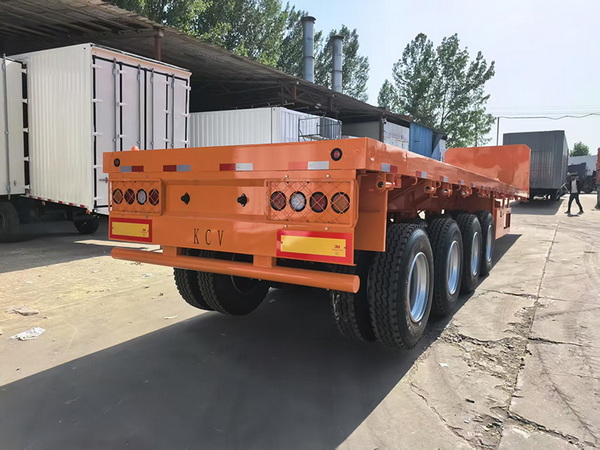
A livestock Semi Trailer is a specialized freight trailer designed for transporting cattle and other animals while being coupled to a road tractor. It usually features strong side panels, internal gates, non-slip flooring, and enhanced ventilation to protect animals on the move.[1][8]
Unlike general-purpose box Semi Trailers, livestock Semi Trailers use open or ventilated side structures, internal partitions, and sometimes double decks to optimize both capacity and animal comfort. These design features allow operators to adjust space per animal while still respecting legal limits on trailer weight and dimensions.[4][3]
Standard cattle Semi Trailers in many markets are generally 48–53 feet in length and about 8.5 feet in width, with internal heights that range roughly from 7 to over 9 feet depending on configuration. The floor area of a 53‑foot Semi Trailer often falls around 40–45 square meters, which becomes the starting point for any loading density calculation.[3][4]
At the same time, highway rules often limit gross vehicle weight to around 80,000 pounds in countries like the United States, with specific per-axle restrictions, meaning that both space and total weight act together as the real ceiling on how many cows can be loaded.[5][9]
Animal welfare guidelines for mature cattle commonly recommend a minimum of about 1.3 square feet of floor space per 100 pounds of animal live weight, with slightly higher space for horned cattle. This translates into roughly 13 square feet for a 1,000‑pound cow, increasing further as body weight grows.[6][9]
Industry loading tables show that a 1,000‑pound animal may occupy around 0.6 head per running foot of a single‑deck cattle truck floor with a typical width close to 92 inches, indicating that a 44‑foot deck might carry about 26–27 animals under recommended conditions. These figures provide practical benchmarks for estimating capacity on longer Semi Trailer platforms.[6]
Using these norms, a 53‑foot livestock Semi Trailer hauling mature cattle often carries in the range of 24–30 adult cows, depending on weight, breed, horns, and whether the animals are fed cattle or lighter dairy stock. If calves or smaller yearlings are transported, and if deck space allows, the figure can be considerably higher, though operators should always maintain generous space to prevent injuries or stress.[9][6]
For example, if a 53‑foot Semi Trailer has approximately 43 square meters of usable floor area and each 1,000‑pound cow is allocated around 1.4–1.5 square meters, the theoretical capacity approaches the mid‑20s before weight and comfort limits suggest stopping. This explains why many professional carriers prefer to load slightly under maximum densities to maintain a margin of safety.[3][9]
Some livestock Semi Trailers feature double decks, effectively multiplying floor area within the same vehicle footprint. With double-deck configurations, operators can separate cattle by size, weight, or category while also improving load balance. However, the internal height of each deck must be high enough for animals to stand naturally and dissipate heat, which means that only smaller cattle or calves are usually suitable for upper levels.[8][4]
Double‑deck Semi Trailers are especially common in markets with intensive cattle production, but they follow strict engineering rules for deck strength, access ramps, and ventilation, all of which affect how many animals can be loaded safely per compartment.[4][8]
Every Semi Trailer must obey maximum gross weight regulations on the roads it uses. In North America, a common limit is 80,000 pounds total vehicle weight, including tractor, Semi Trailer, animals, and any equipment, with additional limits per axle group. Operators must calculate both animal numbers and total live weight to ensure compliance with these bridge and axle formulas.[5]
Animal‑specific guidelines also recommend not exceeding safe loading density in square feet per animal for given weight ranges, and emphasize that total weight must remain under legal load requirements regardless of number of animals. In practice, this can mean leaving a visible amount of free floor space in each bay of the Semi Trailer, especially when hauling larger beef cattle.[9]
Modern livestock handling standards stress that animals must have enough room to stand, adjust posture, brace during braking, and access airflow. Overcrowding can cause animals to fall, get trampled, or overheat, sharply increasing the risk of injury and mortality.[6][9]
Recommended practices include using non‑slip, durable flooring, secure partitions to prevent sudden crowd movements, and enough head room to allow natural stance and ventilation around each cow's body. Many high‑quality Semi Trailer models add features such as adjustable internal gates, smooth interior surfaces, and strategically placed vents or openings to regulate temperature and airflow during both winter and summer operations.[1][8]
The longer cattle remain inside a Semi Trailer, the more important space, airflow, and rest periods become. Guidelines and regulations often specify maximum continuous travel times for mature cattle and sometimes require periods off the vehicle for rest, feeding, and watering after certain hours of transit.[10]
Transporters of agricultural commodities such as livestock may receive some flexibility in driver hours‑of‑service rules in certain jurisdictions, but this does not remove the responsibility to manage animal fatigue, dehydration, and heat stress appropriately within the Semi Trailer environment.[10]
Premium livestock Semi Trailers incorporate a variety of design elements tailored to the needs of cattle transport:
- Reinforced aluminum or steel frames and sidewalls to withstand animal impact and continuous use.[1][4]
- Slip‑resistant aluminum treadplate floors that combine durability, hygiene, and traction.[4][1]
- Multiple interior swing gates with slam latches that form flexible compartments and enable safe loading of different groups of cows.[8][4]
- Air‑ride suspension or similar systems to reduce vibration and shocks transmitted to animals.[7][4]
Some Semi Trailer models also allow optional equipment such as winter enclosure kits, sprinkler or misting systems, and advanced lighting to support operations under varying climate conditions and at all times of day.[1][4]
The future of livestock Semi Trailer operations increasingly relies on integrating monitoring technologies. Trailers can be equipped with sensors that track temperature, humidity, and sometimes even animal movement patterns in real time. These sensors help dispatchers and drivers respond quickly if ventilation drops or temperatures rise too high inside the Semi Trailer.[8]
Combined with GPS‑based fleet management, operators can optimize routes and scheduling so that animals spend less time in transit, further supporting both welfare and productivity. As these technologies mature, they will likely become standard equipment in the next generation of livestock Semi Trailers offered by leading commercial vehicle suppliers.[8]
Before loading cows into a Semi Trailer, both animals and equipment should be carefully checked. Recommended steps include verifying that animals are fit for transport, not severely lame, ill, or heavily pregnant beyond allowed stages, and that they have been managed according to pre‑transport feeding and watering guidelines.[6][9]
The Semi Trailer interior should be cleaned, disinfected, and bedded appropriately for climate, often using straw or similar material in cold conditions to provide insulation and traction. Proper preparation reduces disease transmission and improves animal comfort from the moment cattle step onto the Semi Trailer ramp.[6]
Handling cattle quietly and patiently significantly reduces stress and improves safety for both animals and handlers. Low‑stress loading techniques typically involve guiding animals in small groups from holding pens into the Semi Trailer using well‑designed chutes and gates.[6]
Drivers and stock handlers are encouraged to avoid shouting, electric prods, and sudden movements, instead using position and natural cattle behavior to encourage forward motion. Inside the Semi Trailer, animals should be distributed evenly across compartments so that no single section is overloaded, and partitions should be secured firmly before the vehicle enters traffic.[6]
In North America, mature cattle loading densities for Semi Trailers commonly follow the previously mentioned space guidelines, with many trucks transporting around two dozen or slightly more adult cattle per standard trailer in order to stay within both welfare recommendations and road weight laws.[9][6]
In Europe, livestock transport rules are particularly detailed and may restrict travel durations and specify compartment sizes and allowable space per animal type more strictly, often resulting in lower head counts per comparable Semi Trailer than might be seen in other regions. Across Asia, and especially in countries with rapid modernization of the commercial vehicle sector, there is a growing trend toward adopting similar welfare‑oriented standards while also investing in advanced livestock Semi Trailer designs.[7][10][8]
A leading commercial vehicle supplier like KeyChain Venture Co., Ltd. plays an important role in helping customers match Semi Trailer specifications to their actual livestock operations. This includes advising on deck length and width, interior gate layout, suspension, and coupling systems that fit both local road rules and international regulations where cross‑border transport is involved.[7][4]
By selecting Semi Trailers built to recognized standards, operators can improve cattle survival and condition on arrival, reduce loading and unloading times, and enhance long‑term return on investment through greater durability, better resale values, and lower maintenance costs.[4][1]
While theoretical calculations sometimes show higher numbers, many experienced transporters deliberately load fewer cows into each Semi Trailer than the absolute maximum allowed by space and weight formulas. This margin allows animals to keep better balance, improves air circulation, and minimizes bruising or carcass damage.[9][6]
In practice, for a typical 53‑foot livestock Semi Trailer, targeting the mid‑20s for adult full‑sized cattle is common, with adjustments upward or downward depending on breed, horns, season, and journey duration. For calves or smaller stock, head counts can be higher but should still remain comfortably within recommended density tables to protect welfare and maintain compliance.[3][9]
The exact number of cows a Semi Trailer can hold is not a single fixed figure but a careful balance of trailer size, engineering, legal weight limits, animal weight and size, journey time, and welfare guidelines. For a standard 48–53‑foot livestock Semi Trailer, a typical safe range for adult cattle is often around 24–30 animals, with lower or higher numbers used in special circumstances such as small calves or exceptionally large breeds.[3][6]
High‑quality Semi Trailers designed for livestock provide specialized features—robust construction, non‑slip floors, adjustable internal gates, and engineered ventilation—that enable safe, efficient, and humane transport across domestic and international routes. When supported by well‑trained staff, careful planning, and modern monitoring technology, these Semi Trailers become a vital part of a responsible, profitable cattle logistics system that aligns with both regulatory requirements and rising global expectations for animal welfare.[1][4][8][9]
A typical livestock Semi Trailer with a length around 48–53 feet usually carries in the range of 24–30 mature cows, depending on animal weight, horns, and legal weight limits on the chosen route. Operators often stay slightly below theoretical maximum densities to maintain better welfare and safety for the cattle.[3][9][6]
Yes, road transport rules commonly cap total vehicle weight at about 80,000 pounds, including tractor, Semi Trailer, animals, and equipment, along with specific axle group limits. Even if floor space remains, operators must reduce cow numbers if total live weight would push the combination over these thresholds.[5][9]
Double‑deck cattle Semi Trailers increase total floor area within the same overall length, allowing more animals or more flexible grouping while keeping within road size restrictions. They are typically used for smaller cattle or calves so that each deck still provides adequate standing height and ventilation.[4][8]
Recommended floor space per cow is usually expressed as square footage per 100 pounds of live weight, with one widely cited figure for mature cattle being about 1.3 square feet per 100 pounds, increased for horned animals. These recommendations are derived from animal science research, field experience, and welfare standards to minimize stress, falls, and injury during transport.[9][6]
A good livestock Semi Trailer should have strong yet lightweight construction, non‑slip and easy‑to‑clean flooring, secure internal gates, adequate ventilation openings, and suspension that reduces shocks and vibrations for animals. Optional equipment such as winter enclosure kits, lighting, and misting or sprinkler systems can further improve comfort and performance in harsh climates or long‑distance operations.[8][1][4]
[1](https://www.mheby.com/product/bull-ride-livestock-semi-trailer)
[2](https://www.fourwindstrailers.com/blog/cattle-trailer/)
[3](https://semitrailer.by/understanding-the-hauling-capacity-of-cattle-semi-trailers/)
[4](https://www.fthr.com/product/livestock-trailers/semi/model-8261/)
[5](https://www.transwest.com/trailers/blog/semi-trailer-dimensions-length-and-what-can-you-haul/)
[6](http://ablamb.ca/producer_mgmt/Setting-It-Up-Sheep-Infrastructure/6-Handling-Systems/C-Transportation-and-Other/6-21-Livestock-Trucking-Guide.pdf)
[7](https://www.okt-trailer.com/livestock-semi-trailer-3)
[8](https://www.wilsontrailer.com/wp-content/uploads/2020/08/WilsonLvskBro-19.pdf)
[9](https://www.bqa.org/Media/BQA/Docs/bqa-mature-cattle-hauling-loading-density-guidelines-updated_51523.pdf)
[10](https://www.fmcsa.dot.gov/hours-service/elds/regulatory-guidance-transportation-agricultural-commodities-including-livestock)


