
Views: 222 Author: Amanda Publish Time: 2025-11-24 Origin: Site


Content Menu
● Standard Semi Trailer Dimensions
● How Much Space Does One Chicken Need?
● Floor Area and Layered Loading
● Reconciling Volume, Weight, and Welfare
● Types of Semi Trailers for Poultry Transport
● Ventilation and Temperature Management
● Loading and Unloading Systems
● Semi Trailer Structure and Materials
● Balancing Payload and Fuel Efficiency
● Role of Semi Trailers in Modern Supply Chains
● Why the Exact Number of Chickens Varies
● How KeyChain Venture Co., Ltd. Adds Value
● FAQ
>> 1. Is it legal to fully pack a Semi Trailer with chickens as long as they fit?
>> 2. Do all countries use the same Semi Trailer size for poultry transport?
>> 3. Can a refrigerated Semi Trailer be used for live chickens?
>> 4. How does weather affect how many chickens a Semi Trailer can carry?
>> 5. Why would a logistics company choose a Semi Trailer instead of a smaller truck for poultry?
The question "How many chickens fit in a Semi Trailer?" sounds playful, but the real answer requires some serious thinking about trailer dimensions, bird density, welfare, and logistics. For a commercial operator like KeyChain Venture Co., Ltd., this type of calculation connects directly to real-world Semi Trailer design, capacity planning, and transport efficiency. As a result, the final number is not fixed but usually falls in a practical range of several thousand chickens per Semi Trailer under humane conditions.

A modern Semi Trailer is an extremely versatile logistics platform, and its design determines how efficiently cargo such as poultry can be moved. By examining internal dimensions, weight limits, airflow, and cage systems, it becomes clear why a Semi Trailer is so widely used in international transport and why it can be adapted from palletized freight to specialized livestock operations.
A Semi Trailer is a freight-carrying unit whose front end is supported by a tractor while its rear rests on its own axles. This joint configuration allows the Semi Trailer to pivot, improving maneuverability and enabling different bodies or trailers to be used with the same tractor unit. In global logistics, the Semi Trailer is the standard solution for long-distance highway transport thanks to its balance of payload, volume, and cost per kilometer.
Typical road-going Semi Trailers in many markets, including China, North America, and Europe, are around 48–53 feet long, 8–8.5 feet wide, and roughly 13.5 feet high externally, with slightly smaller usable interior dimensions due to walls, insulation, and structure. These standardized measurements make it easier for logistics planners to estimate loading capacity, whether carrying pallets, machinery, or hypothetical loads of chickens. The Semi Trailer's internal volume and legal weight limit together define the maximum commercial payload.
To estimate how many chickens might fit inside a Semi Trailer, the starting point is understanding typical internal size. A common dry van or box Semi Trailer of 53 feet usually provides an internal length of about 16 meters, an internal width near 2.5–2.6 meters, and an internal height of roughly 2.7–3 meters. This yields an internal volume in the rough range of 90–110 cubic meters for cargo.
Because different types of Semi Trailer exist—dry vans, reefers (refrigerated trailers), and specialized livestock units—the exact usable volume can vary slightly. Insulated walls, air ducts, and reinforced floors can reduce usable width and height. Even so, for capacity planning, transport managers often treat a standard enclosed Semi Trailer as able to carry around 24–26 pallets or up to about 24–25 tons of freight, depending on regional regulations.
A realistic estimate of how many chickens fit into a Semi Trailer also depends on how much space each bird should occupy. An adult broiler chicken usually weighs between 2 and 3 kilograms and needs enough space to stand, move slightly, and breathe comfortably. In commercial transport, the industry often calculates loading in terms of kilograms of live weight per square meter of floor area and per cage tier.
Regulatory guidelines and welfare standards generally limit the maximum density of live birds per square meter to avoid stress and overheating. Typical operational ranges are around 35–45 kilograms of live birds per square meter of floor area in a Semi Trailer under normal climate conditions. If the average chicken weighs about 2.5 kilograms, this implies roughly 14–18 chickens per square meter of floor space per layer of cages.
A 53‑foot Semi Trailer provides a floor area in the range of roughly 35–40 square meters once wall thickness and unusable spaces are subtracted. If each square meter can safely hold around 40 kilograms of live birds, a full layer might carry about 1,400–1,600 kilograms of chickens. Dividing that by the typical 2.5‑kilogram live bird weight yields around 560–640 chickens per layer.
Poultry Semi Trailer operators rarely rely on a single layer. Instead, they use modular cages or racks arranged in several tiers from the floor toward the roof of the Semi Trailer. Depending on internal height and cage design, four to five vertical layers are common. If one layer holds around 600 chickens, a five‑layer configuration could hypothetically carry close to 3,000 chickens, assuming weight limits and ventilation requirements are satisfied.
Technical calculations can suggest very high maximum numbers, especially if birds are imagined as geometric blocks tightly filling the Semi Trailer's internal volume. However, in real operations, three constraints limit the actual load:
- Volume: The total cage system and birds must fit within the internal length, width, and height of the Semi Trailer, including space left for air circulation channels.
- Weight: Legal gross vehicle weight, including tractor, Semi Trailer, cages, auxiliary equipment, and birds, cannot exceed regional limits, often around 36–40 tons total.
- Welfare: Welfare standards limit live bird density to reduce stress, lameness, and mortality during transport, especially in hot climates or long-haul routes.
When these factors are combined, typical practical loads for a standard enclosed poultry Semi Trailer often fall in the range of roughly 3,000–3,500 chickens. This range achieves a compromise between economic efficiency and responsible animal handling.
Not all Semi Trailers are suitable for carrying live chickens. Some are optimized for dry freight, while others are engineered specifically for animals:
- Dry Van Semi Trailer: Enclosed, box-type units used mainly for pallets, cartons, and non-livestock cargo. Without specialized ventilation or cages, this style is not ideal for poultry.
- Reefer Semi Trailer: Refrigerated units designed to keep a stable temperature for perishable goods. While they control temperature, they are usually not configured for live animals unless heavily modified.
- Livestock Semi Trailer: Purpose-built Semi Trailer equipped with ventilated sides, airflow systems, drainage, and interior compartments or racks. For chickens, these trailers integrate multi-tiered cage systems.
KeyChain Venture Co., Ltd. can customize Semi Trailer specifications to meet client needs, including reinforced floors, modular animal cage structures, and advanced air management for live cargo.
Transporting thousands of chickens in a Semi Trailer concentrates heat and moisture in a confined space. As birds produce body heat and water vapor, internal trailer temperature can rise rapidly, especially in hot or humid climates. Effective airflow and temperature control are therefore critical design elements for any poultry Semi Trailer.
Modern Semi Trailer designs for livestock often feature:
- Side or roof air vents to generate cross-flow ventilation.
- Optional powered fans to maintain consistent airflow when the vehicle is stationary or moving slowly.
- Temperature and humidity sensors connected to monitoring systems in the tractor cab.
- Strategic cage alignment that prevents dead-air corners inside the Semi Trailer.
By combining structural vent openings with technological monitoring, operators can safely maintain higher bird counts per Semi Trailer while keeping within welfare guidelines.
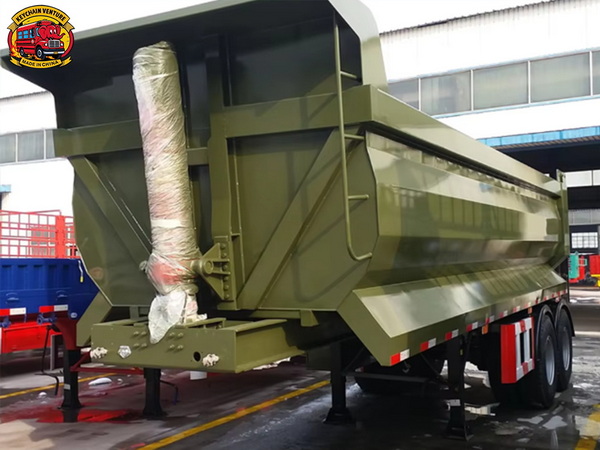
The way chickens are loaded into a Semi Trailer directly affects both capacity and animal safety. In large operations, birds are placed into crates or modular cages that stack efficiently into the Semi Trailer interior. These modules are typically lightweight but strong enough to withstand stacking in multiple tiers.
Loading systems may include:
- Hydraulic or mechanical lifts that raise cage stacks to upper levels in the Semi Trailer.
- Side or rear doors designed specifically for cage handling and forklift entry.
- Interior tracks, rails, or locking systems that prevent cage movement during transport.
Efficient loading and unloading reduce handling time, which lowers stress for the birds and increases the utilization rate of the Semi Trailer, making each trip more economical.
The structural integrity of a poultry Semi Trailer is fundamental for both safety and longevity. Livestock Semi Trailers often need stronger floors than standard dry vans because of the concentrated point loads from cage feet and the dynamic movement of live birds.
Common construction features include:
- High-strength steel or aluminum main beams to support static and dynamic loads.
- Anti-corrosion treatments on floors and interior walls due to frequent washing and exposure to organic materials.
- Non-slip surface coatings to protect personnel during cleaning and handling.
- Lightweight but durable sidewalls that balance payload capacity with structural rigidity.
KeyChain Venture Co., Ltd. designs Semi Trailer chassis to meet or exceed local and international standards, optimizing material choice and frame geometry to improve payload efficiency and reduce fuel consumption.
Owners and fleet operators care not only about how many chickens fit in a Semi Trailer but also about how much it costs to transport them per kilometer. Heavier or poorly streamlined Semi Trailers consume more fuel, increasing total transport cost and emissions.
Design strategies to improve efficiency include:
- Aerodynamic profiles: Rounded front corners, side skirts, and roof fairings that reduce drag.
- Weight optimization: Use of high-strength steel or aluminum to maintain strength while cutting tare weight, allowing more payload within the same legal gross limit.
- Rolling resistance reduction: High-quality tires, correct inflation, and axle alignment to lower rolling resistance and improve fuel economy.
These strategies combine to make each loaded Semi Trailer trip more productive, whether transporting poultry, pallets, or other commercial cargo.
Beyond chickens, Semi Trailers move an enormous variety of goods in integrated supply chains, from raw materials to finished products. In this context, livestock transport is a specialized but important segment. The same principles of volume optimization, weight control, and safety that apply to poultry transport also apply to other high-volume cargo types.
For operators working with international partners, having a standard Semi Trailer platform simplifies cross-border coordination. Consistent lengths, widths, and coupling standards make it possible to plan routes, dock operations, and multimodal transfers more easily. KeyChain Venture Co., Ltd. supports these needs by providing Semi Trailer solutions adapted to regional regulations and specific industries.
While it is tempting to quote a single figure, real-world operations demonstrate why the capacity of chickens in a Semi Trailer is a range, not a fixed constant:
- Different breeds and ages of chickens have different body sizes and weights.
- Climate and season change permissible density—cool conditions may allow higher loads than hot, humid weather.
- Road regulations and enforcement levels vary by country, affecting how much weight operators are comfortable carrying.
- Trailer configurations differ: more tiers, wider cages, or better ventilation can increase capacity within the same external dimensions.
Therefore, a practical working estimate is that a standard, well-designed poultry Semi Trailer may carry roughly 3,000 or slightly more chickens in everyday use. The exact number is best determined by a detailed calculation based on local regulations, bird weight, and the particular Semi Trailer model.
As a leading Chinese supplier of commercial vehicles, KeyChain Venture Co., Ltd. focuses on delivering Semi Trailers tailored to customer operations. For clients involved in poultry or livestock transport, this includes:
- Engineering trailer dimensions and cage systems to align with local welfare rules and weight limits.
- Optimizing airflow and sensor layouts for precise environmental control inside the Semi Trailer.
- Using advanced manufacturing processes to improve durability and corrosion resistance in harsh, wash-down environments.
- Offering after-sales support, maintenance guidance, and potential telematics integration so operators know in real time how their Semi Trailer is performing.
By integrating technology, structural engineering, and practical experience, the company helps customers maximize payload while protecting both animals and equipment investment.
In practical, humane conditions, a standard livestock-configured Semi Trailer can usually carry around 3,000 or a little more chickens, depending on bird size, cage design, climate, and legal weight limits. This capacity arises from a careful balance of floor area, stacked cage layers, ventilation, and structural safety. Rather than being just a quirky question, “How many chickens fit in a Semi Trailer?” highlights the importance of good engineering, thoughtful logistics planning, and ethical animal treatment.
For operators seeking efficient commercial transport solutions, the Semi Trailer remains one of the most flexible and powerful tools available. With well-designed units from manufacturers such as KeyChain Venture Co., Ltd., fleets can gain superior payload efficiency, safer livestock handling, and better long-term operating economics across domestic and international routes.
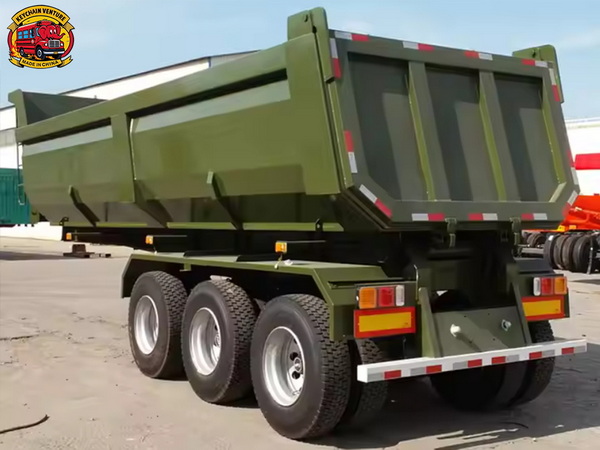
No. Even if more chickens could physically fit inside a Semi Trailer, operators must follow local animal welfare regulations and road weight limits. Legal frameworks typically restrict live bird density and total gross vehicle weight, so actual loads must stay within these boundaries to avoid fines, animal stress, and potential losses.
Not exactly. While many markets use similar lengths and widths for Semi Trailers, there are regional differences in maximum allowable height, length, and weight. Poultry transport companies must adapt their Semi Trailer choice to local standards, which can influence how many cages and birds each trailer can carry.
A refrigerated Semi Trailer controls temperature but is not automatically suitable for live animals. To carry chickens, it would need adequate ventilation, cage systems, and appropriate drainage. In many cases, specialized livestock Semi Trailers are preferred because they are designed from the start to accommodate airflow and cleaning needs.
Hot, humid, or extreme cold weather reduces the safe load density in a Semi Trailer. In hot climates, too many birds in a confined space can quickly lead to overheating and high mortality, so operators reduce numbers and rely on stronger ventilation. In cold regions, protection from wind and proper insulation become more important than sheer capacity.
A Semi Trailer generally offers a lower cost per bird over long distances because it carries more chickens per trip and makes better use of fuel and driver time. Larger payloads spread fixed costs over more units of cargo, improving efficiency. For large farms, integrators, and processors, using Semi Trailer fleets for poultry transport can significantly reduce overall logistics expenses.
[1](https://schneiderjobs.com/blog/semi-truck-trailer-dimensions)
[2](https://streamlogistics.com/trailer-dimensions/)
[3](https://www.goodloading.com/en/blog/truck-transport/dimensions-and-types-of-semi-trailers/)
[4](https://haletrailer.com/blog/dry-van-dimensions-capacities/)
[5](https://www.sunhunk.com/about/groupnews-detail-547.htm)
[6](https://equipmentexpertsinc.com/semi-truck-length-a-guide-to-truck-and-trailer-dimensions/)
[7](https://www.gw-world.com/us/tools/freight-forwarding-and-logistics/truck-trailer-types)
[8](https://www.transwest.com/trailers/blog/semi-trailer-dimensions-length-and-what-can-you-haul/)
[9](http://www2.iccb.org/iccb/wp-content/pdfs/adulted/tdl_bridge_curriculum/tdl_context_math/tdl_math_resource_file/Truck_Trailer_Guide.pdf)


