
Views: 222 Author: Amanda Publish Time: 2025-08-29 Origin: Site


Content Menu
● What Is a 1:32 Scale in Modeling?
>> Why Is 1:32 Such a Popular Scale?
● How Big Is a 1:32 Scale Tractor?
>> Dimensions of a Typical Full-Size Tractor
>> Why Do These Dimensions Matter?
● Popular 1:32 Scale Tractor Models and Their Specifics
>> John Deere 1:32 Scale Models
>> Case IH and New Holland 1:32 Scale Tractors
>> Other Well-Known 1:32 Scale Models
● The Appeal of 1:32 Scale Tractors: More Than Just Size
>> Versatility for Dioramas and Collections
● Using 1:32 Scale Tractors for Remote Control and Functional Models
>> What RC 1:32 Tractors Offer
● Collecting Tips for 1:32 Scale Tractor Enthusiasts
>> 1. Start with Quality Manufacturers
>> 4. Mix with Scale Accessories
● Maintenance and Cleaning of 1:32 Scale Tractors
● Enhancing the 1:32 Scale Tractor Experience
>> Participation in Model Shows and Auctions
● FAQ
>> 1. How do you measure a 1:32 scale tractor accurately?
>> 2. Are 1:32 scale tractors compatible with other farming model scales?
>> 3. Can 1:32 scale tractors be used for remote control?
>> 4. Are 1:32 scale tractors suitable for children?
>> 5. How do you clean and maintain a 1:32 scale tractor?
When it comes to collecting model tractors or understanding the details of agricultural machinery on a miniature scale, the 1:32 scale is one of the most popular sizes among enthusiasts and professionals alike. But how big exactly is a 1:32 scale tractor, and why has this scale become a standard in the modeling industry? In this detailed article, we'll explore the dimensions, features, advantages, and context of 1:32 scale tractors, along with visual references and a comprehensive FAQ to help you deepen your tractor knowledge.
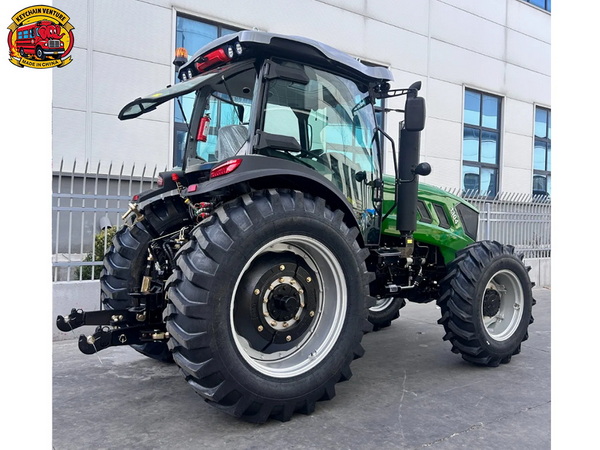
Scale modeling is the art and science of representing a full-sized object in a smaller, yet accurately proportional, form. The scale ratio defines how many times the real object is reduced in size to create an understandable miniature version.
For a 1:32 scale:
- Every 1 unit on the model equals 32 units on the real tractor.
For example, one inch on the model corresponds to 32 inches on the original tractor. This principle applies uniformly across all dimensions—length, width, and height—ensuring full proportionality.
The 1:32 scale has become a standard in agricultural machinery modeling for several important reasons:
- Optimal Balance of Detail and Size: At 1:32 scale, the model remains small enough to display conveniently yet large enough to faithfully replicate complex details of real tractors, such as moving parts, decals, and cabine interiors. Smaller scales often sacrifice detail, while larger scales take up much more space.
- Historical Precedence: Many manufacturers adopted the 1:32 scale early on, making it popular among hobbyists who wished to maintain uniformity in their collections of agricultural equipment.
- Compatibility: With many 1:32 scale farm accessories and implements available, this scale facilitates creating realistic farming dioramas that appeal to collectors and educators alike.
To truly comprehend the size of a 1:32 scale tractor, it helps to start by looking at the dimensions of actual tractors and then apply the scale reduction.
Tractors come in various sizes—small compact tractors to large heavy-duty models. However, a midsize general-purpose tractor usually measures approximately:
- Length: 12 feet (144 inches)
- Width: 6.5 feet (78 inches)
- Height: 8 feet (96 inches)
These dimensions vary based on model and attachments, but this baseline is ideal for comparison.
Using the 1:32 scale, divide the real tractor's dimensions by 32 to get the corresponding model dimensions:
- Length: 144 inches ÷ 32 = 4.5 inches
- Width: 78 inches ÷ 32 ≈ 2.44 inches
- Height: 96 inches ÷ 32 = 3 inches
Therefore, a 1:32 scale tractor averages about 4.5 inches long, 2.4 inches wide, and 3 inches high.
This scale makes the tractor:
- Compact Enough for Collection: At approximately the length of a smartphone, it fits perfectly on shelves, desks, or display cabinets.
- Detailed Enough for Appreciation: The size allows for the inclusion of realistic features such as working wheels, detailed grills, and cabins.
- Manageable for Handling and Use: Many 1:32 scale tractors are designed for display and can also support light play or functional features like moving parts, especially in remote-controlled variants.
John Deere remains one of the most recognized brands in agricultural equipment, and its 1:32 scale models are similarly popular. These miniatures often show:
- Accurate brand colors and logos
- Working front wheels for steering simulation
- Detailed tire treads and engine components
- Interchangeable or removable parts such as hoods and implements
John Deere's attention to detail elevates the scale tractor from a mere replica to a collector's prized possession.
Other major brands like Case IH and New Holland provide 1:32 scale models that feature:
- Authentic cabin interiors with visible controls
- Clear windows and realistic exhaust systems
- Realistic articulation for steering and hitching mechanisms
- Accurate safety decals and lighting features
These brands lend diversity to collections, honoring different tractor manufacturers in miniature form.
Brands such as Fendt, Massey Ferguson, Claas, and Kubota have also developed detailed 1:32 scale tractors. Each tries to match their real-world counterparts as much as possible in shape, design, and proportions. Specialty limited editions and historical models add depth for collectors.

At roughly 4 to 5 inches long, 1:32 scale tractors allow both manufacturers and hobbyists to incorporate an impressive amount of detail. From engine placements to miniature decals, these models provide a realistic feel unmatched by smaller scales. This level of realism appeals not only to collectors but also to educators and agricultural professionals who use models for demonstration.
Due to their manageable size, 1:32 scale tractors are easy to display in cases or on desktops without requiring a large floor footprint. This factor makes the scale accessible to a wider audience—hobbyists who want detailed miniatures, collectors with limited space, or children (under supervision) interested in farm machinery.
Scale tractors in 1:32 provide tangible models to teach farming technology basics to students. Agricultural trainers and museums use these models to explain tractor anatomy, function, and history. The size allows for up-close observation that is impossible with real machines.
Collectors often build detailed farm scenes—complete with fields, barns, implements, and vehicles—all in 1:32 scale. This uniform scale compatibility enhances realism and storytelling possibilities for these dioramas, whether for exhibitions or personal enjoyment.
While many 1:32 scale tractors are static display pieces or collectible diecasts, there is a growing market for remote-controlled (RC) functional tractors offered in this scale.
- Working Driving Mechanisms: Movement is controlled remotely with precision steering and throttle control.
- Functional Attachments: Some models come with motorized implements such as plows or loaders that simulate real farm work.
- Durability: Built with tougher materials to withstand handling during play or demonstrations.
- Battery Power: Typically powered by rechargeable batteries, with varying operating times.
These RC models appeal to children, hobbyists who enjoy functional play, and even agricultural professionals demonstrating tractor capabilities in miniature.
If you are considering building a 1:32 scale tractor collection, here are some practical tips:
Invest in models from well-known manufacturers to ensure authenticity and fine craftsmanship. Avoid low-quality knockoffs that miss detail or durability.
To protect models and showcase your collection properly, consider display cases with glass or acrylic covers that keep dust away and prevent accidental damage.
Some collectors focus on historic tractor models, others on modern brands, or even specific farming regions. This adds coherence and storytelling quality to your collection.
Add precision-scale accessories such as trailers, farming implements, or figures to enhance realism and diorama presentation.
Many 1:32 scale models have small fragile parts. Use gentle handling and clean with soft brushes to maintain condition.
Regular maintenance enhances the life and display quality of your scale tractors:
- Use soft brushes or microfiber cloths to dust the surface gently.
- Avoid water or harsh solvents, since paint and decals might degrade.
- Compressed air can help remove dust from tight crevices.
- For metal models, light polishing with a non-abrasive cloth can restore shine.
Proper storage in dust-proof environments prevents paint dulling and wear over time.
Beyond just owning miniature tractors, the 1:32 scale opens doors to various enriching activities:
Many hobbyists paint and customize tractors to replicate vintage paint jobs, introduce weathering effects, or simply personalize their models.
The 1:32 scale tractor world is active with collectors' events, swap meets, and online forums where enthusiasts exchange advice, trade models, and display prized tractors.
Workshops geared at agricultural technology or craftsmanship sometimes use these mini tractors as hands-on learning tools.
A 1:32 scale tractor is a miniature marvel that captures the essence of real agricultural machinery while being compact enough to suit collectors, hobbyists, and educational purposes. Measuring roughly 4.5 inches in length, these models marry intricate detailing with practical display size. From John Deere to Case IH and beyond, the 1:32 scale offers an exciting way to explore and appreciate tractors in all their industrial glory.
By assembling a collection or engaging with these models, enthusiasts gain an insightful window into farm life and machinery mechanics. Whether for display, play, or study, 1:32 scale tractors continue to play a vital role in the model vehicle and diecast communities. Their blend of accessibility, precision, and functionality makes them an enduring favorite in agricultural modeling.
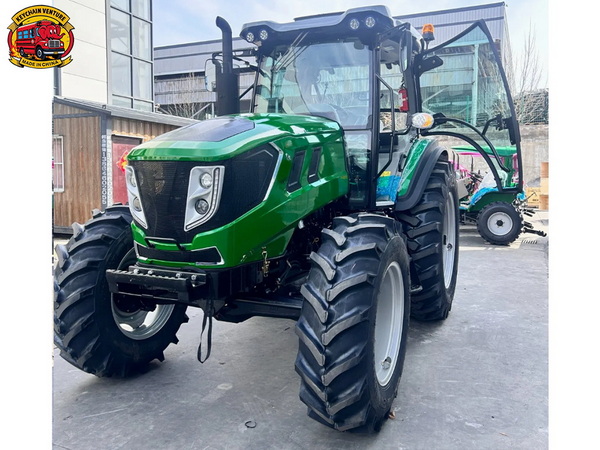
To measure a 1:32 scale tractor, use a ruler or caliper to check its length, width, and height. The model's dimensions should be exactly 1/32 of the real tractor's corresponding dimensions, ensuring proportional correctness.
1:32 scale tractors are best paired with accessories and models of the same scale. While they are not directly compatible with larger scales like 1:16 or much smaller scales like 1:64, the 1:32 scale enjoys broad industry acceptance and a wide accessory range within its own scale.
Yes, some hobby-grade 1:32 scale tractors come as remote control models. These RC tractors include functional steering, throttle, and sometimes working attachments, providing realistic farming simulations.
Most 1:32 scale tractors are collectible models with delicate parts better suited for older children or adults. However, some ruggedized remote-controlled versions are made specifically for younger users under supervision.
Clean your model with a soft brush or canned air to remove dust. Avoid water or harsh chemicals that can damage paint and decals. For metallic parts, gentle polishing is recommended to retain shine while preserving detail.


