
Views: 222 Author: Amanda Publish Time: 2025-10-01 Origin: Site


Content Menu
>> Key Features of a Semi Trailer
● Dimensions and Clearance Heights of Semi Trailers
● Can a Car Physically Fit Underneath a Semi Trailer?
● Safety Concerns of Cars Fitting Under Semi Trailers
>> Safe Practices Around Semi Trailers
● Practical Applications for Cars and Semi Trailers
>> Car Transport Using Semi Trailers
>> Vehicle Maintenance and Inspection
● How to Measure the Gap Between a Semi Trailer and the Ground
>> Accurate Measurement Steps:
● Tips for Drivers Near Semi Trailers
● Frequently Asked Questions (FAQ)
>> 1. What is the average clearance height of a semi trailer?
>> 2. Can any standard car fit safely under a semi trailer?
>> 3. Are there semi trailers designed with higher ground clearance?
>> 4. Is it safe to park or drive a car under a semi trailer?
>> 5. How are cars transported using semi trailers?
Understanding whether a car can fit under a semi trailer is a question that intrigues many logistics professionals, drivers, and even curious onlookers. Semi trailers are large, heavy-duty transport vehicles designed primarily for carrying vast amounts of cargo, and their clearance heights can sometimes create scenarios where cars might surprisingly fit beneath them. This article explores the relationship between cars and semi trailers, including dimensions, safety considerations, real-world applications, and much more.
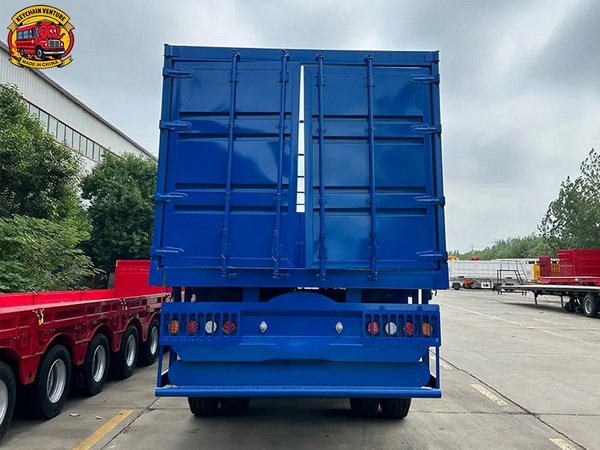
A semi trailer is a trailer without a front axle, designed to be coupled with a tractor unit or a truck to form an articulated vehicle. They are widely used for transporting goods domestically and internationally. Semi trailers come in various shapes and sizes and are pivotal in the logistics industry for their flexibility and capacity.
- Length ranges commonly from 28 to 53 feet.
- Height typically varies between 12 and 14 feet.
- Designed to transport heavy loads including vehicles, machinery, or large quantities of cargo.
- Can be flatbeds, refrigerated, enclosed, or tank trailers depending on the goods transported.
Semi trailers are essential in freight movement worldwide, supporting a variety of industries including automotive, construction, agriculture, and retail. Their design reflects a balance between maximizing cargo volume and ensuring road safety and vehicle stability.
Understanding if a car can fit under a semi trailer requires considering the clearance height beneath the trailer. The height of the underside of a semi trailer usually depends on the type of trailer, the suspension system, and the loading status.
Typical clearance heights under semi trailers vary but often range from approximately 48 to 54 inches (around 4 to 4.5 feet). This height is critical because it determines what can safely pass underneath the trailer without causing damage.
Different trailer types have different clearances due to their design and intended cargo:
- Standard Dry Van Trailers: These are enclosed and commonly used semi trailers with typical undercarriage clearance of roughly 48 to 54 inches.
- Flatbed Trailers: Featuring an open platform, flatbeds generally have ground clearance similar to dry vans but sometimes slightly lower due to the absence of sidewalls.
- Refrigerated Trailers: Also called reefers, these include cooling units that can affect their clearance, typically maintaining around 50 to 54 inches depending on the configuration.
The suspension system also plays a significant role; air ride suspensions can be adjusted, raising or lowering the trailer height by several inches, which can temporarily affect under-trailer clearance.
The average sedan or car height ranges roughly from 55 to 60 inches (4.6 to 5 feet), which exceeds the average clearance of most semi trailers. This generally means ordinary cars cannot fit underneath a semi trailer.
However, certain vehicles or specific conditions might allow a car to fit beneath a semi trailer:
- Sports Cars or Supercars: Some sports cars, such as the Lamborghini Aventador or Ferrari models, have extremely low ground clearances—sometimes as little as 3 to 4 inches—making them physically low-profile enough to fit under semi trailers with adequate clearance.
- Lowered or Modified Vehicles: Custom car modifications, such as lowering suspension height, can reduce overall vehicle height significantly.
- Empty or Raised Trailers: When a semi trailer is empty, air suspension systems may cause it to sit higher off the ground temporarily, potentially increasing clearance.
Several viral videos and demonstrations have shown super low-profile cars carefully passing or being driven beneath flatbed semi trailers, mainly for entertainment or promotional purposes. For these cases, the clearance is tight, and driving under is done at very slow speeds under controlled conditions.
However, for everyday passenger cars like SUVs, pick-up trucks, or standard sedans, it remains highly unlikely and impractical to fit underneath a semi trailer due to the height difference.

While the curiosity around whether a car can fit under a semi trailer is understandable, safety risks involved in attempting this action are substantial and should never be overlooked.
- Injury or Fatality Risk: Attempting to fit under a moving or stationary semi trailer risks serious injury if the trailer moves unexpectedly.
- Vehicle Damage: The roof or higher parts of a car could be severely damaged if clearance is misjudged.
- Instability and Crushing Risks: The confined space beneath a heavy trailer leaves no room for error.
- Legal and Liability Issues: Unauthorized entry under commercial vehicles is often illegal and can lead to liability claims.
- Always maintain a safe distance when driving or walking near semi trailers.
- Do not attempt to maneuver cars beneath trailers unless under supervised, professional control.
- Follow safety protocols during vehicle loading, unloading, and maintenance.
Despite the inherent clearance challenges, knowing the interaction between cars and semi trailers is important in certain industries and real-world scenarios.
Auto transport companies use specialized semi trailers designed to carry multiple cars stacked on two or more levels. These trailers, often called car carriers or auto haulers, have ramps and securing mechanisms to safely transport vehicles over long distances.
Mechanics and maintenance personnel sometimes need to work under semi trailers, requiring sufficient clearance and appropriate safety gear. Cars are not driven under semi trailers in these cases; instead forklifts or specialized lifts are used to access trailer undersides.
For anyone needing to determine if a car might fit under a semi trailer, precise measurement is the first step.
1. Measure Trailer Underbody Height: Use a tape measure to find the distance from the ground to the lowest point beneath the trailer's frame when it is parked on flat ground.
2. Measure the Car Height: Measure from the ground to the highest point on the car (usually the roof or antenna).
3. Compare the Two: If the trailer clearance height is larger than the car height, theoretically, the car could fit.
4. Add a Safety Margin: Always add several inches to avoid close fits that could risk damage.
This process can help logistics operators or drivers understand clearance constraints before attempting vehicle movement in tight spaces.
Driving near or alongside semi trailers involves special caution due to the large blind spots and maneuvering requirements of these heavy vehicles.
- Maintain ample following distance to avoid blind spots.
- Avoid driving in the area directly behind or beside trailers whenever possible.
- Use your horn or signal clearly before passing a semi trailer.
- When parking nearby, ensure the trailer is stable and not likely to move.
- Avoid attempting to squeeze a car under any form of semi trailer without professional supervision.
Understanding these tips helps prevent accidents and ensures safety on busy roadways or loading docks where semi trailers are common.
In conclusion, the question "Can a car fit under a semi trailer?" is nuanced. While most everyday vehicles are too tall to fit under a semi trailer due to the typical clearance heights (usually 48 to 54 inches), certain sports cars or heavily modified cars with extremely low profiles can physically fit beneath under controlled conditions. Additionally, semi trailer design, suspension height, and loading status impact ground clearance, influencing what can pass underneath.
Despite this possibility, pursuing or attempting to fit a car under a semi trailer carries significant safety risks, including injury and vehicle damage, and is generally unlawful unless done under strict supervision for maintenance or media production purposes. For professional transport, cars are usually secured on semi trailers using specialized equipment rather than driving beneath.
Awareness of these dynamics and safe driving practices around semi trailers enhances operational safety for drivers, logistics teams, and the general public.

Typical clearance heights under semi trailers range from approximately 48 to 54 inches, depending on the trailer type and suspension system.
Most standard cars, including sedans, SUVs, and pickups, are too tall to fit safely under a semi trailer, given the usual undercarriage clearance.
Some flatbed and refrigerated semi trailers may have slightly higher clearance, but it is rarely sufficient for most cars to fit underneath.
No, it is unsafe due to the risk of injury, vehicle damage, and trailer movement, and it is prohibited in most situations.
Cars are transported on specialized car carrier semi trailers with ramps and multi-level decks, allowing multiple vehicles to be secured and transported safely on top, not under, the trailer.


