
Views: 222 Author: Amanda Publish Time: 2025-10-02 Origin: Site


Content Menu
● Introduction to Water Trucks
>> What Makes a Water Truck Unique?
● Primary Uses of Water Trucks
>> Construction and Dust Control
>> Soil Compaction and Grading
>> Firefighting and Emergency Response
>> Agriculture and Landscaping
● Key Features and Components of a Water Truck
>> Water Tank
>> Control and Safety Features
● Advantages of Using Water Trucks
● Maintenance and Operational Considerations
● FAQ
>> 1. What is the typical capacity of a water truck's tank?
>> 2. How do water trucks contribute to dust control?
>> 3. Are water trucks used in firefighting?
>> 4. What maintenance is required for a water truck?
>> 5. Can water trucks be used in agriculture?
Water trucks are essential vehicles designed to transport and distribute large quantities of water across various industries and applications. Their versatility and functionality make them indispensable in construction, agriculture, mining, firefighting, and environmental management. This article explores in detail what water trucks are used for, their benefits, key features, and why they have become a crucial tool in many sectors.

A water truck is a specialized vehicle equipped with a large tank that carries water for diverse purposes. Unlike ordinary trucks, water trucks are designed to safely and efficiently transport water and apply it in controlled ways to meet industry-specific demands. These trucks are constructed to manage heavy loads, often ranging from 1,000 gallons to over 10,000 gallons of water, with specialized tanks, pumps, and distribution systems that allow them to serve multiple roles in demanding environments.
Water trucks stand out because of several key features:
- Massive Water Tanks: Designed for large water volumes that cater to extensive operational needs.
- Advanced Pump Systems: Allow for controlled water flow and pressure, essential for precise applications.
- Rugged Chassis: Built on heavy-duty frameworks that handle rough terrain and long-distance travel.
- Versatile Spray Nozzles and Hoses: These allow operators to spray water in different patterns, from fine mist to heavy streams.
Because of these specialized designs, water trucks can operate efficiently in places where water is inaccessible or requires precise management.
Water trucks serve multiple critical functions across various industries. Their ability to deliver water on-site makes them highly valuable for numerous practical applications.
One of the primary uses of water trucks is managing dust on construction sites. Dust particles generated by earthworks, demolition, and vehicle traffic can become airborne, posing health risks to workers and nearby residents as well as contributing to environmental pollution. Water trucks mitigate this hazard by frequently spraying water over dirt roads, open areas, and stockpiles of materials.
Additionally, keeping the dust down improves visibility, which is crucial for safety on busy construction sites. This application also helps construction companies comply with environmental regulations designed to limit particulate emissions.
Water trucks play a vital role in preparing construction sites through soil compaction. Moisture is essential to compact soil efficiently because it fills the tiny air gaps between soil particles, enabling them to bind more tightly. Water trucks add the necessary moisture, making soil more stable and suitable for building foundations, roadbeds, or landscaping projects.
Proper soil compaction prevents future structural problems such as settling or cracking, thereby ensuring a durable and stable base for construction.
Mining environments are often dusty and hazardous. Water trucks are invaluable in these settings for dust suppression and maintaining site safety. By spraying fine water droplets over mine haul roads and excavation zones, they significantly reduce dust levels. This not only protects the health of miners but also minimizes equipment wear caused by abrasive dust particles.
Moreover, water trucks support cooling operations and occasional washing of mining equipment to extend machinery lifespan.
In firefighting, water trucks provide a mobile water supply, especially important in remote or rural locations lacking fire hydrants or natural water sources. When wildfires or brush fires threaten communities or infrastructure, water trucks can rapidly deliver water to create firebreaks or douse flames.
Equipped with high-pressure pumps and adjustable nozzles, water trucks enable firefighters to control water flow targeted at hotspots, enhancing fire containment capabilities.
Water trucks benefit the agriculture sector by supplementing irrigation systems or serving as the primary source of water in areas without permanent irrigation infrastructure. Large farms and orchards can use water trucks to irrigate fields, orchards, or greenhouses, supporting crop health and growth.
In landscaping, water trucks help with planting, turf establishment, or maintaining expansive lawns and gardens, ensuring plants receive adequate water on schedule.
Water trucks contribute significantly to environmental and land management projects. Activities such as wetland restoration, reseeding barren land, preventing soil erosion, or dust control on unpaved roads all benefit from water trucks' ability to deliver large volumes of water exactly where needed.
They also assist in artificial rainmaking techniques, provide water for wildlife habitats temporarily, and replenish water bodies such as ponds and reservoirs, promoting ecological balance.
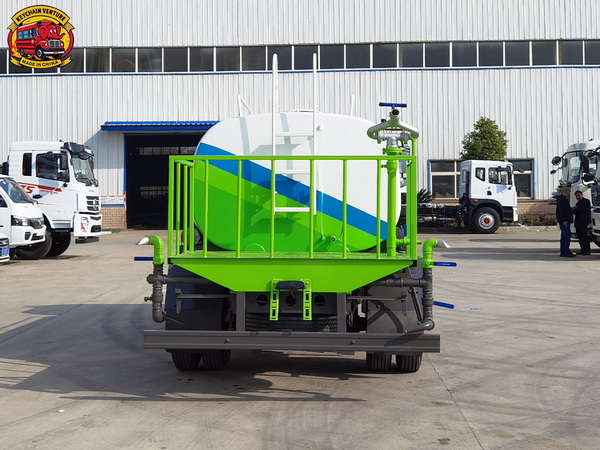
Understanding the components and design of water trucks sheds light on why they are such adaptable and effective tools.
The water tank is the heart of the truck, designed to hold water securely during transport. Tanks are often constructed from materials such as steel or heavy-duty polyethylene to resist corrosion and withstand rigorous operational conditions. Tanks may also be insulated or equipped with heating elements for use in freezing temperatures, preventing water from freezing in cold climates.
Water trucks use a range of pumps — centrifugal, diaphragm, or piston types — depending on the pressure and flow needed. These pumps feed water to spray bars, nozzles, or hoses and can be adjusted to fine mist sprays or heavy streams, allowing different applications such as light dust control or deep soil saturation.
Some models come with remote control systems or automated settings enabling operators to control water flow without leaving the cab, improving efficiency and safety.
The chassis forms the structure supporting the tank and pumping equipment. Typically, water trucks are built on commercial truck frames like those from Isuzu, Ford, or Mercedes-Benz, chosen for durability and capacity. Engines are engineered not only for fuel efficiency but also to provide the torque needed to transport heavy loads on uneven or challenging terrains.
Modern water trucks often include advanced control systems that allow operators to regulate water pressure and distribution patterns precisely. Safety features may include pressure relief valves, emergency shut-offs, and sturdy handrails or ladders for safe tank access.
Water trucks offer numerous benefits that make them favored choices across industries:
- Cost-Effective Water Delivery: They eliminate the need for more complex irrigation or dust suppression infrastructure.
- Flexibility and Mobility: Their ability to move water to remote or temporary sites is unmatched.
- Improved Health and Safety: By controlling dust and supporting firefighting, they protect workers and communities.
- Environmental Stewardship: They ensure water is applied efficiently, reducing wastage and promoting compliance with environmental regulations.
- Time Saving: Their rapid deployment and large capacity reduce downtime and improve project speed.
To maximize the lifespan and reliability of water trucks, proper maintenance is essential. Operators should:
- Perform routine inspections of tanks, valves, and hoses to detect leaks or damage
- Regularly service pumps and check pressure systems for optimal performance
- Maintain the engine and chassis according to manufacturer guidelines
- Clean and winterize trucks if they are inactive during cold months to prevent freeze damage
- Train operators on safe handling and emergency procedures
Effective maintenance not only improves vehicle longevity but also enhances operational safety and efficiency.
Water trucks are indispensable vehicles that serve a variety of critical functions across multiple industries worldwide. Their unique ability to transport and distribute large volumes of water efficiently makes them central to dust control, soil preparation, firefighting, agriculture, mining, and environmental protection efforts. By understanding their key features, applications, and maintenance requirements, businesses can leverage water trucks to improve safety, optimize operations, and enforce environmental compliance. As infrastructure projects and environmental concerns grow, the demand for versatile water trucks is expected to rise, confirming their place as an essential asset in modern industry.

Most water trucks have tanks ranging from 1,000 to over 10,000 gallons, with the exact capacity selected based on the operational requirements of the site or industry.
Water trucks frequently spray water over exposed soil and construction materials, effectively binding dust particles and preventing them from becoming airborne, which improves air quality and safety.
Yes, water trucks serve as mobile water sources for firefighting efforts, particularly in rural or wildland areas without access to fire hydrants or natural water bodies.
Routine inspection for leaks, pump servicing, chassis and engine maintenance, and seasonal procedures like winterizing are essential to keep water trucks operating efficiently and safely.
Absolutely. Water trucks are widely used for irrigating crops, watering large fields or gardens, and supporting landscaping projects where permanent irrigation systems are impractical.


