
Views: 222 Author: Amanda Publish Time: 2025-08-24 Origin: Site


Content Menu
● Factors Affecting the Water Capacity of a Water Truck
>> 4. Intended Use and Terrain
● Typical Water Truck Capacities
● How Is Water Truck Capacity Measured?
● Applications of Water Trucks
>> Dust Control on Construction Sites
>> Agricultural Irrigation and Crop Management
>> Firefighting and Emergency Services
>> Street Cleaning and Sanitation
>> Dust Control in Mining Operations
>> Environmental Protection and Land Reclamation
● Operation and Efficiency Tips for Water Trucks
● Safety Considerations When Using Water Trucks
● Maintenance Tips for Water Trucks
● Choosing the Right Water Truck Capacity for Your Needs
● Frequently Asked Questions (FAQ)
>> 1. What is the average water capacity of a standard commercial water truck?
>> 2. Can water trucks carry liquids other than water?
>> 3. How does vehicle weight affect the water truck's carrying capacity?
>> 4. Are there water trucks with specialized spray nozzles for firefighting?
>> 5. What maintenance practices ensure water truck longevity?
As a leading commercial vehicle supplier in China, KeyChain Venture Co., Ltd. is proud to offer premium solutions in the water truck industry—supporting clients both domestically and internationally with high-performance buses, heavy trucks, and specialized commercial vehicles. One of the most frequently asked questions about water trucks concerns their water capacity: How many gallons of water can a typical water truck hold?
This article will provide a detailed and insightful exploration into water truck capacities, how they vary, the factors influencing volume, practical applications, operational tips, safety considerations, and maintenance practices to help you get the most out of your water truck investment.
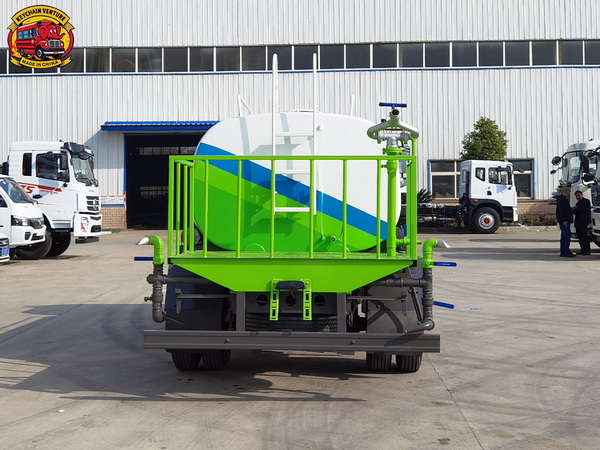
A water truck is a specialized commercial vehicle designed to transport and dispense large volumes of water for various uses such as dust control, firefighting, agricultural irrigation, construction site water supply, and street cleaning. They are equipped with a large tank mounted on a truck chassis with nozzles, pumps, and control valves to control water flow.
Water trucks come in different shapes and sizes but all share the common goal of moving and distributing water over short or medium distances efficiently. The versatility of water trucks makes them indispensable in many industrial, municipal, and agricultural settings.
The volume of water a water truck can carry doesn't depend on one standard size—it varies widely according to multiple design and operational parameters.
The most obvious factor is the size of the tank itself. Water truck tanks are manufactured in numerous sizes, typically ranging from 500 to 5,000 gallons or more. The tank's shape (cylindrical, rectangular, or elliptical) and construction materials (steel, aluminum, polyethylene) influence its weight, durability, and water-holding capacity.
Additionally, tanks are designed with baffles—internal dividers that reduce the momentum of water sloshing inside when the truck is in motion. This design increases driving stability and safety but slightly reduces the effective volume of water carried.
The truck chassis and suspension system dictate the maximum safe load, which limits the maximum water volume that can be carried. Heavy-duty trucks with reinforced suspensions and commercial-grade axles can carry larger tank sizes, while light-duty trucks have smaller capacities.
For example, a Class 6 or 7 truck chassis can typically carry 1,500 to 2,500 gallons safely, while Class 8 chassis can support tanks holding upward of 5,000 gallons.
Local road weight limits and transportation regulations affect the allowable maximum water volume for trucks. Operators must balance tank size with legal load limits to avoid fines or vehicle damage. Regulations may also dictate vehicle dimensions and the placement of safety equipment like reflectors or spill containment systems.
Water trucks designed for construction site dust suppression might have different capacity requirements than those for agricultural use, fire response, or street cleaning. Rough terrains often demand more robust chassis with moderate tank size to maintain vehicle stability, while urban applications might prioritize maneuverability and smaller capacities.
Below is an overview of typical water truck sizes used worldwide, categorized by tank capacity, primary usage, and associated chassis classes:
- 500 - 1,000 Gallons: Light-duty water trucks used mainly in small sites, landscaping, or urban areas with restricted space. These often use pickup-style chassis or smaller commercial trucks.
- 1,500 - 2,500 Gallons: The most common mid-size water trucks are deployed for municipal services, industrial sites, and agricultural delivery. Medium-duty chassis (Class 6 and 7 trucks) support these tanks.
- 3,000 - 5,000 Gallons: Heavy-duty water trucks for mining, large construction projects, and firefighting duties are built on Class 8 heavy truck chassis. These trucks can operate in demanding environments and carry large water volumes over substantial distances.
Water truck capacity refers to the total volumetric space inside the tank, usually measured in US gallons. For practical calculations, tank volume is initially measured in cubic feet and then converted to gallons using the conversion factor:
1 cubic foot = 7.48 gallons
The formula to estimate tank capacity is:
> Capacity (gallons) = Tank Length (ft) × Tank Width (ft) × Tank Height (ft) × 7.48
Note that the usable volume may be slightly less than the calculated figure due to the presence of internal baffles and structural components.
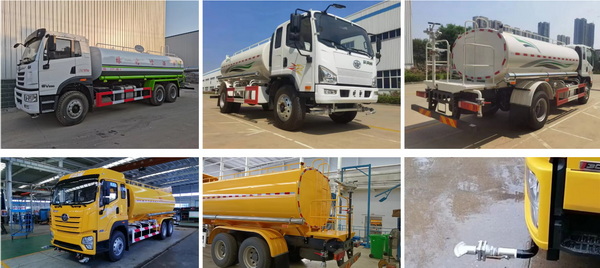
Water trucks are highly versatile and provide critical support for many industries and public services.
One of the most common uses of a water truck is road and site dust suppression. Water trucks spray a fine mist or direct streams of water on dirt roads or large dusty areas, reducing airborne dust particles. This improves air quality and safety for workers and nearby residents.
Water trucks provide supplemental irrigation to crops when fixed infrastructure is either too expensive or unavailable. Combined with sprayers, these trucks can also distribute fertilizers or pesticides uniformly, enhancing crop yield.
In rural areas or locations where fire hydrants are scarce, water trucks serve as mobile water sources for firefighting operations. Some are equipped with high-pressure pumps and specialized nozzles to support fire suppression efforts.
Municipal governments often use water trucks to keep public streets and parks clean, spraying water to remove dust, litter, or debris, and maintaining neighborhood sanitation.
In mining environments, controlling dust from excavations and haul roads is essential. Water trucks spray water continuously or intermittently on these surfaces to maintain visibility and reduce airborne pollutants harmful to both workers and nearby communities.
Water trucks also support environmental efforts such as revegetating disturbed land by moistening soil to encourage seed germination and plant growth effectively.
Maximizing the performance of your water truck requires more than just choosing the right tank size. Consider the following operational strategies:
- Regular Maintenance: Keep pumps, valves, and spray nozzles clean and functioning smoothly to avoid leaks and ensure uniform spraying.
- Loading Practices: Avoid overfilling the tank; water spills waste resources and create unsafe road conditions.
- Use of Baffles: Ensure that the tank's internal baffles are intact and functioning to reduce water surge that can affect vehicle handling.
- Route Planning: Efficient routing reduces fuel consumption and optimizes water delivery within your operational windows.
- Technology Integration: Some modern water trucks include GPS-based systems to monitor water levels and optimize spray patterns according to terrain and weather conditions.
Handling a tank loaded with thousands of gallons of water requires awareness of safety rules:
- Water movement within the tank (free surface effect) can destabilize the vehicle if the tank is not baffled properly.
- Sudden braking or turning can cause the water to surge, affecting vehicle control.
- Proper braking systems and anti-lock brakes (ABS) are important safety features on water trucks.
- Drivers should be trained to handle fully loaded trucks under different road and weather conditions.
- Regular inspections of tank mounts, suspension, tires, and brakes reduce the risk of accidents due to mechanical failure.
To prolong the life and maintain the performance of your water truck:
1. Inspect the Tank Regularly – Look for signs of rust, wear, or damage that can cause leaks or structural issues.
2. Maintain Pumps and Valves – Clean and lubricate mechanical parts to avoid corrosion and ensure smooth operation.
3. Check Tires and Suspension – Carrying heavy water loads places stress on tires and suspension; proper tire pressure and suspension condition are critical.
4. Flush the Tank Periodically – Remove sediment build-up and prevent contamination.
5. Test Spray Nozzles – Confirm uniform water distribution and adjust as necessary to optimize coverage.
Regular maintenance is an investment that reduces downtime, improves safety, and enhances efficiency.
Selecting the ideal water truck comes down to considering multiple factors:
- Primary Application: Dust control, firefighting, irrigation, or sanitation.
- Operating Terrain: Urban, rural, industrial, or uneven ground.
- Regulatory Compliance: Local laws governing weight and dimensions.
- Additional Equipment Needs: Spray bars, foam injectors, or specialized pumps.
- Budget and Maintenance Capabilities: Larger trucks cost more upfront and require more upkeep.
By closely evaluating these aspects, companies can align their choice of water truck capacity and features with project requirements for optimal value.
Determining how many gallons of water a water truck can hold depends on multiple factors including tank size, chassis capacity, intended use, and regulatory limits. Water trucks vary widely in capacity from small 500-gallon units to heavy-duty models that carry 5,000 gallons or more. Selecting the right size and configuration is crucial for operational efficiency, safety, and cost-effectiveness.
Water trucks play a vital role across many industries, including construction, agriculture, firefighting, and municipal sanitation. Proper operation, safety awareness, and regular maintenance are key to maximizing their lifespan and performance.
At KeyChain Venture Co., Ltd., we provide customizable water trucks tailored to meet diverse customer requirements worldwide. Our solutions ensure reliable, high-quality water transport and spraying capabilities that support your projects safely and efficiently.
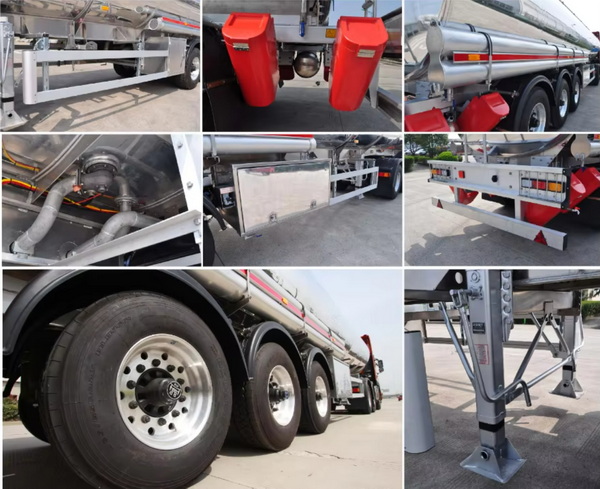
The average capacity ranges from 1,500 to 2,500 gallons depending on the model and configuration. This range suits most municipal and industrial applications while maintaining maneuverability and compliance with road restrictions.
Generally, water trucks are designed specifically for water. However, with proper tank lining and plumbing modifications, some trucks can carry other non-corrosive liquids like liquid fertilizers or certain chemicals, but this requires careful consideration of material compatibility and safety.
The load capacity of the truck's chassis and axles defines how much water it can safely carry. Exceeding weight limits risks structural damage, premature wear, and legal penalties. Operators must balance tank size and water volume with safe load limits.
Yes, some water trucks are equipped with high-pressure pumps and specialized nozzles designed specifically for firefighting. These trucks can deliver water quickly and at the pressures needed to combat fires, particularly in areas without hydrant access.
Key maintenance practices include regular inspection of tanks for corrosion, upkeep of pumps and valves, monitoring suspension and tires for wear, flushing the tank to remove sediments, and testing spray nozzles to ensure efficient water distribution.


