
Views: 222 Author: Amanda Publish Time: 2025-11-24 Origin: Site


Content Menu
● Standard Semi Trailer Dimensions and Volume
>> 53-Foot Dry Van Semi Trailer
>> 48-Foot Dry Van or Curtain-Side Semi Trailer
● Volume-Based Cord Calculations
● Weight-Based Cord Calculations
>> Approximate Wood Weights per Cord
>> Example: Semi Trailer with Hardwood
>> Example: Semi Trailer with Softwood
● Reconciling Volume and Weight Limits
● Stacking Methods and Packing Efficiency
● Semi Trailer Types for Different Wood Operations
● Regulatory and Safety Considerations
>> Height, Width, and Length Limits
● Operational Strategies for Maximizing Cord Capacity
>> Matching Semi Trailer Specs to Wood Type
>> Route and Permit Optimization
● Example Scenarios: Cords per Semi Trailer
>> Scenario 1: Domestic Firewood Distribution
>> Scenario 2: Softwood Export from China
>> Scenario 3: Green Hardwoods from Forest to Mill
● How KeyChain Venture Co., Ltd. Can Help
● FAQs
>> 1. How many cords of hardwood can a 53-foot Semi Trailer usually carry?
>> 2. Why can a Semi Trailer carry more softwood cords than hardwood cords?
>> 3. Does trailer type really change how many cords fit?
>> 4. How does moisture content of wood affect Semi Trailer capacity?
>> 5. What is the best way to plan cord capacity for a new Semi Trailer fleet?
Transporting firewood or logs with a Semi Trailer is one of the most efficient ways to move large volumes of timber for both domestic and export markets. For a professional fleet operator or logistics planner, understanding how many cords of wood a Semi Trailer can safely and legally carry is essential for profitability, scheduling, and compliance. As a Chinese commercial vehicle supplier such as KeyChain Venture Co., Ltd., optimizing every Semi Trailer load directly improves operational efficiency and customer satisfaction.
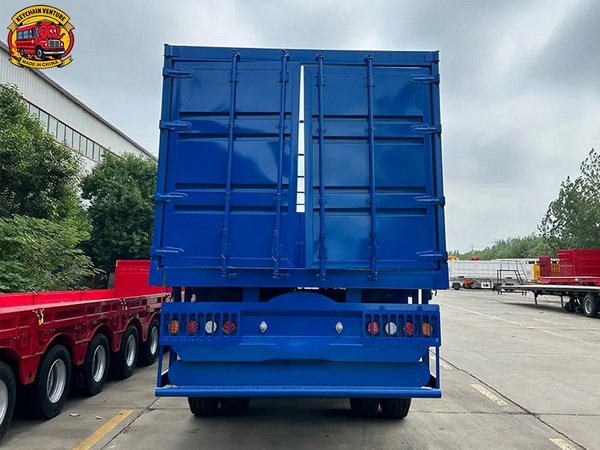
A cord is the standard unit for measuring firewood in North America and many export contracts. One full cord is defined as a tightly stacked pile measuring 4 feet high, 4 feet deep, and 8 feet long, which equals 128 cubic feet of wood. This definition assumes the wood is stacked neatly with minimal air gaps, not loosely thrown.
Because the cord is a volume measurement, it is useful for estimating how much wood can fit into the enclosed space or on the deck of a Semi Trailer. In practice, air gaps, irregular log shapes, and bark texture reduce the effective volume used. Many operators also talk about “face cords” or “rick,” which are smaller stacks, but export and bulk transport usually focus on full cords for clarity.
The starting point for calculating cord capacity is understanding the physical dimensions of a Semi Trailer. Common configurations used in wood transport include:
- Length: approximately 53 ft
- Interior width: about 8–8.5 ft
- Interior height: about 8.5–9 ft
Multiplying these dimensions gives an interior volume in the range of about 3,400–4,000 cubic feet, depending on the exact trailer model, floor thickness, and roof design. Even though this is the theoretical volume, not all of it is usable once wood is stacked.
- Length: approximately 48 ft
- Similar width and height to a 53-foot trailer
Total interior volume is slightly lower, but the same principles apply. Many regional haulers and operators in markets with tighter city access limits prefer 48-foot Semi Trailers.
Flatbeds do not have walls or a roof, so volume depends on the allowed stacking height and width limits on public roads. A typical flatbed Semi Trailer can be about 48–53 ft long and 8.5 ft wide. Maximum height is governed by road regulations (often around 13.5–14 ft total vehicle height), so operators must calculate usable stack height above the deck.
Specialized log trailers use bunks, stakes, or bolsters instead of a closed box. They are designed specifically for long logs and may have lower tare weight, making them ideal for forest-to-mill supply chains. Volume is less precise but weight limits are usually the controlling factor.
Because one cord equals 128 cubic feet, a common method is to divide the Semi Trailer's internal volume by 128. For a typical 53-foot dry van Semi Trailer with an interior volume around 3,800 cubic feet, the absolute mathematical limit is roughly 29–30 cords.
However, this number assumes:
- Perfect rectangular wood pieces
- Zero air gaps
- No lost space near walls, doors, or roof
- Full height stacking from floor to ceiling
In reality, stacked firewood or logs never reach this theoretical maximum. Actual practical volumes for a 53-foot Semi Trailer are often closer to 70–80% of the geometric volume, due to irregular shapes and safe stacking practices. As a result, the real-world volume-based capacity often drops to about 22–24 cords of reasonably well-stacked wood for a typical dry van Semi Trailer.
For a 48-foot Semi Trailer, the proportional figure is slightly lower, usually in the high teens to low twenties in terms of cords when volume alone is considered.
While volume is important, the legal weight limit is usually the real constraint. In many regions (including the United States and numerous exporting markets), the typical maximum legal gross vehicle weight for a tractor and Semi Trailer combination is about 80,000 pounds. This total includes:
- Tractor unit weight
- Semi Trailer weight (tare weight)
- Cargo weight (wood)
If a typical tractor and Semi Trailer together weigh around 30,000–35,000 pounds empty, the remaining payload capacity for wood is about 45,000–50,000 pounds. The exact number depends on the specific Semi Trailer design, materials, and axle configuration.
- Dense hardwoods (e.g., oak, hickory, beech): often around 3,000–4,000 pounds per cord when seasoned, higher when green.
- Medium-density hardwoods (e.g., birch, maple): often in the 2,500–3,500 pounds per cord range.
- Softwoods (e.g., pine, fir, spruce): often in the 2,000–2,800 pounds per cord range, depending on moisture and species.
These are generalized ranges used for planning. Actual weights should always be verified with scales, especially for export shipments or contracts with strict specifications.
Assume:
- Maximum payload: 45,000 pounds of cargo
- Average seasoned oak: 3,700 pounds per cord
45,000 ÷ 3,700 ≈ about 12 cords
Even if the Semi Trailer has enough volume for more than 20 cords, weight limits will restrict the load to around a dozen cords of dense hardwood to remain legally compliant.
Assume:
- Maximum payload: 45,000 pounds
- Average softwood: 2,500 pounds per cord
45,000 ÷ 2,500 = 18 cords
Here, the same Semi Trailer can carry many more cords of lighter softwood than hardwood before reaching the legal weight ceiling.
In real-world operations, the number of cords a Semi Trailer can carry is the lower of:
- The number of cords that physically fit, based on interior volume and stacking efficiency
- The number of cords whose total weight remains at or below the legal payload limit
For dense hardwood, the weight limit is usually reached long before the volume limit. For lighter, dry softwood, volume might become a limiting factor, especially if the wood is stacked in uniform, stable rows.
For most standard 53-foot dry vans:
- Dense hardwood: roughly 10–14 cords per Semi Trailer
- Softwood or lighter mixed species: roughly 14–20 cords per Semi Trailer
These figures vary with moisture content, cut length, and stacking quality.
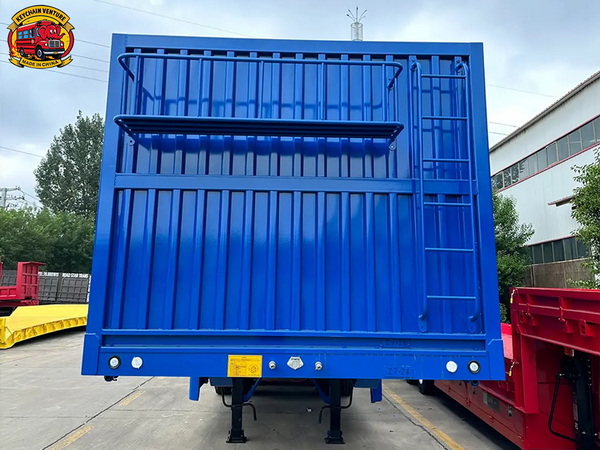
How the wood is stacked dramatically affects how many cords can be transported in one Semi Trailer. Key practices include:
Splitting logs to consistent lengths (commonly 16 inches, 24 inches, or 40 cm, depending on market) and cross-stacking layers improves stability and packing density. Straight, parallel rows minimize air voids and make it easier to secure the load inside the Semi Trailer.
Some exporters and large regional suppliers use palletized bulk bags or crates loaded by forklift. This method:
- Speeds up loading and unloading
- Improves stack stability
- Allows predictable dimensions per unit
However, pallet bases and packaging also consume volume and add weight, slightly reducing the number of cords per Semi Trailer compared to loose stacking.
For low-value or local deliveries, wood may be loosely thrown into the Semi Trailer. This approach is fast but very inefficient in terms of volume. A “loose thrown cord” occupies more space than a tightly stacked cord. Planning must account for this extra volume, often using multipliers such as 1.2 to 1.5 times the space of a tightly stacked cord, depending on the loading style.
Selecting the right Semi Trailer type for wood transport ensures that volume, weight, and operational requirements are balanced correctly.
- Best for: processed firewood, packaged wood products, palletized loads
- Advantages: protects cargo from weather, easy to seal for export, compatible with logistics hubs
- Limitations: fixed interior height, more tare weight than some open trailers
Dry vans are common in export firewood logistics, especially when shipping from production plants to ports or distribution centers.
- Best for: bundled logs, long-length timbers, crane or loader operations
- Advantages: easy side and top loading, flexible cargo shapes, good for oversized pieces
- Limitations: weather exposure, reliance on tarps or coverings, height and width must strictly follow road rules
Flatbeds allow operators to carry timber that cannot fit through a van door or that is too long for a normal enclosed Semi Trailer.
- Best for: roundwood logs from forest to sawmill or pulp mill
- Advantages: optimized for logs, lower tare weight, strong securing structures
- Limitations: less flexible for non-log loads, often dedicated to forestry operations
In forestry-focused fleets, this is the main solution for transporting logs by Semi Trailer, maximizing the balance between log length, weight, and stability.
Operating a Semi Trailer with wood is not only an engineering challenge but also a legal one. Compliance ensures that a fleet remains safe, profitable, and reliable.
Most jurisdictions specify:
- Maximum gross combination weight (truck + Semi Trailer + cargo)
- Maximum axle group loads (steer axle, drive axles, trailer axles)
- Possible exceptions or permits for certain industries (e.g., forestry routes)
If the Semi Trailer is overloaded by cords of wood, fines, vehicle impoundment, or loss of insurance coverage may follow. Using weighbridges or portable axle scales is essential when transporting dense hardwood or green logs.
Proper securement is vital to prevent shifting wood inside or on top of a Semi Trailer. Typical methods include:
- Straps, chains, and binders over stacked bundles
- Stakes or side posts on log trailers
- Bulkheads and interior load bars in dry vans
Operators must follow recognized securement standards, which often specify minimum numbers and strengths of tie-downs per load.
Even if weight and cord count are within limits, the overall dimensions of the loaded Semi Trailer must comply with road rules. Overheight or overwidth loads usually require special permits, pilot vehicles, or restricted routes.
Professional operators and suppliers like KeyChain Venture Co., Ltd. can improve payload efficiencies by combining better vehicle specification, careful planning, and advanced loading systems.
For lighter wood or processed firewood destined for export, a high-volume 53-foot Semi Trailer might be ideal to get closer to the volumetric maximum without exceeding weight limits. For heavy hardwood logs, a more robust Semi Trailer with optimized axle configuration may allow slightly higher legal payloads while maintaining stability.
Seasoning or kiln-drying wood reduces moisture content, which:
- Lowers the weight per cord
- Increases the number of cords that can be loaded per Semi Trailer
- Improves burning quality for end customers
Dry wood allows operators to approach volume limits rather than being restricted by weight.
On certain forestry corridors or industrial routes, regional regulations may permit higher gross weights for Semi Trailers carrying timber. Careful route planning and permit management can raise the practical number of cords per trip, as long as the vehicle and trailer are designed for the extra load.
To illustrate how these factors combine, consider a few typical scenarios:
- Semi Trailer: 53-foot dry van
- Wood: seasoned mixed hardwood
- Target: retail firewood yards
The fleet manager aims for about 12–14 cords per load, staying below the 80,000-pound gross limit and ensuring simple stacking and unloading.
- Semi Trailer: 53-foot high-volume Semi Trailer
- Wood: air-dried softwood, palletized
- Destination: port terminal
Thanks to the lighter species and lower moisture content, each Semi Trailer can safely carry in the range of 16–20 cords, depending on packaging and pallet weight.
- Semi Trailer: specialized log Semi Trailer
- Wood: freshly cut hardwood logs
- Weight is the primary constraint
The operation usually targets 10–13 cords per trip, varying with species and log diameter, but always confirming with axle scales at the loading site.
As a leading Chinese commercial vehicle supplier, KeyChain Venture Co., Ltd. can help customers choose and configure Semi Trailers specifically optimized for timber, firewood, or log transport. By tuning trailer length, axle count, deck height, and material selection, operators can bring cord capacity closer to the legal limits without compromising safety.
Customized Semi Trailer solutions may include:
- High-volume box Semi Trailers for export firewood
- Heavy-duty flatbeds with reinforced decks and stake pockets
- Specialized log Semi Trailers with bunks and bolsters
- On-board weighing systems to quickly verify payloads
Through proper vehicle specification and loading procedures, fleets can achieve higher productivity per trip and more predictable cost per cord.
Determining how many cords of wood a Semi Trailer can carry involves more than just measuring interior length and width. The true answer depends on a balance of three main factors: the geometric volume of the Semi Trailer, the density and moisture content of the wood, and the legal weight limits on the roads being used. While a 53-foot Semi Trailer might theoretically hold close to 30 cords by volume, real-world operations often carry far fewer cords to remain within legal weight and to allow for safe, stable stacking.
For dense hardwood, many carriers find that 10–14 cords per Semi Trailer is a realistic, compliant range, while lighter softwoods might allow 14–20 cords under similar conditions. Logistics planning must always start from verified vehicle specifications, reliable wood weight data, and local regulations. With the right Semi Trailer choice and professional loading processes, operators and suppliers like KeyChain Venture Co., Ltd. can deliver more wood per trip, reduce unit transport costs, and better serve domestic and international customers.
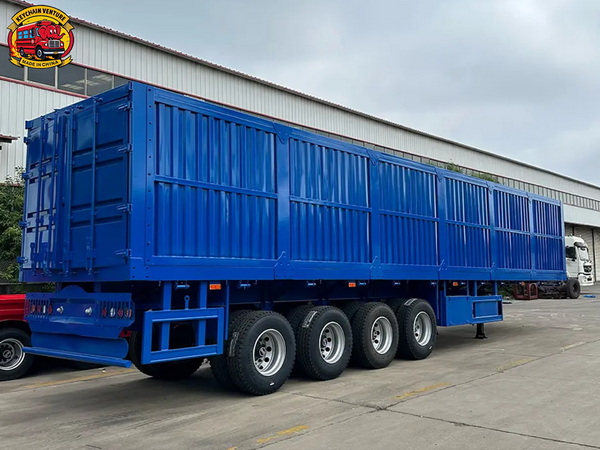
A 53-foot Semi Trailer carrying dense hardwood typically transports around 10–14 cords per load, depending on exact species, moisture level, and trailer tare weight. Operators must confirm maximum payload using certified scales to remain below the gross vehicle weight limit and axle load limits in their region.
Softwood species usually have lower density and contain less mass per unit volume than dense hardwood species. This means that for the same interior space of a Semi Trailer, more softwood cords can be loaded before reaching the legal weight limit, allowing higher cord counts without exceeding regulations.
Yes. Enclosed dry vans, flatbeds, and specialized log Semi Trailers offer different usable volumes, tare weights, and securement options. An enclosed Semi Trailer may prioritize volume and protection, while a log Semi Trailer optimizes weight and length for round logs; these differences can significantly change the number of cords per trip.
Wet or green wood is much heavier than dry or seasoned wood, so moisture content directly influences the number of cords that can be loaded before reaching the payload limit. Reducing moisture through air drying or kiln drying allows a Semi Trailer to carry more cords safely, sometimes shifting the constraint from weight to volume.
The best approach is to combine accurate vehicle specifications, realistic wood weight data for your primary species, and local road regulations. Fleet managers should estimate both volume-based and weight-based capacity, then validate those estimates using test loads and scales. Working with a professional supplier such as KeyChain Venture Co., Ltd. ensures that each Semi Trailer is specified to match the exact needs of your timber or firewood logistics operation.
[1](https://semitrailer.by/how-many-logs-can-fit-in-a-semi-trailer-a-comprehensive-guide-for-forest-and-logistics-professionals/)
[2](https://loadlok.com/blogs/news/how-many-pallets-fit-in-a-semi-trailer)
[3](https://www.atsinc.com/blog/how-many-pallets-fit-in-trailer-explained)
[4](https://wellpack.org/how-to-calculate-the-capacity-of-a-truck/)
[5](https://thacotrailers.com/en/semi-trailer-weight-capacity/)
[6](https://www.nctrailers.com/blog/trailer-payload-capacity-a-quick-guide-to-determining-the-maximum-weight-your-trailer-can-carry/)
[7](https://semitrailer.by/understanding-the-weight-of-semi-wood-trailers/)
[8](https://www.paigelogistics.com/resources/freight-calculator/)
[9](https://www.lamartrailers.com/post/payload-capacity-quick-trailer-calculator)


