


Content Menu
● Understanding Semi Trailer Basics
>> What Exactly Is a Semi Trailer?
>> Key Components Impacting Backing Maneuvers
● Preparing to Back the Semi Trailer
>> Thorough Pre-Trip Inspection
>> Surveying the Backing Environment
>> Adjusting to Vehicle Controls
● Step-by-Step Guide to Backing a Semi Trailer
>> Step 1: Position Your Truck
>> Step 2: Shift Into Reverse and Begin Moving Slowly
>> Step 3: Use Reference Points in the Mirrors
>> Step 4: Correct Angles and Steer Gradually
>> Step 5: Final Alignment and Stopping
● Common Challenges and How to Overcome Them
>> Challenge #2: Limited Visibility
>> Challenge #3: Backing in Tight Spaces
>> Challenge #4: Uneven Surfaces and Slopes
>> Challenge #5: Stress and Fatigue
● Tips for Safe and Efficient Backing
● Frequently Asked Questions (FAQ)
>> 2. What is the best way to avoid jackknifing when backing a semi trailer?
>> 3. Can I rely solely on mirrors when backing a semi trailer?
>> 4. How do I correct if my semi trailer starts to angle too steeply during backing?
>> 5. Are there specialized training programs for semi trailer backing?
Backing a semi trailer is one of the most challenging yet essential skills for commercial drivers. It requires precision, patience, and practice to safely maneuver a large rig in tight spaces or tight deadlines. At KeyChain Venture Co., Ltd., a leading Chinese commercial vehicle supplier providing high-performance bus and heavy truck solutions domestically and internationally, we understand that mastering backing a semi trailer can significantly improve operational safety and efficiency.
This detailed guide covers everything from understanding the basics of a semi trailer to step-by-step backing instructions, common challenges you may face, and practical tips to perfect your technique. Whether you are a novice driver or looking to refine your skills, this article offers thorough insights designed to help you back your semi trailer confidently.
Before you begin to back your semi trailer, it is crucial to have a solid understanding of what a semi trailer is and how its unique design affects maneuverability.
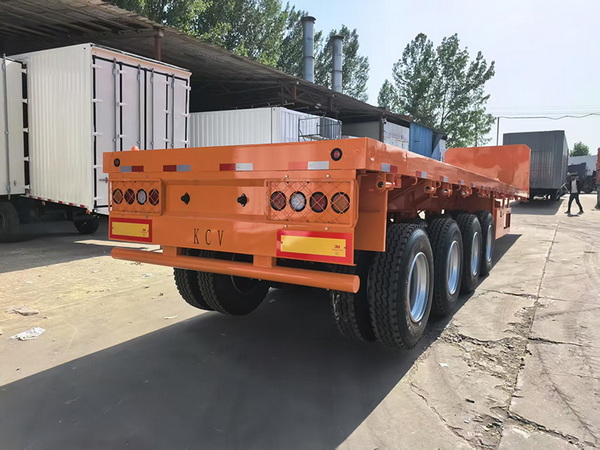
A semi trailer, also known simply as a “semi,” is a type of trailer that relies on a tractor unit to support its front end. Unlike full trailers, which have axles at both ends, a semi trailer only has axles near its rear. The tractor unit connects to the semi trailer through a fifth wheel coupling, which acts as a pivot point allowing both units to articulate during turns and backing maneuvers.
Due to this pivoting connection, the movement of the trailer when backing is indirect; the trailer tends to turn opposite in direction to the tractor's steering input. Therefore, understanding this relationship and predicting the trailer's path is essential for precise maneuvering.
- Tractor Unit: Responsible for steering and pulling the trailer.
- Fifth Wheel Coupling: The connection between tractor and semi trailer, pivotal for movement.
- Trailer Axles: Usually two or more sets located near the rear, bearing most of the load.
- Kingpin: The locking mechanism on the trailer's underside that mates with the fifth wheel.
- Blind Spots: Areas around the rig not visible directly or via mirrors, critical to check during backing.
Recognizing how these parts work together helps you anticipate the trailer's movements and avoid costly errors.
Preparation sets the foundation for successful backing maneuvers.
Start by performing a detailed inspection of the entire rig:
- Check tire pressure and condition on both the tractor and trailer.
- Test brake functionality on both units.
- Make sure lights and signals are fully operational.
- Confirm mirrors are clean and properly adjusted to cover blind spots.
- Inspect the fifth wheel coupling to ensure it's properly locked.
Before you begin reversing:
- Walk around the backing area to identify any obstacles—curbs, poles, other vehicles, or pedestrians.
- Evaluate surface conditions for traction and stability—wet, icy, or uneven terrain requires extra caution.
- Plan your backing path by visualizing the final position of the trailer.
- If available, request a spotter for added safety and guidance.
Backing a semi trailer differs greatly from regular vehicle reversing:
- Understand that when the steering wheel turns right, the rear of the trailer moves left, and vice versa.
- Use both side mirrors carefully to maintain situational awareness.
- Grip the steering wheel with your left hand at 12 o'clock and turn it counterclockwise to back left or clockwise to back right — but with an emphasis on fine, deliberate movements.
- Avoid sudden jerks or oversteering.
This structured guide will help you navigate the complexity of backing a semi trailer efficiently and safely.
Begin by pulling the tractor forward so that you are roughly parallel to the spot where you intend to back in. Maintain 3 to 5 feet of clearance between your tractor and the trailer's parking area to allow room for the trailer to pivot.
With the rig in reverse:
- Use small, gentle steering inputs to start the trailer's movement.
- Remember, turning the steering wheel right causes the trailer to go left and turning it left causes the trailer to go right.
- Keep your speed very slow; foot control on the brake is critical.
Monitor your trailer's position by focusing on key reference points:
- Side markers such as parking lines, posts, or other fixed objects.
- The corners of the trailer as seen in the mirrors.
- Backing signals or markings painted on the ground.
Use your mirrors to continuously assess if the trailer is moving along your planned path.
If the trailer begins to jackknife (fold in sharply):
- Stop the motion immediately.
- Pull forward sufficiently to straighten the trailer.
- Resume backing using smaller steering adjustments.
- Do not overcorrect; smooth inputs work better than abrupt corrections.
As you approach the final backing position:
- Make small corrections to align the trailer perfectly.
- Stop the truck precisely when the trailer is in position.
- Engage parking brakes, and if necessary, place wheel chocks to prevent rolling.
Once stopped:
- Exit the vehicle and perform a visual inspection to confirm the trailer is parked correctly.
- Make adjustments if necessary before completing your task.
Backing a semi trailer poses specific hurdles that even experienced drivers encounter.
This is the most common and dangerous issue. It happens when the trailer folds too sharply against the tractor unit. To avoid jackknifing:
- Keep the rig moving slowly.
- Avoid sharp steering wheel movements.
- When jackknife starts, stop backing and realign by pulling forwards.
Blind spots can obscure obstacles behind or to the sides of the trailer. To compensate:
- Use properly adjusted mirrors.
- Utilize spotters whenever possible.
- Consider backup cameras or sensors if your rig is equipped.
Operating in confined loading bays or urban streets requires fine control:
- Use slow, incremental movements.
- When off-course, pull forward and realign instead of forcing the trailer.
- Consider practicing in similar spaces to build confidence.
Backing on inclines or uneven terrain can cause trailer movement unpredictability:
- Avoid backing up steep slopes if possible.
- Use steady braking to maintain control.
- Apply wheel chocks and parking brakes carefully to secure the rig after stopping.
Backing requires focus and calm nerves:
- Take your time; do not rush.
- If you feel fatigued or stressed, pause and take a break.
- Practice helps build muscle memory that reduces mental strain.
- Practice Regularly: Like any complex skill, consistent practice improves ability and confidence.
- Stay Patient: Accuracy beats speed; rushing invites errors.
- Eliminate Distractions: Avoid phone use, radio adjustments, or conversations when backing.
- Use Technology: Cameras, sensors, and spotters add layers of safety.
- Understand Your Vehicle: Each semi trailer varies; learn how yours responds through hands-on experience.
- Communicate Your Intentions: If others are in the area, use signals or communicate verbally with spotters.
- Dress Appropriately: Wear high visibility clothing if you exit the vehicle to check positioning.
- Maintain Your Equipment: Regularly service brakes, steering, and coupling devices to function optimally.
- Follow Company and Local Regulations: Be aware of local laws regarding trailer parking, backing zones, and safety requirements.
Backing a semi trailer is a crucial skill for drivers that combines deep knowledge of vehicle mechanics, sharp situational awareness, and patient execution. With proper vehicle preparation, thorough environmental assessment, and step-by-step application of steering techniques, drivers can effectively overcome common challenges such as jackknifing and limited visibility. Practicing safe strategies, employing available technology, and maintaining calm during backing maneuvers will not only protect the rig and cargo but also ensure the safety of all road users.
At KeyChain Venture Co., Ltd., we emphasize providing reliable commercial vehicles paired with knowledge sharing to help operators achieve optimal performance. Mastering backing your semi trailer enhances your driving safety, efficiency, and professionalism—essential in today's competitive transportation industry.

It's best to leave about 3 to 5 feet clearance to give the trailer enough room to pivot when backing into tight areas, without risking collision.
Avoid jackknifing by keeping your speed slow, making small steering adjustments, and stopping to realign if the trailer starts folding inward too sharply.
While mirrors are essential, they have limitations. Employing spotters or backup cameras provides additional safety, especially where blind spots and obstructions exist.
Stop immediately, pull forward to straighten the rig, then proceed with smaller, smoother steering inputs to avoid worsening the angle.
Yes, many professional driver training schools offer courses focusing on backing techniques, including simulator training and on-road supervised practice, which can accelerate skill acquisition.


