Views: 222 Author: Amanda Publish Time: 2025-08-22 Origin: Site


Content Menu
● Types of Dump Trucks and Their Capacities
>> Articulated Dump Truck (ADT)
● Key Factors Affecting Dump Truck Load Capacity
>> Dump Truck Bed Size and Volume
>> Truck Design and Axle Configuration
● How to Calculate Dump Truck Load in Tons
>> Step 1: Find the Truck Bed Volume
>> Step 2: Determine Material Density
>> Step 3: Calculate Load Weight
● Common Dump Truck Sizes and Load Capacities
● Safety Considerations When Loading Dump Trucks
>> Use Proper Loading Equipment
● Operational Efficiency Tips for Dump Truck Usage
● FAQs
>> 1. How many tons does a standard dump truck typically carry?
>> 2. What is the difference between an articulated dump truck and a standard dump truck?
>> 3. How does material type affect dump truck load capacity?
>> 4. Can dump trucks be legally overloaded to carry more material?
>> 5. What maintenance tips help ensure dump trucks operate safely when fully loaded?
Dump trucks are essential vehicles in the construction, mining, and transportation industries, designed to carry and unload various types of loose materials such as sand, gravel, demolition waste, and dirt. The capacity of a dump truck, especially how many tons it can hold, is a critical factor influencing project efficiency, cost estimation, and logistics planning. As a leading commercial vehicle supplier, KeyChain Venture Co., Ltd. presents an in-depth guide on dump truck capacities, providing valuable insights to both domestic and international customers. In this article, we will explore the tonnage capacities of different dump trucks, factors influencing load capacity, calculations, and practical safety considerations. This knowledge will empower you to make informed decisions when choosing or operating dump trucks for your projects.
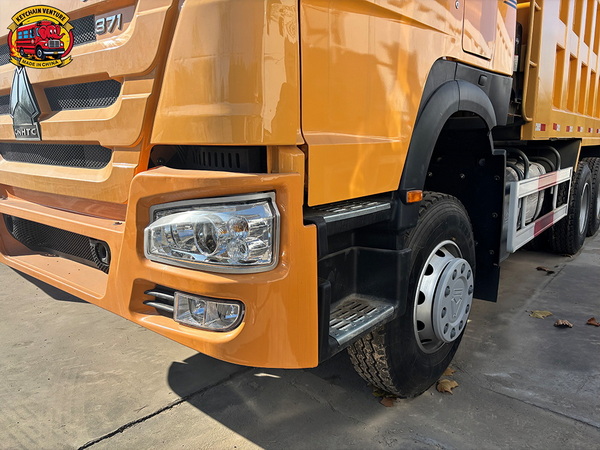
A dump truck is a heavy-duty vehicle equipped with an open-box bed hinged at the rear and equipped with hydraulic pistons to lift the front, allowing the contents to be deposited on the ground behind the truck at the delivery site. The design enables efficient unloading of large quantities of bulk materials.
As a workhorse in commercial and industrial sectors, dump trucks come in various sizes, from small trucks suited to light construction jobs to massive articulated haulers used in mining. Their versatility and robust design make them indispensable in numerous material handling tasks.
Understanding dump truck load capacity starts by identifying the type of dump truck most suited for your needs. The tonnage a dump truck can carry depends heavily on its type, size, and configuration.
Standard dump trucks typically have a rigid frame with a fixed box. These trucks are common for urban and highway construction projects. Their load capacity generally ranges from 10 to 15 tons, making them suitable for transporting moderate volumes of material such as sand, gravel, or demolition debris.
Articulated dump trucks are designed with a pivot joint between the cab and the dump box, offering excellent maneuverability in rugged or uneven terrain. This makes them ideal for mining, quarry, and large construction sites. ADTs carry larger loads than standard trucks, typically between 25 and 40 tons. Their ability to navigate hills and rough roads provides an advantage where a standard dump truck would struggle.
Transfer dump trucks combine a standard dump truck pulling a separate trailer dump box, effectively increasing load capacity. The combined vehicle can carry between 20 and 30 tons. This configuration makes them popular in hauling jobs where volume is important but weight must be managed according to local regulations.
Super dump trucks come with additional axles and enhanced chassis design to maximize legal weight limits on highways. They can typically carry up to 26 tons or slightly more, depending on regional regulations. These trucks provide a useful balance between load capacity and road legal compliance.
Off-highway or mining dump trucks are specialized vehicles designed for extremely heavy loads that regular road trucks cannot handle. These massive dump trucks can haul from 40 tons to over 100 tons per load. They usually operate in enclosed or off-road environments such as mines, large earthmoving projects, and logging areas.
Several essential factors influence how many tons a dump truck can effectively and safely carry. Understanding these helps optimize the use of dump trucks and avoid costly mistakes.
Weight limits for dump trucks vary by country and region. These are set by transportation authorities to protect road infrastructure and ensure vehicle safety. Each truck's load must comply with maximum gross vehicle weight ratings (GVWR), including the vehicle's own weight plus the payload, distributed within allowable axle loads.
The density of the material being transported greatly affects how many tons a dump truck can hold. For example, sand and gravel differ in density:
- Dry sand: roughly 1.4 to 1.6 tons per cubic meter
- Wet sand: about 1.8 to 2.0 tons per cubic meter
- Gravel: around 1.7 to 1.9 tons per cubic meter
Transporting denser materials reduces the volume a truck can carry before reaching its weight limit.
The volumetric capacity of the dump truck's bed is expressed in cubic yards or cubic meters. Larger beds allow more volume, but loading to volume limits without considering the material's density can lead to exceeding safe weight limits.
For instance, a dump truck with a 12 cubic yard bed can carry different tonnages dependent on material weight per cubic yard.
The truck's chassis, suspension system, and axle configuration determine its maximum GVWR. Adding axles spreads the vehicle's weight over more wheels, allowing it to carry heavier loads while adhering to road safety laws.
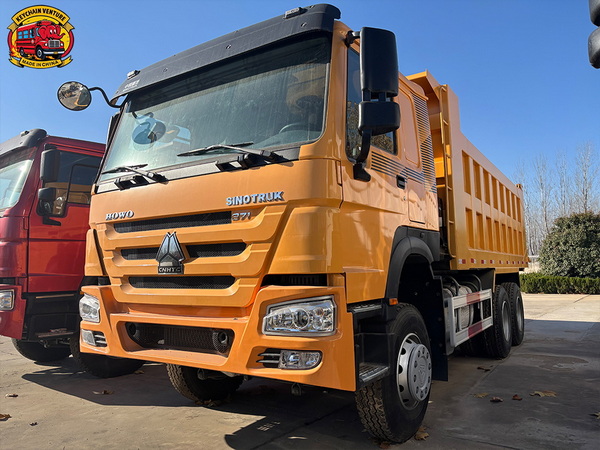
Calculating the load in tons for a dump truck requires knowing two key pieces of data: the truck bed's volume and the material density.
Truck specifications typically list this volume in cubic yards or cubic meters.
Obtain accurate density values for the material you will transport, in tons per cubic yard or tons per cubic meter.
Use the formula:
> Load weight (tons) = Volume (cubic yards or cubic meters) × Material density (tons/cubic yard or tons/cubic meter)
A dump truck with a 12 cubic yard capacity carrying gravel:
- Gravel density = 1.7 tons/cubic yard
- Load weight = 12 × 1.7 = 20.4 tons
Thus, the dump truck would transport approximately 20.4 tons of gravel safely within its volume capacity.
Proper calculation avoids:
- Overloading, which risks damage or accidents
- Under-utilization, which can reduce transportation efficiency
Different jobs require different dump truck sizes. Understanding these sizes helps select the best vehicle:
| Dump Truck Type | Bed Size (cubic yards) | Approximate Load Capacity (tons) |
|---|---|---|
| Small Dump Truck | 5 – 6 | 7 – 10 |
| Standard Dump Truck | 10 – 14 | 15 – 25 |
| Super Dump Truck | 14 – 18 | 20 – 26 |
| Articulated Dump Truck | 30 – 50 | 25 – 40+ |
| Off-Highway Mining Truck | 50 – 100+ | 40 – 100+ |
Ensuring safety while maximizing the load is critical:
Exceeding the vehicle's GVWR risks mechanical failures including tire blowouts, brake failure, and suspension damage. Overloaded trucks also pose dangers to operators and other road users.
Uneven loads compromise vehicle stability, increasing the chance of accidents during operation or unloading.
Always adhere to local road and highway laws. Different jurisdictions may have varying weight limits and fines for violations.
Loaders and excavators should control material placement carefully to avoid shifts during transport.
Brake systems, tires, chassis, and suspension must be inspected and maintained regularly to safely handle loads.
Maximizing efficiency in transporting materials with dump trucks requires a balance between load size, safety, and turnaround time.
- Match Truck Size to Job: Don't use oversized trucks for small loads or vice versa. Choose the right truck based on material volume and density.
- Plan Routes: Efficient routes reduce fuel usage and time per trip.
- Train Operators: Skilled drivers can optimize loading and unloading while mitigating damage or wear.
- Schedule Maintenance: Prevent downtime by strictly following maintenance schedules, especially when trucks transport heavy loads regularly.
Determining how many tons a dump truck will hold is not a fixed number but depends on multiple factors including truck type, bed volume, material density, and legal regulations. From light-duty standard dump trucks carrying around 10-15 tons to heavy-duty mining trucks that haul over 100 tons, there is a wide spectrum of options tailored to various industrial needs. Proper calculation, adherence to safety standards, and effective operational practices are key to achieving productivity and minimizing risks. At KeyChain Venture Co., Ltd., we offer a diverse fleet of high-performance dump trucks, enabling domestic and international clients to meet their demands efficiently and safely.

A standard dump truck usually carries between 10 and 15 tons, depending on the truck's configuration and legal weight limits.
An articulated dump truck has a pivoting joint that enhances maneuverability over rough terrain and can typically carry larger loads than a standard dump truck.
Denser materials weigh more per cubic yard or cubic meter, which decreases the volume a dump truck can carry without exceeding weight limits.
No, overloading is illegal and unsafe. Doing so risks vehicle damage, fines, transporting accidents, and increases road damage.
Regular inspection and maintenance of brakes, tires, suspension, and hydraulic systems are essential, along with following recommended load limits.