
Views: 222 Author: Amanda Publish Time: 2025-11-14 Origin: Site


Content Menu
● The Meaning of Cubic Yards (CY)
● Calculating Dump Truck Capacity
>>> Example
● Dump Truck Types and Typical Capacities
● Factors Influencing Dump Truck Capacity
>> Material Density and Moisture Content
>> Legal Limits and Regulations
>> Loading and Operation Techniques
● Common Dump Truck Materials and Their Typical Loads
● Real-World Capacity Demonstrations and Best Practices
>> Best Practices for Maximizing Utility
● Application of Dump Trucks in Different Industries
>> Construction
>> Landscaping and Agriculture
● Dump Truck Capacities Around the World
● Evolving Technologies in Dump Trucks
● Environmental and Safety Considerations
● Frequently Asked Questions (FAQ)
>> 1. How many cubic yards can a standard dump truck carry?
>> 2. How do material type and moisture affect dump truck capacity?
>> 3. What is the best method for calculating dump truck capacity?
>> 4. What happens if a dump truck is overloaded?
>> 5. Are larger dump trucks always more efficient?
A dump truck is an essential vehicle in construction, mining, and transportation, valued for hauling large amounts of loose material efficiently and safely. One of the most crucial questions when selecting a dump truck for any job is, “How many cubic yards (CY) can a dump truck hold?” Understanding cubic yard capacity is vital for accurate project planning, budgeting, and material logistics, whether you're moving soil, gravel, sand, or demolition debris. This article provides a comprehensive examination of dump truck capacities, calculation methods, influencing factors, real-world examples, and expert best practices.

Dump trucks are specialized vehicles designed with a hydraulically operated open-box bed at the rear, which can be raised to deposit its load at the delivery site. They play a critical role in material handling for construction, mining, landscaping, and waste management projects. These vehicles are engineered to optimize transportation efficiency and minimize manual labor, making them indispensable in modern infrastructure development.[11][12]
Cubic yard (CY) is a volume measurement commonly used in construction and bulk material trades. One cubic yard is equivalent to 27 cubic feet (a cube, 3 feet on each side). This standardized measuring unit helps quantify how much loose material—soil, gravel, sand, etc.—a dump truck bed can carry in a single load. All capacity calculations, purchasing decisions, and delivery estimates in this industry revolve around cubic yards.[13][14]
- Measure the interior length, width, and height of the dump truck bed in feet.
- Multiply these values for the total cubic feet (L × W × H = cubic feet).
- Divide by 27 to convert to cubic yards (cubic feet ÷ 27 = cubic yards).[15][16]
A dump truck with a 10-foot-long, 6-foot-wide, and 4-foot-high bed:
- 10 × 6 × 4 = 240 cubic feet
- 240 ÷ 27 ≈ 8.9 cubic yards
For accuracy, always round down when approaching maximum legal payload to avoid overloading. This simple formula enables fleet managers to match equipment to specific job requirements, reducing costs and increasing safety.[16][15]
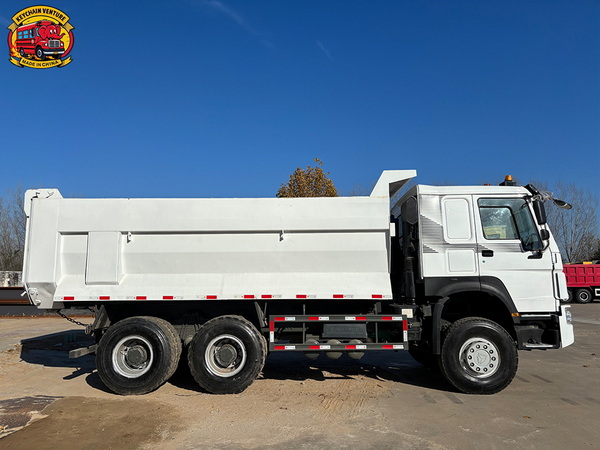
- Capacity: 10–14 CY
- Best For: General construction, roadwork, bulk material delivery.[17][18][19][13]
- Capacity: 6–7 CY
- Best For: Residential landscaping, minor construction.[16]
- Capacity: 16 CY and above
- Best For: Heavy load transport, commercial jobs.[12][17]
- Capacity: Up to 20 CY
- Best For: Major roadwork, high-volume hauling.[12]
- Capacity: 19–32 CY
- Best For: Mining, large-scale earthmoving.[20][21]
- Capacity: Up to 100 CY or more
- Best For: Mines, quarries, and high-capacity industrial transport.[11][12]
The capacity of each dump truck type is defined by the design of its bed, number of axles, suspension, and structural strength.
Bed shape (rectangular or curved), side height, and gate configuration all influence working capacity. Curved beds may reduce usable volume, while taller sides add capacity.[16]
Heavier or wetter loads (like wet sand or saturated soil) reach maximum legal weights with fewer CY. Lighter materials (such as mulch) can nearly fill the bed before reaching legal weight restrictions.[22]
Local and national regulations define legal load weights according to truck size, axle count, and road type. Operators must always ensure compliance to avoid penalties and prevent accidents.[22][12]
Loading technique is important for safety and capacity. Even distribution of material reduces the risk of tip-over accidents and improves handling.[23][20]
Regular inspection of hydraulic systems, brakes, tires, and bed integrity ensures the dump truck can safely operate at full rated capacity.[24][25][23]
| Material | Typical CY per Load | Approximate Weight Load |
|---|---|---|
| Dirt (moist) | 10–12 | 18–22 tons |
| Gravel (dry) | 8–10 | 20–24 tons |
| Sand (wet) | 8–10 | 22–26 tons |
| Concrete debris | 6–8 | 25–30 tons |
| Mulch (light) | 12–15 | 6–8 tons |
Material selection and weather are important—in wet seasons, even light materials can exceed weight rules before filling the bed, limiting CY per load.[13][17][22]
Industry videos, such as operator safety guides, show dump truck filling, weight distribution, and offloading steps, revealing common errors and best techniques for maximizing dump truck capacity and performance.[25][26][27][28][29][24]
- Measure every unique load if possible, especially when hauling materials with uneven density or variable moisture.
- Double-check truck specifications for each job—never assume all trucks in a fleet are the same.
- Develop operator routines for pre-load and post-load inspection.
- Consult weight charts and local authorities for up-to-date guidance on truck and road restrictions.
Dump trucks are foundational for transporting fill dirt, gravel, and stone for foundation work, grading, and road building. Their loading speed and maneuverability keep projects on schedule.
Articulated and mining haul trucks handle immense volumes, delivering efficiency for ore and aggregate extraction in rugged conditions.
Smaller dump trucks efficiently deliver soil, mulch, fertilizer, and aggregates, keeping site maintenance costs low and increasing delivery speed.
Capacity standards and preferred truck models differ by region. In North America, standard dump trucks are common in municipal work, while tri-axle and superdumps serve commercial market needs. In mining countries like Australia, haul trucks with payloads upwards of 100 CY are routine. European and Asian markets utilize compact and articulated designs to navigate narrower roads and diverse job sites.[21][11][12]
Technological advancements are revolutionizing dump truck efficiency, accuracy, and payload management:
- On-board weighing systems display real-time load weight to operators.
- GPS and telematics optimize fleet routes, improving project timelines and reducing fuel costs.
- Advances in hydraulic and control systems increase dumping safety and efficiency, minimizing load spillage and damage risks.
Strict environmental norms mean modern dump truck operations emphasize fuel efficiency, emissions reduction, and dust control. Safety systems—such as automatic backup alarms, 360-degree cameras, and tire-pressure monitoring—are standard on new models and required by contractors globally.[23]
Accurately knowing and applying the cubic yard (CY) capacity of dump trucks is essential for maximizing efficiency, safety, and profitability in any material transport operation. Various factors—from truck design and material type to legal restrictions and loading practices—impact actual payloads on the job site. By leveraging the correct calculation methods and understanding how capacity changes with different materials, stakeholders can plan and execute jobs with confidence, saving time, reducing risk, and ensuring regulatory compliance. KeyChain Venture Co., Ltd. continues to lead the market in providing high-performance trucks and advanced loading solutions tailored to every customer's needs, making dump trucks indispensable in the continued growth of global industry.
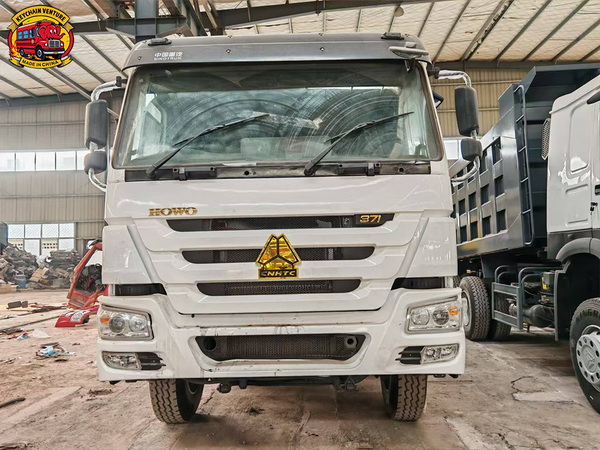
A standard dump truck carries between 10 and 14 cubic yards of loose material such as dirt or gravel.[18][19][17][13]
Heavier or wetter materials take up less volume per load than lighter, dry materials due to legal weight restrictions, so more CY can be hauled with light, dry materials, and fewer CY with dense or wet loads.[22]
Measure the truck bed's interior length, width, and height in feet, multiply for cubic feet, and divide by 27 to convert to cubic yards. Always check truck documentation for manufacturer-specific recommendations.[15][16]
Overloading increases risk of accidents, damages truck components, voids insurance coverage, and exposes operators and owners to legal penalties and fines. Stay within rated and legal payloads at all times.[20][12][22]
Not always. Larger trucks are best for high-volume jobs with clearances and strong infrastructure, but in urban or constrained spaces, a smaller, more maneuverable dump truck may deliver better efficiency, safety, and lower costs.[30][21]
[1](https://www.w3schools.com/html/html_headings.asp)
[2](https://www.w3schools.com/tags/tag_hn.asp)
[3](https://seosherpa.com/header-tags/)
[4](https://www.conductor.com/academy/headings/)
[5](https://accessibility.psu.edu/headingshtml/)
[6](https://yoast.com/how-to-use-headings-on-your-site/)
[7](https://seranking.com/blog/html-heading-tags/)
[8](https://developer.mozilla.org/en-US/docs/Web/HTML/Reference/Elements/Heading_Elements)
[9](https://www.w3.org/WAI/tutorials/page-structure/headings/)
[10](https://www.semrush.com/blog/heading-tags/)
[11](https://kp.uky.edu/knowledge-portal/articles/truck-dump/)
[12](https://www.truxnow.com/blog/types-of-dump-trucks)
[13](https://www.lynchtruckcenter.com/manufacturer-information-how-much-can-a-dump-truck-carry.html)
[14](https://www.calculatorsoup.com/calculators/construction/cubic-yards-calculator.php)
[15](https://municibid.com/blog/calculate-dump-truck-capacity)
[16](https://www.oxbodies.com/how-to-choose-the-right-dump-truck-body-size/)
[17](https://www.youtube.com/watch?v=noD9Mr6zGRI)
[18](https://www.earthhaulers.com/how-much-dirt-can-a-dump-truck-carry/)
[19](https://www.coopskw.com/learn-about-dump-truck-capacity/)
[20](https://construction.unitedequip.com/news-and-events/dump-truck-faqs/)
[21](https://www.unitedrentals.com/project-uptime/equipment/construction-dump-trucks-uses-types-and-sizes)
[22](https://atlantadumptruckhauling.com/how-to-calculate-dump-truck-load-capacity/)
[23](https://www.safetyvideos.com/dump_truck_safety_training_video_p/c007e.htm)
[24](https://www.youtube.com/watch?v=bQk4twmd2PE)
[25](https://www.youtube.com/watch?v=UV9khUORds0)
[26](https://www.youtube.com/watch?v=kpB_eEY49Y4)
[27](https://www.youtube.com/watch?v=bErBnl_ZnIM)
[28](https://www.youtube.com/watch?v=quHAYSosB2U)
[29](https://www.youtube.com/playlist?list=PLgtjFAc5rG7uD6H1Kj7QH8NYsNXDRt9NJ)
[30](https://heavyironcapital.com/dump-trucks-your-complete-guide-to-types-uses-and-financing/)


