
Views: 222 Author: Amanda Publish Time: 2025-11-24 Origin: Site


Content Menu
● Why Volume in Cubic Meters Matters
● Typical Semi Trailer Dimensions
● How to Calculate Cubic Meters in a Semi Trailer
● Common Semi Trailer Types and Their Volumes
>> Refrigerated (Reefer) Semi Trailer
>> Lowboy and Step Deck Semi Trailers
● Legal Limits and Their Impact on Volume
● Pallet Capacity vs. Cubic Meters
● Practical Examples: Converting Cargo Volume to Semi Trailers
● Real-World Factors That Reduce Effective Volume
● Semi Trailer Selection for Different Industries
● Optimizing Load Planning in Semi Trailers
● Semi Trailers and Sustainability
● Summary
● FAQ
>> How many cubic meters are in a standard 13.6 m semi trailer?
>> How many cubic meters are in a 53‑foot dry van semi trailer?
>> Why does a reefer semi trailer have less cubic volume than a dry van?
>> How can I quickly estimate cubic meters for any semi trailer?
>> Do legal dimension limits control how many cubic meters a semi trailer can have?
Semi trailers are the backbone of global freight transport, moving everything from consumer goods to heavy machinery across long distances. Understanding how many cubic meters a Semi Trailer can hold is essential for shippers, fleet operators, and logistics planners who want to maximize efficiency and control transportation costs. This article explains how to calculate semi trailer volume, how different trailer types compare, and how to use this knowledge in real-world operations.[4][7]

A semi trailer is a cargo vehicle without a front axle that relies on a tractor unit (prime mover) to support and pull the load. The front portion of the semi trailer is supported by the tractor through a fifth-wheel coupling, while the rear is carried by its own axle group.[10]
Semi trailers are widely used because they offer high payload capacity, flexible coupling and decoupling, and compatibility with intermodal operations such as rail and sea transport. In many markets, semi trailers represent the core equipment class for long-haul and regional logistics.[10]
Cubic meters (m³) measure internal space, not weight. While weight limits are regulated for road safety, available volume determines how much physical product can be loaded before reaching those limits.[4]
For light yet bulky cargo such as furniture, textiles, packaging materials, or e‑commerce parcels, the volume of a semi trailer is often the first constraint, long before maximum legal weight is reached. Optimizing cubic meters helps reduce empty space, cut the number of trips, and improve revenue per kilometer.[9]
Although exact dimensions differ by country and specification, many on-road semi trailers follow broad standards. In Europe and China, standard box semi trailers are often around 13.6 meters long, about 2.45–2.5 meters wide, and roughly 2.7–3.0 meters internal height.[4]
In North America, commonly used dry van or reefer semi trailers are typically 48–53 feet long (about 14–16 meters), 102 inches wide (about 2.6 meters external width), and 13.5 feet high overall, with slightly lower internal height due to deck thickness and roof structure.[7]
Using the internal values, many standard box semi trailers used for palletized freight provide a volume of roughly 85–90 cubic meters, depending on exact height and width.[7][4]
The cubic capacity of a semi trailer is simply the internal length, multiplied by internal width, multiplied by internal height, all in meters:
Volume(m³)=Length(m)×Width(m)×Height(m)
For example, consider a typical European-style box semi trailer with approximate internal dimensions of 13.6 meters length, 2.45 meters width, and 2.7 meters height.[4]
13.6×2.45×2.7≈90m³
In North America, a 53‑foot dry van semi trailer may have about 16.15 meters internal length, 2.44 meters internal width, and roughly 2.7 meters internal height.[7]
16.15×2.44×2.7≈106m³
These calculations show that depending on design and region, a large enclosed semi trailer often ranges from about 85 to over 100 cubic meters of usable internal volume.[7][4]
Different semi trailer designs exist for various cargo types, and each offers different effective cubic meters.
The dry van semi trailer is a fully enclosed, non‑refrigerated box used for general freight such as consumer goods, palletized products, or packaged industrial components.[7]
A typical dry van semi trailer in European dimensions (around 13.6 m long) offers close to 90 cubic meters of space, while a North American 53‑foot dry van can exceed 100 cubic meters internally, depending on internal roof height and wall thickness.[4][7]
A refrigerated semi trailer, or reefer, includes insulation and a cooling unit. The added wall thickness and equipment reduce internal width and height compared with a similar external size dry van.[7]
For this reason, reefer semi trailers often have slightly lower cubic capacity, commonly in the range of about 80–95 cubic meters for the larger 53‑foot or 13.6‑meter class, even though their outer dimensions are similar to dry vans.[2][7]
Flatbed semi trailers consist of an open deck, sometimes with stake pockets or removable sides. Because there are no solid walls or roof, flatbeds are usually characterized by deck length and width rather than strict cubic meters.[7]
In practice, flatbed semi trailers are chosen for oversized loads like steel beams, machinery, or construction materials. Volume is less relevant than footprint and permitted cargo height under local regulations.[3][7]
Lowboy and step deck semi trailers feature dropped decks that allow for taller cargo within legal overall height limits.[7]
Although their total enclosed cubic volume is not usually specified (many are open or partly open designs), the reduced deck height lets operators carry higher machinery or equipment that would not fit on a standard flatbed semi trailer, making them essential for heavy haul projects.[3][7]
Tanker semi trailers are designed to transport liquids, gases, or powders in a cylindrical tank. Volumes for these semi trailers are normally expressed directly in cubic meters, often ranging from about 30 to 40 cubic meters for common highway fuel or chemical tankers.[9]
Because tankers are specialized, their design focuses on safe containment, compartmentalization, and weight distribution rather than maximizing cubic meters for general cargo.[9]
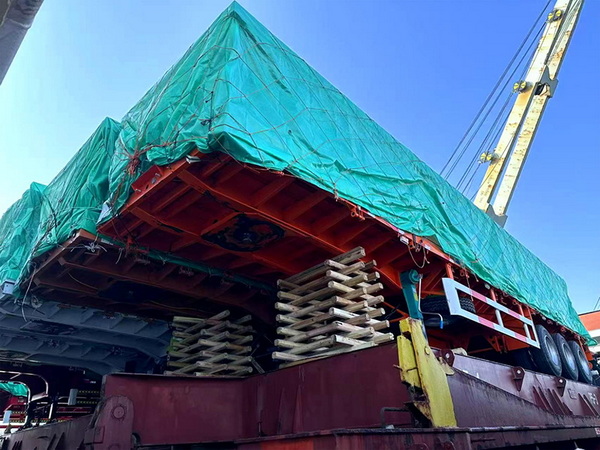
National and regional regulations set maximum length, width, and height for road vehicles, including semi trailers. In many European countries and in China, common maximum trailer lengths are around 13.6–13.75 meters with a width of about 2.55 meters and total height around 4.0 meters.[4]
In the United States, typical semi trailer regulations allow lengths of 48–53 feet with a standard width of 102 inches and an overall height of about 13.5 feet, depending on state rules.[8][7]
These regulatory envelopes create a practical ceiling for how many cubic meters a standard road‑legal semi trailer can offer, which is why large dry vans tend to cluster in the 85–110 cubic meter range worldwide.[4][7]
In real freight operations, semi trailers are often described by how many pallets they can carry rather than their total volume. A typical 13.6‑meter European semi trailer can hold about 33–34 Euro pallets (1.2 m × 0.8 m), corresponding to roughly 90 cubic meters.[4]
In North America, a 53‑foot dry van semi trailer may hold around 24–26 standard pallets when loaded on the floor in a single layer, with volume typically above 90 cubic meters, depending on internal layout.[7]
Logistics planners must balance pallet configuration and cubic meter utilization. Cubic meters define total available space, but pallet layout determines how effectively that space is used and how stable the load will be during transport.[4][7]
Consider a shipper who needs to move a total cargo volume of 450 cubic meters of mixed palletized goods. If each semi trailer used has about 90 cubic meters of internal volume, the number of trailers required can be estimated as:
450÷90=5
So the operation would plan for roughly five fully loaded semi trailers, assuming the pallets can be efficiently arranged to use the space.[4]
If the same cargo is loaded into larger semi trailers with 100 cubic meters capacity, the requirement changes to:
450÷100=4.5
In that case, the planner may schedule five semi trailers but with some reserve space, or attempt to consolidate further by optimizing pallet stacking and loading sequence.[7]
The theoretical cubic meters in a semi trailer rarely match the usable volume in practice. Several factors reduce effective cargo space:
- Interior fixtures such as load bars, ventilation channels, or reefer units occupy part of the semi trailer.[7]
- Wall insulation and lining reduce internal dimensions compared with the external width and height.[2][7]
- Uneven or irregularly shaped loads create voids that cannot be filled, lowering the real cubic utilization.[9]
- Safety margins must be left for door operation, tie‑down equipment, and ensuring that cargo does not press dangerously against roof or walls.[7]
Because of these constraints, operational volume utilization targets rarely reach 100%; many fleets aim for high but realistic fill rates, often between 80% and 95% of theoretical cubic meters.[9]
Different industries use specific semi trailer configurations to make the best use of available cubic meters.
- Retail and e‑commerce operations favor large dry van semi trailers to move high volumes of relatively light, boxed goods, often filling the space before reaching maximum allowed weight.[9]
- Food and pharmaceutical chains rely heavily on reefer semi trailers, accepting slightly reduced cubic meters in exchange for precise temperature control.[2][7]
- Construction and heavy industry focus more on deck area and permitted height, using flatbed, lowboy, and step deck semi trailers rather than enclosed volume.[3][7]
By matching trailer type to cargo characteristics, operators achieve better utilization of both weight capacity and cubic meters in their semi trailer fleets.[9]
Advanced load planning software and careful operational practices help fleets use semi trailer volume more efficiently.
Key strategies include:
- Using detailed item dimensions to build three‑dimensional loading plans that minimize empty space inside each semi trailer.[9]
- Choosing pallet patterns that balance stability with high cubic utilization, such as turning some pallets sideways where regulations allow.[4]
- Mixing heavy, dense items with light, bulky products in one semi trailer to approach both weight and volume limits efficiently.[9]
- Coordinating return loads to reduce empty backhauls and maximize the number of loaded cubic meters moved per kilometer driven.[9]
Transport companies that understand exactly how many cubic meters are available in each semi trailer model can choose the best equipment and loading strategies for each route and customer.
Maximizing cubic meters in semi trailers has a direct environmental benefit. When each semi trailer carries more freight volume per trip, fewer trucks are needed for the same total cargo movement, which reduces fuel consumption and greenhouse gas emissions.[9]
Innovations such as aerodynamic add‑ons, lightweight construction materials, and low‑rolling‑resistance tires further improve efficiency by allowing fleets to move more goods in each semi trailer without increasing fuel usage. In many markets, regulatory frameworks encourage better load factors and modern, efficient semi trailer designs as part of broader sustainability policies.[9]
Most standard enclosed road semi trailers worldwide fall into a relatively narrow band of cubic capacities. A typical 13.6‑meter European box semi trailer commonly offers around 90 cubic meters of internal space, while a 53‑foot North American dry van semi trailer may reach or slightly exceed 100 cubic meters.[4][7]
However, the precise number of cubic meters in any semi trailer depends on its internal length, width, and height, as well as design features like insulation, lining, and floor thickness. Knowing how to calculate and interpret these values enables shippers and carriers to plan loads accurately, reduce wasted space, and increase profitability on every semi trailer movement.[4][9]
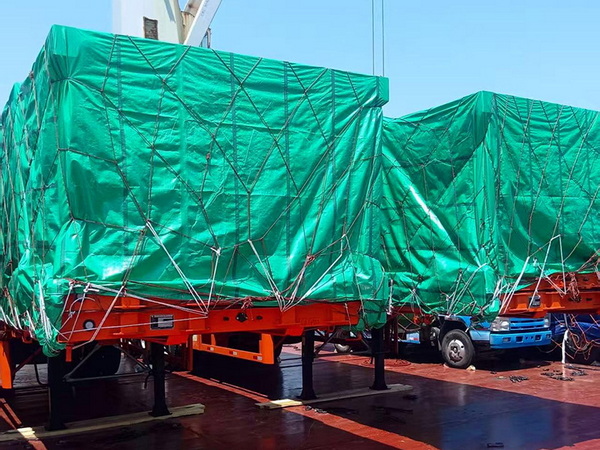
A commonly specified 13.6‑meter box semi trailer with about 2.45 meters internal width and roughly 2.7 meters internal height provides close to 90 cubic meters of volume, though exact figures vary by manufacturer and design.[4]
A 53‑foot dry van semi trailer with approximate internal dimensions of 16.15 meters by 2.44 meters by around 2.7 meters may offer just over 100 cubic meters of space, depending on internal clearances and roof height.[8][7]
Reefer semi trailers have insulated walls, floor, and roof, plus a refrigeration unit, all of which reduce internal width and height, so even if the outer dimensions match a dry van, the internal cubic meters are slightly lower.[2][7]
Measure or obtain the internal length, width, and height in meters, then multiply them: volume in cubic meters equals length times width times height. This simple formula works for most enclosed semi trailers and many specialized designs.[4]
Yes. Government regulations on maximum length, width, and height directly limit the external size of trailers, which in turn caps the internal volume available. As a result, most road‑legal box semi trailers converge around 85–110 cubic meters of capacity.[7][4]
[1](https://schneiderjobs.com/blog/semi-truck-trailer-dimensions)
[2](https://aatrailer.com/how-long-are-semi-truck-trailers-everything-you-need-to-know/)
[3](https://www.transwest.com/trailers/blog/semi-trailer-dimensions-length-and-what-can-you-haul/)
[4](https://www.goodloading.com/en/blog/truck-transport/dimensions-and-types-of-semi-trailers/)
[5](https://www.hyjjvehicle.com/Semi-Trailer-Truck-DImensions.html)
[6](https://www.1gptransinc.com/tools-to-help/trailer-types-and-dimensions)
[7](https://streamlogistics.com/trailer-dimensions/)
[8](https://haletrailer.com/blog/dimensions-53-trailer/)
[9](https://www.veritread.com/blog/semi-trailer-dimensions/)
[10](https://en.wikipedia.org/wiki/Semi-trailer_truck)


