Views: 222 Author: Amanda Publish Time: 2025-11-15 Origin: Site


Content Menu
● Semi Trailer Types for Grain Transport
● Calculating Grain Capacity in Semi Trailers
>> Federal and State Regulations
● Factors Impacting Semi Trailer Grain Capacity
>> Dimensions and Structural Design
● Economic Impact of Trailer Capacity
● Innovations in Semi Trailer Grain Transport
>> Integration of Smart Systems
>> Case Study: Efficient Harvest Haul
>> Fleet Optimization for Export
>> Challenges in Mountainous Terrain
● The Value of Proper Grain Trailer Selection
● FAQ
>> 1. What is the typical bushel capacity of a grain hopper semi trailer?
>> 2. How do U.S. laws affect truck loading limits?
>> 3. Does grain type affect semi trailer capacity?
>> 4. What best practices help ensure safe semi trailer loading?
>> 5. Are all semi trailers designed for grain transport?
The semi trailer stands at the center of modern agricultural logistics, enabling the swift, large-scale transport of grains such as corn, wheat, and soybeans for farmers, commercial producers, and supply chains around the world. For companies like KeyChain Venture Co., Ltd., understanding the actual grain-holding capacity of a semi trailer is vital to maximizing efficiency and profitability. This comprehensive guide brings together technical insights, real-world scenarios, and practical advice to help stakeholders optimize their grain operations with semi trailers.[1][4]

A bushel represents a standard unit of dry volume—the equivalent of approximately 35.2 liters or 1.25 cubic feet in the U.S.—used mainly to measure and price bulk agricultural goods. In semi trailer applications, knowing how bushel volume translates to trailer space is fundamental because it affects cargo planning, shipping costs, and legal compliance.[4]
Dry van semi trailers are the most familiar on public highways. With enclosed sides and roof, these models typically boast capacities of 1,600–1,800 bushels depending on length, height, and design. Their weather-resistant structure makes them suitable for grains, though not optimized for bulk unloading.[4]
Purpose-built for bulk grain, hopper semi trailers offer capacities of 1,200–1,600 bushels and feature gravity drain doors to simplify unloading. Lengths range from 40 to 43 feet, with models from major brands such as Stoughton and Wilson available in widths of 96–102 inches and interior volumes up to 1,550 bushels or more. Hopper shape, clearance, and side height are key design factors.[2][3][6][4]
Flatbed semi trailers are adaptable for bagged or crated grain, but bulk loads are limited to 1,000–1,200 bushels, with loose grain requiring containers for secure transport. Their open sides and top are well-suited to oversized equipment, yet less optimal for bulk agricultural shipments.[4]
Equipped with conveyor systems, live bottom semi trailers provide controlled unloading, handling 800–1,200 bushels at a time depending on their dimensions. Their specialty design suits particular crops or industrial scenarios.[4]
Semi Trailer Type | Length | Width | Bushel Capacity |
Standard Dry Van | 53 ft | 8.5 ft | 1,600–1,800 |
Grain Hopper | 40–43 ft | 8–8.5 ft | 1,200–1,600 |
Flatbed | 48 ft | 8.5 ft | 1,000–1,200 |
Live Bottom | 40 ft | varies | 800–1,200 |
Capacity depends on both trailer volume and the grain's density. The typical calculation is:
Bushels = (Interior Length × Width × Height)/1.25
where length, width, and height are measured in feet, and 1.25 is the cubic foot volume of one bushel.[10][4]
Consider a modern grain hopper trailer measuring 1,400 cubic feet internally:
- Bushel capacity: 1,400 ÷ 1.25 = 1,120 bushels.[4]
- With corn (56 lb/bushel): 1,120 × 56 = 62,720 lbs (31.36 tons).[1]
- With wheat (60 lb/bushel): 1,120 × 60 = 67,200 lbs (33.6 tons).[1]
- With soybeans (60 lb/bushel): 1,120 × 60 = 67,200 lbs (33.6 tons).[1]
Federal guidelines restrict total truck and trailer weight to 80,000 lbs on interstate highways, which can mean reaching weight limits before filling the maximum cubic volume for high-density grains. Every operator must monitor both volume and gross vehicular weight (GVW) to remain compliant and safe.[5][8]
- Length, width, and height: These foundational specs define total trailer volume, directly impacting the semi trailer's bushel count.[1][4]
- Axle configuration: Tri-axle or tandem setups influence weight distribution, stability, and legal limits.[1]
- Corn: Standard at 56 lbs/bushel, moderately dense, often reaching capacity near legal weight limit before max volume.[1]
- Wheat/Soybeans: 60 lbs/bushel, dense, may fill the trailer faster in weight than in space.[1]
- Other grains: Oats, barley, and rye have lower densities, sometimes allowing more bushels per trip.[1]
- Bulk: Unbagged grain fills space fully, maximizing volume efficiency.[4]
- Bagged/Crated: Requires additional space and may limit total bushels.[4]
- Loading method: Using carts, conveyors, and gravity hoppers ensures efficient fill and safe axle balancing.[11]
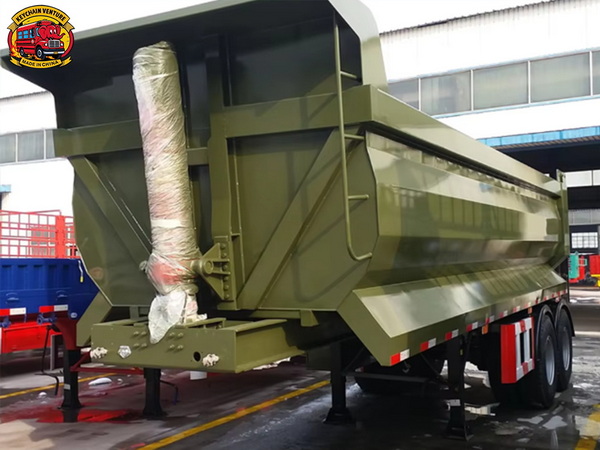
Distributing grain evenly along the trailer's center axis is essential for stability and road safety. This prevents imbalances that can lead to accidents or uneven tire wear.[1]
Operators should inspect the trailer after every load for uniform distribution and address any shifting, especially during extended trips over rough roads. Real-time monitoring systems and on-board scales can aid compliance and efficiency.[12][1]
Legal and safe hauling requires careful attention to the load on each axle. Overloading any section can result in fines or accidents. Smart scales help keep loads balanced and within limits.[8]
Selecting the right semi trailer type for each crop maximizes haul volume and reduces transportation costs per bushel. Hopper trailers offer value by combining volume capacity with quick unloading.[2]
Higher-capacity semi trailers mean fewer trips, resulting in lower fuel use, decreased carbon emissions, and savings for both transport companies and growers.[2][1]
Durable, well-maintained semi trailers are critical for long-term fleet reliability. New models, like those from Stoughton and Wilson, add value with stronger materials and design features that boost capacity and reduce losses.[3][2]
Modern hopper semi trailers feature optimized slopes, multiple discharge doors, and lightweight construction, allowing safer transit, more effective unloading, and higher payloads.[3]
GPS-based fleet management and weigh-in-motion sensors streamline grain shipping, allowing operators to track axle weights, loading rates, and route choices for the greatest efficiency and compliance.[12]
A wheat farmer uses two 40-foot hopper trailers at full capacity (1,400 cubic feet each), planning three trips to a grain elevator at 1,120 bushels per load. Careful scheduling and monitoring ensures all trucks stay below 80,000 pounds gross, maximizing payload and minimizing travel time.
Commercial grain suppliers operating cross-border fleets must juggle local laws on semi trailer weight and size, balancing cost and compliance to deliver product efficiently to ports and terminals.
Drivers hauling semi trailer loads in regions with hills or rough terrain need to pay extra attention to load distribution and trailer stability, often opting for lower profiles and reinforced axles to manage shifting loads.
Understanding the capacity of a semi trailer for grain is about more than just numbers. It's about bringing together dimensions, weight limits, legal requirements, commodity types, unloading efficiency, and long-term ownership cost. Companies who master these details benefit from fewer lost loads, reduced operational expenses, and stronger relationships with customers.[2][4]
Knowing precisely how many bushels of grain a semi trailer can hold enables agricultural companies and logistics providers to optimize transport, streamline operations, and avoid costly mistakes. From choosing between dry van, hopper, flatbed, or live bottom semi trailers, to calculating bushel capacity, monitoring axle weight, and observing regulatory compliance, each step in the process enhances overall effectiveness and safety. By leveraging the latest design features, smart sensors, and efficient hauling practices, operators help build a more productive and sustainable agricultural supply chain for communities worldwide.[5][2][4][1]
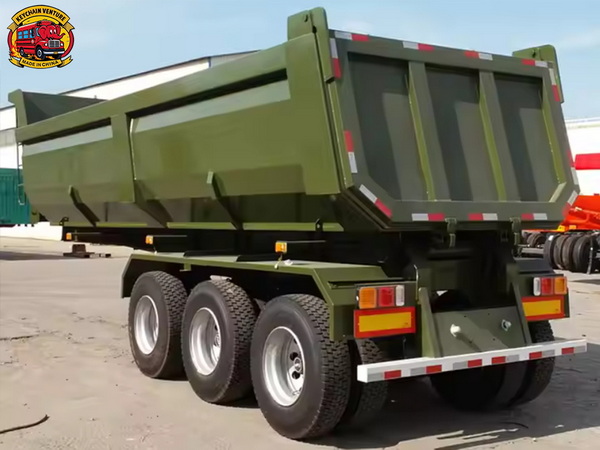
Most grain hopper semi trailers hold between 1,200 and 1,600 bushels, depending on their design, side height, and width.[6][2]
Legal weight restrictions limit total vehicle and cargo weight to 80,000 lbs on most U.S. highways. Overloaded semi trailers incur fines or may be removed from service.[8][5]
Yes, each grain varies in density and bushel weight. Corn is typically 56 lbs per bushel, while wheat and soybeans are denser at 60 lbs per bushel, affecting legal load limits and maximum bushel quantities.[1]
Always distribute grain evenly, monitor axle weights, inspect loads pre-trip, and use modern scales and sensors for optimally balanced hauling.[11][12]
No, only trailers built for bulk hauling—such as grain hoppers—maximize volume efficiency. Flatbeds and dry vans may require bagged or crated grain, limiting capacity and often complicating unloading.[2][4]
[1](https://semitrailer.by/understanding-semi-trailer-capacities-the-case-of-grain-transportation/)
[2](https://www.stoughtontrailers.com/products-and-services/grain-trailer)
[3](https://www.wilsontrailer.com/wp-content/uploads/2021/03/GrainBroch11-20.pdf)
[4](https://semitrailer.by/how-many-bushels-does-a-semi-trailer-hold-a-comprehensive-guide/)
[5](https://haletrailer.com/blog/dimensions-hopper-bottom/)
[6](https://www.mheby.com/generation-grain-trailer)
[7](https://talk.newagtalk.com/forums/thread-view.asp?tid=818427&DisplayType=nested&setCookie=1)
[8](https://ops.fhwa.dot.gov/freight/policy/rpt_congress/truck_sw_laws/app_a.htm)
[9](https://www.transwest.com/trailers/blog/semi-trailer-dimensions-length-and-what-can-you-haul/)
[10](https://www.convertunits.com/from/bushel/to/cubic+foot)
[11](https://www.youtube.com/watch?v=y5PReYdwXBA)
[12](https://equipmentexpertsinc.com/semi-truck-length-a-guide-to-truck-and-trailer-dimensions/)