Views: 222 Author: Amanda Publish Time: 2025-11-08 Origin: Site


Content Menu
● 1: Core Principles of Tractor Size
● 2: Task-Based Sizing Framework
● 3: Reading and Interpreting Specifications
● 4: Real-World Sizing Scenarios
● 5: Attachments and Compatibility
● 6: Maintenance and Longevity
● 7: Global Market Considerations
● FAQ
>> 1) What factors determine the right Tractor size for my fleet?
>> 2) How does horsepower relate to real-world performance?
>> 3) Should I prioritize larger weight or higher horsepower?
>> 4) How important are hydraulic flow and number of ports?
>> 5) What should I look for in attachments to maximize size efficiency?
Choosing the right Tractor size is a foundational decision for fleets and operators engaged in heavy transport, construction, agriculture, and municipal maintenance. The aim is to align machine power, weight, ballast, and hydraulic capacity with the planned tasks, terrain, and duty cycle while maximizing uptime and total cost of ownership. This extended guide builds on practical sizing principles, real-world scenarios, and media-rich decision aids, helping buyers and fleet managers make informed choices. KeyChain Venture Co., Ltd. brings its experience in high-performance commercial vehicles to assist domestic and international clients in selecting tractor configurations that meet diverse operational demands.

Tractor size boils down to three interrelated dimensions: horsepower, weight with ballast, and hydraulic capability. Each parameter affects performance, efficiency, and versatility in different working environments.
- Horsepower: Engine horsepower powers vehicle movement and core functions, while PTO horsepower determines the energy available to implements. For tasks relying on hydraulics or PTO-driven tools, PTO HP often governs overall effectiveness.
- Weight and ballast: Proper ballast improves traction, especially on slopes, mud, or loose surfaces. The distribution of weight between front and rear axles influences steering, stability, and soil impact.
- Hydraulics and attachments: The number of hydraulic outlets, flow rate, pressure, and circuit configuration determine how many tools can operate simultaneously and how quickly they respond.
- Wheelbase and footprint: A longer wheelbase enhances stability under load, but can reduce maneuverability in tight spaces; a shorter wheelbase improves agility in yards and urban settings.
- Cab ergonomics and visibility: A comfortable, well-designed cab reduces operator fatigue on long shifts and improves productivity.
Tractor size categories commonly used by commercial operators:
- Compact tractors: Lower horsepower, lighter weight, high maneuverability—suitable for small lots, light attachments, and efficiency-focused tasks.
- Utility tractors: Mid-range horsepower and ballast with broad attachment compatibility—fit for a wide array of tasks across municipal, agricultural, and industrial settings.
- Heavy-duty tractors: High horsepower with substantial ballast and advanced hydraulic systems—built for demanding workloads and challenging terrains.
Translate power and weight into actionable sizing decisions by mapping typical tasks to Tractor classes and performance targets.
- Lifting and material handling: Prioritize ballast, loader capacity, and robust hydraulic flow. A configuration with strong lift capacity and stable ballast reduces operator effort and increases throughput.
- Tow and drag operations: Emphasize drawbar power and traction, with ballast tuned to the load and terrain. On hills or uneven ground, ballast distribution and tire selection are critical.
- Ground engagement and terrain: In soft soils, broader footprints and higher ballast improve traction; on hard surfaces, the emphasis shifts to stability and control.
- Attachment ecosystem: Confirm compatibility with three-point hitch categories, rear and front PTO speeds, hydraulic circuit counts, and the ease of changing implements to minimize downtime.
- Duty cycle and climate: Long shifts, high ambient temperatures, and dusty environments call for reliable cooling systems, protected electricals, and easy access for maintenance.
Beyond headline horsepower, practical evaluation requires a careful read of the spec sheet.
- Engine HP vs. PTO HP: Engine HP covers propulsion and engine-driven systems; PTO HP delivers power available to implements. Align PTO HP with the load demands of intended attachments.
- Weight and ballast options: Review base weight, maximum safe payload, and ballast configurations that can be adjusted to match varying tasks and terrains.
- Hydraulics: Note total hydraulic flow, the number of remote valves, port configurations, and the availability of front and rear circuits. More flow and ports enable concurrent operation of multiple attachments.
- Transmission and drivetrain: Consider transmission type (manual, hydrostatic, powershift) and gear ranges. The right drivetrain minimizes operator effort and reduces wear over long duties.
- Tires and ballast: Wheel size, tread pattern, and ballast choices influence ground pressure and traction. Ensure compatibility with site conditions and uptime requirements.
- Comfort and visibility: Cab design, seat ergonomics, climate control, noise levels, and visibility all impact operator productivity and fatigue.
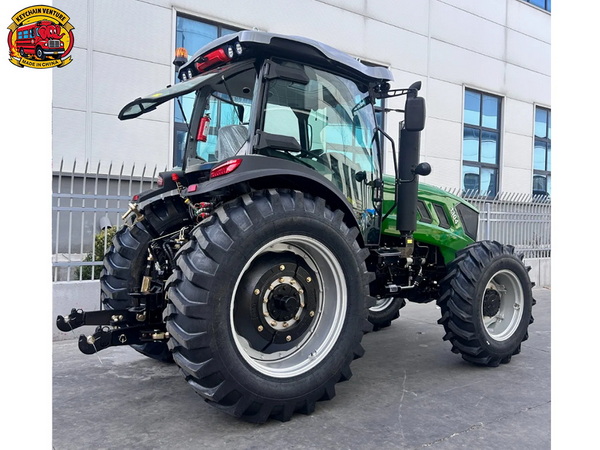
Concrete examples help translate theory into practice.
- Municipal maintenance and light construction: A mid-range utility Tractor in the 90–150 HP range often balances power, maneuverability, and cost. Attachments such as sweepers and light loaders are typical, with ballast tuned for street environments.
- Logistics yards and freight operations: For frequent towing and material handling, a 120–180 HP Tractor with ample ballast, multiple hydraulic outlets, and adaptable PTO options provides flexibility across shifting duties.
- Agricultural-adjacent transport tasks: Moving heavy loads over open terrain and mixed surfaces benefits from 150–250 HP with robust cooling and ballast for stable traction.
- Heavy-duty construction sites: Demanding workloads on slopes and uneven ground can justify 250–350 HP class machines with advanced hydraulics and reinforced components for longevity.
Note on Total Cost of Ownership (TCO): TCO includes purchase price, depreciation, maintenance, fuel consumption, downtime costs, and resale value. The optimal choice minimizes idle time, optimizes fuel efficiency for typical duties, and avoids unnecessary wear through proper duty-cycle alignment.
Attachments extend a Tractor's versatility, making size selection even more consequential.
- Front loaders, backhoes, mowers, tillers, augers, blades, and more each place different demands on hydraulics and ballast.
- PTO-driven equipment requires alignment of PTO speeds and horsepower with implement requirements.
- Three-point hitch categories and the number of hydraulic ports determine how many attachments can operate simultaneously and with what efficiency.
- A structured compatibility matrix or vendor guidelines help buyers avoid mismatches and downtime.
Long-term reliability hinges on appropriate sizing and proactive upkeep.
- Cooling and load management: Ensure cooling systems are capable of dissipating heat under peak duty cycles to prevent throttling and premature wear.
- Maintenance scheduling: Regular oil changes, filter replacements, and hydraulic inspections maintain responsiveness and extend service life.
- Service network: A strong dealer and service network minimizes downtime, especially in distant or high-demand markets.
Regional needs and regulatory landscapes influence sizing and configurations.
- North America and Europe: Emphasize dealer support, hydraulic reliability, and broad attachment ecosystems.
- Asia and other markets: Prioritize cost-effective options, robust components, and adaptable ballast/attachment options.
- Brand positioning: Highlight experience delivering high-performance commercial vehicle solutions and apply a modular approach to sizing and configuration to fit diverse duties.
Selecting the right Tractor size is a balancing act among power, weight, hydraulics, and attachment compatibility, tailored to the specific workload, terrain, and duty cycle. A well-chosen size leads to higher uptime, improved efficiency, and favorable long-term costs. KeyChain Venture Co., Ltd. remains committed to delivering tailored, high-performance commercial-vehicle solutions that meet the evolving needs of international clients.
- Answer: The primary tasks (lifting, towing, ground engagement), terrain, attachment compatibility, ballast needs, duty cycle, and total cost of ownership collectively determine the optimal size.
- Answer: Engine horsepower drives mobility and core systems; PTO horsepower determines the power available to implements. Matching PTO HP to implement load is essential for efficiency.
- Answer: Weight enhances traction and stability, especially on uneven terrains, but excess weight can reduce maneuverability and increase fuel use. Use balanced ballast to optimize performance.
- Answer: Hydraulic flow governs how many attachments can operate simultaneously and at what speed; more ports and higher flow enable faster cycle times for demanding tasks.
- Answer: Ensure PTO compatibility, hydraulic capacity, and hitch compatibility align with intended attachments; choose versatile, well-supported attachments to maximize the value of the chosen Tractor size.
[1](https://www.holderandsonsequipment.com/blog/tips-to-buy-a-tractor-by-size--41663)
[2](https://www.bobcat.com/na/en/buying-resources/tractors/compact-tractor-sizes-guide)
[3](https://www.centralarkansasmahindra.com/blog/guide-to-tractor-sizes--29131)
[4](https://wwcm.com.au/tractor-sizes-guide/)
[5](https://www.truck1.eu/blog/how-to-choose-a-tractor-unit-t258)
[6](https://www.lectura-specs.com/en/specs/transportation/trucks-truck-tractors-tractor-units)
[7](https://www.trigreenequipment.com/how-to-choose-the-right-size-tractor-for-your-acreage/)
[8](https://business.michelin.co.uk/help-advice/farm-vehicles/choose-tyres-6-criteria-for-tractor-tyres)